Yusuf Islam addressed the "Global Forum for Liberation from Colonialism" held in Istanbul, Turkey, on May 11-12, 2026. The musician and activist participated in the international event, which focused on themes of decolonization and intellectual history. The British singer, who was formerly known as Cat Stevens, converted to Islam and adopted the name Yusuf Islam, bringing a unique perspective to the forum's discussions. His statements at the forum were subsequently reported in the Al-Khabar newspaper on May 14, 2026, appearing on page 21, noting the significance of his remarks on a global stage. The forum itself served as a platform for diverse voices to converge on critical issues surrounding the legacy of colonialism and its enduring impact on knowledge systems.
Echoes of Colonial Past
The contemporary call for decolonization of knowledge has deep historical roots, particularly in regions that experienced colonial rule. In the 1920s, a prominent intellectual, Sheikh Mubarak El-Mili, identified France's concerted efforts to "colonize our history." This observation pointed to a deliberate strategy by colonial powers to reshape narratives and control the historical understanding of the colonized people. Sheikh Mubarak El-Mili, a significant Algerian scholar and nationalist figure, authored the seminal book "History of Algeria in Antiquity and Modernity," a work that sought to reclaim and reassert an indigenous historical perspective.
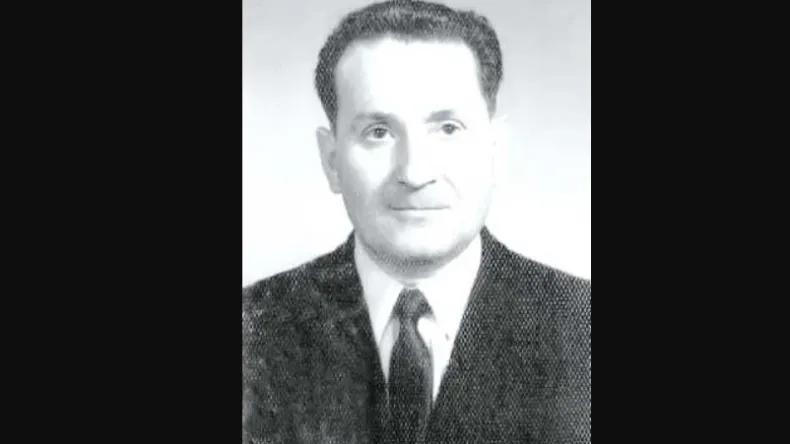
Algerian fighter Mohamed Cherif Sahli, born in Sidi Aïch, Béjaïa in 1906, was also a key figure in this intellectual resistance. His early life in Algeria was shaped by the colonial context, which fueled his later commitment to liberation. Sahli pursued his education at the prestigious Sorbonne in Paris, where he engaged with philosophical thought, and later taught philosophy in high schools across Paris, demonstrating his intellectual prowess and dedication to education. Despite his academic pursuits in the colonial metropole, he remained deeply committed to the liberation of his homeland. He joined the National Liberation Front (FLN), becoming an active participant in Algeria's struggle for independence. Mohamed Cherif Sahli stated, "حرّروا التاريخ" (Liberate history), a powerful and concise call to action that encapsulated the urgent need to dismantle colonial historical interpretations. This phrase became a rallying cry for intellectual and cultural self-determination, emphasizing that true political liberation necessitated a parallel liberation of historical narratives from colonial influence.
Contemporary Call for Liberation
Yusuf Islam stated, "We must liberate the production and dissemination of knowledge from colonialism." This statement, delivered at the "Global Forum for Liberation from Colonialism," directly addresses the ongoing need to critically examine the origins and biases embedded within global knowledge systems. The British singer, who converted to Islam and took the name Yusuf Islam, delivered this message at the "Global Forum for Liberation from Colonialism" in Istanbul, showing the international and intergenerational nature of this struggle. This call echoes earlier intellectual efforts to reclaim historical narratives and challenge dominant, often Eurocentric, perspectives.
Mohamed Cherif Sahli, an Algerian fighter and scholar, published his book on liberating history in 1965, following Algeria's regained independence. The timing of its publication, immediately after the country achieved sovereignty, noted the critical link between political freedom and intellectual autonomy. Sahli, who studied at the Sorbonne and taught philosophy in Paris, was a member of the National Liberation Front (FLN), embodying the fusion of intellectual and revolutionary spirit. His work contributed to a broader movement to challenge colonial interpretations of history and knowledge, aligning with the contemporary discussions on decolonization by asserting the importance of indigenous perspectives and historical accuracy.
The Imperative of Deeper Change
Mohamed Cherif Sahli left a significant call to action, stating, "حرّروا التاريخ" (Liberate history). This sentiment notes a broader historical resistance to colonial knowledge systems that extended beyond academic discourse into the lived experiences of the colonized. In Algeria, the French school system, established during the colonial period, was colloquially known among the populace as the "School of the Devil," reflecting deep-seated distrust and opposition to its perceived role in cultural assimilation and the suppression of indigenous identity. This popular designation showed the profound impact of colonial education on the collective consciousness and the widespread rejection of its underlying agenda.
French philosopher Roger Garaudy later echoed concerns about the integrity of knowledge, warning against biased formulations that could distort truth and perpetuate injustice. Garaudy articulated these concerns in his work, "Towards a Dialogue of Civilizations," suggesting a continued need to scrutinize the origins and perspectives embedded in various forms of intellectual output. His philosophical insights provided a European perspective on the dangers of unchallenged knowledge, resonating with the earlier calls from figures like Sheikh Mubarak El-Mili and Mohamed Cherif Sahli. The ongoing dialogue, as noted by Yusuf Islam's recent address, confirms that the imperative to decolonize knowledge remains a vital and urgent task in the 21st century.