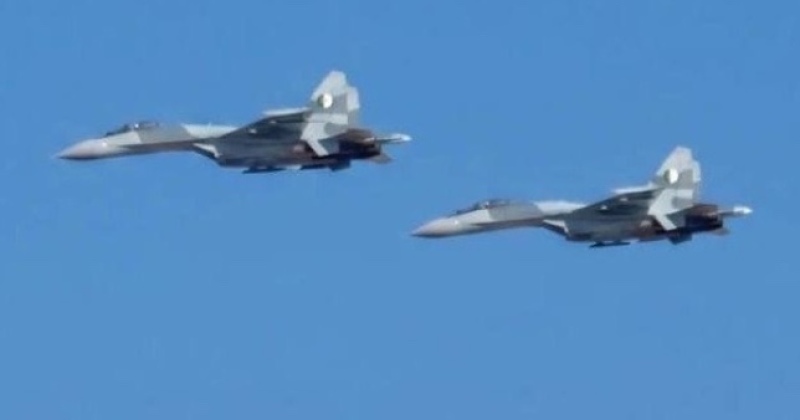
The Algerian Air Force has confirmed the operational integration of Su-35 air superiority fighters, with the first image of the aircraft in flight within its service recently released. This significant visual confirmation shows the advanced stage of Algeria's military modernization efforts. The image, which circulated widely, definitively showed Su-35 air superiority fighters operating within the Algerian Air Force, marking a key moment in the nation's defense capabilities. This development follows earlier reports in late 2024 indicating Algeria had placed orders for the advanced fighter jets, a move that drew international attention. Deliveries of the Su-35s to Algeria officially commenced in March 2025, initiating the rollout of these sophisticated aircraft into the Algerian fleet. Algeria has reportedly begun receiving its initial batches of all three of Russia’s heaviest and most complex fighter types currently in production within a 15-month timeframe, marking a significant and rapid modernization of its air capabilities. This full acquisition strategy notes a concerted effort to enhance the nation's aerial defense and strike capacities with some of the most advanced military aviation technology available globally.
New Generation of Russian Jets Arrive
The integration of these new aircraft has been a phased process, with various confirmations emerging over recent months. Footage released in mid-June confirmed the delivery of Su-34 strike fighters to Algeria, adding a potent ground attack component to the air force. These Su-34s are known for their long-range precision strike capabilities, further diversifying Algeria's offensive options. Separately, late February saw the release of footage confirming the arrival of Su-57 fifth-generation fighters in the country, a landmark acquisition that places Algeria among a select few nations operating such advanced stealth aircraft. The Su-57 represents the pinnacle of Russian fighter technology, designed for air superiority and strike missions with stealth characteristics. The integration of the advanced R-77M air-to-air missile was also confirmed in mid-2025, further enhancing the capabilities of Algeria's air fleet by providing a advanced long-range engagement option. The R-77M missile is an active radar-guided long-range air-to-air weapon, key for modern aerial combat scenarios.
These additions signify a substantial upgrade to the Algerian Air Force's operational strength, providing a multi-layered defense and offense capability. The Su-57 is a stealth multirole fighter jet, offering a blend of air-to-air and air-to-ground capabilities with reduced radar cross-section. The Su-34, on the other hand, is a dedicated strike aircraft designed for precision bombing and ground attack missions, capable of operating in all weather conditions. The Su-35, now officially operational, is an advanced 4++ generation multirole fighter, known for its superb maneuverability and advanced avionics. The J-20, J-35, and F-35 are considered among the world’s most advanced fighter types, placing the Su-57 in a competitive class globally and showing the strategic importance of Algeria's acquisition of this fifth-generation platform.
Algeria's Evolving Air Fleet
The Algerian Defence Ministry is estimated to have procured 18 Su-35 fighters, significantly bolstering its aerial combat power. This new fleet complements its existing formidable air assets, including over 70 Su-30MKA fighters already in service with the Algerian Air Force. The Su-30MKA aircraft have been a cornerstone of Algeria's air defense for years, providing strong multirole capabilities. Orders for the Su-30MKA fighters were placed gradually over a 13-year period, specifically between 2006 and 2019, reflecting a long-term strategy of consistent modernization. Both the Su-30MKA and the recently acquired Su-35 are described as heavily enhanced '4+ generation' derivatives of the Soviet Su-27 Flanker, a testament to the enduring design and continuous evolution of this successful platform.
The Su-35 was developed close to a decade after the Su-30MKA, incorporating technological advancements that set it apart from its predecessor. Among these enhancements, the Su-35 benefits from supercruise capabilities, a feature that the Su-30 lacks, allowing it to sustain supersonic flight without using afterburners. This capability significantly improves combat persistence and operational reach. The Su-35 features more powerful engines, an advanced radar system, and improved avionics, providing superior situational awareness and engagement capabilities. The integration of these advanced features makes the Su-35 a formidable adversary in aerial engagements. Until the recent delivery of the Su-57 to Algeria, the Su-35 was widely considered the most capable fighter type in Africa and likely across the Arab world, showing its significant role in regional air power dynamics and its status as a premier air superiority asset.
Broader Defense Modernization Strategy
Algeria's defense acquisitions align with a broader strategy to modernize its armed forces, particularly given its status as the largest country by far in Africa. This geographical expanse necessitates a strong and modern military to ensure national security and project regional influence. The Algerian Defence Ministry has increasingly diversified its procurement, placing orders for Chinese warships, air defense systems, electronic warfare systems, and other advanced assets. This expansion indicates a full approach beyond just air power, focusing on a multi-domain defense strategy that includes naval, ground-based air defense, and electronic warfare capabilities. The acquisition of Chinese naval vessels suggests a desire to enhance its maritime security and project power across its extensive coastline. Similarly, investments in air defense systems aim to create a layered defense against potential aerial threats.
The diversification of suppliers, including Russia and China, allows Algeria to access a wide range of advanced military technologies and avoid over-reliance on a single source. This strategic approach ensures that Algeria's armed forces are equipped with modern capabilities across all branches. Looking to the future, the J-35, a Chinese-developed fighter, is considered a leading candidate to further modernize Algeria's diverse fleet. This potential acquisition would introduce another advanced stealth fighter into the Algerian Air Force, further solidifying its position as a leading military power in the region. The continuous investment in advanced military hardware shows Algeria's commitment to maintaining its national security and strategic interests in an increasingly complex geopolitical landscape.