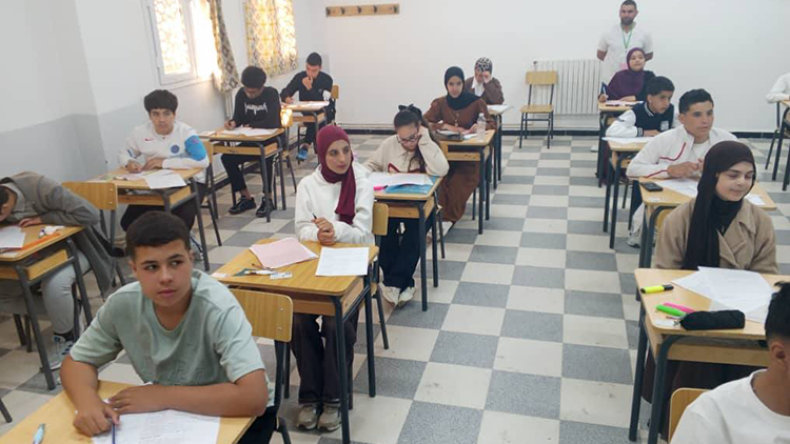
The second day of Algeria's "Biem" middle school exams occurred on May 20, 2026, with students undertaking tests in mathematics and English. The nationwide assessment continued as scheduled across the country, drawing participation from a vast number of middle schoolers preparing for their transition to secondary education. This key examination period is a significant milestone in the Algerian educational system, determining students' progression.
Challenging Mathematics Paper
The mathematics exam, administered on the second day of Algeria's "Biem" middle school assessments, reportedly relied heavily on prior knowledge and was described as exhausting for some candidates. The paper focused on lessons covered during the first and second semesters of the academic year, placing a significant emphasis on previously acquired mathematical concepts. Many exercises within the exam required a systematic understanding of principles and demanded mathematical thinking from students, rather than posing direct questions that could be answered through simple recall. This structure necessitated a deep engagement with the subject matter, challenging students to apply their cumulative understanding. The nature of the questions, which often presented complex problems requiring multi-step solutions, contributed to the perception of the exam as particularly difficult for some participants. The rigorous demands of the mathematics paper meant that students had to draw upon a broad range of skills developed throughout the academic year.
English Exam Offers Respite
The English examination, administered on the second day of the "Biem" middle school assessments, reportedly offered a contrasting experience to the mathematics paper. Candidates found the English exam questions to be better than anticipated, which contributed to a boost in their morale. The paper concentrated on fundamental learning acquired during the first and second semesters of the academic year. Its structure emphasized the application of linguistic and grammatical foundations, allowing students to demonstrate their understanding of core English concepts without encountering the same level of difficulty reported in the mathematics assessment. Students were generally more optimistic about their performance in English, a feeling that provided a welcome relief after the challenging mathematics session. The questions were structured to assess basic comprehension and application of language rules, which students found manageable and reflective of their classroom learning. This positive experience in the English exam helped to alleviate some of the stress accumulated during the earlier mathematics test.
Environmental and Special Circumstances
High temperatures impacted examination conditions across numerous provinces. Several educational institutions reportedly lacked adequate ventilation or air conditioning, which contributed to discomfort for students. The heat created challenging environments within examination halls, potentially affecting students' concentration and overall performance. Despite these environmental challenges, the examination process accommodated students with special needs, including those who had sustained injuries. These students were able to participate in the middle school assessment alongside their peers, ensuring inclusivity in the national examination. Special arrangements were made to facilitate their participation, demonstrating a commitment to providing equal opportunities for all candidates. The logistical efforts to manage both the widespread heat and individual student needs noted the complexities of administering a nationwide exam.
Expert Review and Future Considerations
Experts suggest a review of the official examination schedule, recommending that climate conditions be taken into account. The suggestion follows assessments completed under challenging environmental factors, including high temperatures. This consideration aims to optimize future examination periods for student comfort and performance, ensuring that external elements like heat do not unduly impact the assessment process in Algeria. The call for a schedule review shows the importance of creating optimal conditions for students to demonstrate their knowledge fairly. Such a review would involve assessing historical weather patterns and potentially shifting exam dates to cooler periods of the year. This proactive approach seeks to mitigate the adverse effects of extreme weather, thereby supporting better student outcomes and a more equitable testing environment for all participants in the "Biem" examinations.