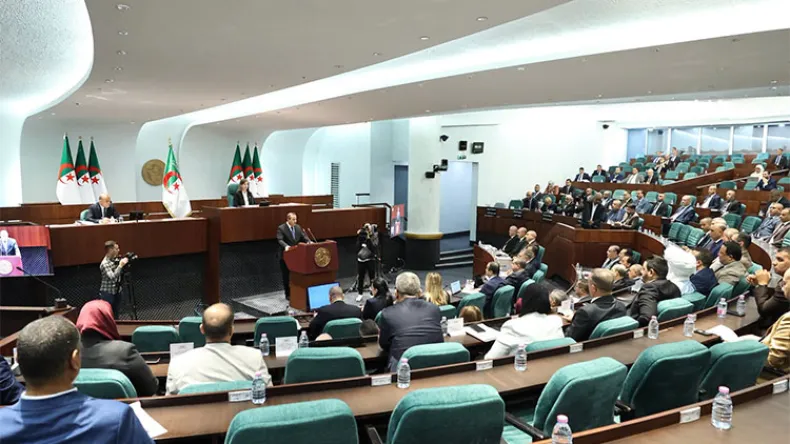
The National People's Assembly held its first session to discuss the 2027 Finance Bill on 2 November 2026. Lawmakers in Algeria gathered to begin formal deliberations on the proposed fiscal measures and budgetary priorities for the upcoming year. The proceedings marked the commencement of the legislative review process regarding the government's economic agenda. Members of parliament representing various political factions attended the session to examine the draft legislation. Officials are scheduled to evaluate the specific allocations and tax provisions outlined within the document in the coming days. The assembly will continue to debate the bill as part of the official budgetary cycle. The legislative body serves as the primary forum for these fiscal evaluations, ensuring that the proposed government spending aligns with national requirements.
Economic Strategy and Production
Deputy Yacoub Ben Issa of the National Liberation Front argued that the government must shift its focus toward internal industrial output and employment metrics. During the session, he stated: "The strength of the economy is not measured by the volume of resources it consumes, but by what it can produce in terms of wealth and jobs." His position reflects a parliamentary push to move beyond historical reliance on resource consumption as the primary indicator of national financial health. By prioritizing domestic production, the deputy suggested that the state could foster a more resilient economic environment, moving away from past dependencies and toward a model defined by tangible output and workforce development.
Infrastructure expenditures and their operational outcomes also drew scrutiny from assembly members. Deputy Nourredine Belhouari of the Movement of Society for Peace reported that the cancer treatment hospital in Tlemcen required 10 billion dinars to build. However, he noted that the facility is currently operating at only 35 percent of its capacity. The discrepancy between the initial capital investment and the current service output served as a focal point for lawmakers evaluating the efficiency of state-funded projects. This specific case prompted a wider discussion regarding the utility of large-scale capital investments that fail to reach full operational potential.
Broadening the scope of fiscal reform, lawmakers collectively called for specific structural adjustments to the national budget. Parliamentarians advocated for expanding the tax base and integrating the informal market into the formal economy to increase state revenues. These representatives also demanded improved oversight mechanisms regarding public spending. The proposed measures aim to ensure greater transparency and accountability in how government funds are allocated and utilized throughout the 2027 fiscal year. By focusing on these structural reforms, the assembly aims to stabilize the national financial position and improve the efficacy of public service delivery. The debate remains ongoing as lawmakers continue to scrutinize the document, seeking to balance the need for increased revenue collection with the necessity of maintaining stringent control over the distribution of state resources.