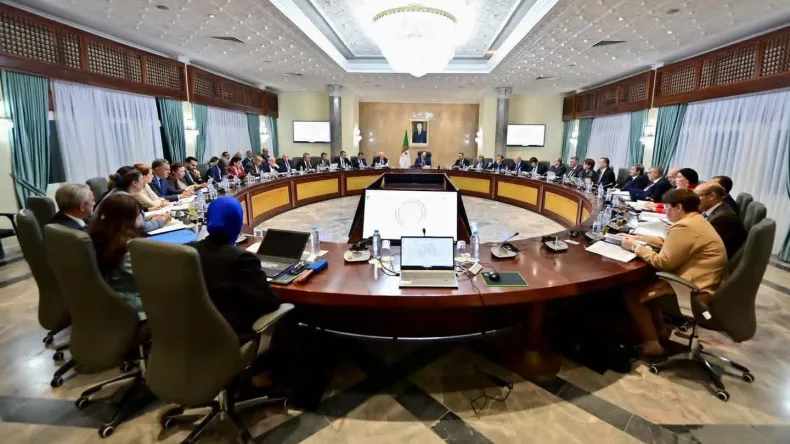
Prime Minister Sifi Ghebri chaired a government meeting on Wednesday in Algeria. The session focused on strengthening national initiatives concerning radiation safety and social mapping efforts, showing the government's commitment to public welfare and strategic planning.
Radiation Safety Regulations Detailed
The Algerian government meeting addressed a draft executive decree outlining safety regulations for ionizing radiation sources and general radiation protection. This key document, which was a central point of discussion, defines specific safety rules for ionizing radiation sources and radiation protection, aiming to create a strong regulatory framework. The proposed decree establishes specific rules aimed at safeguarding individuals and the environment from potential hazards associated with radiation exposure, ensuring a full approach to managing these risks.
The primary objective of the draft decree is to reinforce the national radiation protection system. This reinforcement includes establishing full frameworks for occupational, medical, and public exposures to radiation, providing clear guidelines for various scenarios where radiation might be encountered. Additionally, the decree seeks to enhance the management and control of radiation sources across various sectors, from industrial applications to healthcare facilities. The initiative represents a concerted effort by the Algerian authorities to update and strengthen existing protocols, ensuring a higher standard of safety for workers, patients, and the general population in contexts where radiation sources are present or utilized. This proactive measure reflects the government's dedication to mitigating risks associated with radiation technology and ensuring public health.
Algeria's Social Map Development
The Algerian government also reviewed a presentation detailing the executive plan for establishing the social map of Algeria. This initiative aims to provide a full overview of the country's social landscape, offering a detailed understanding of the diverse conditions across its regions. The government studied this presentation on the executive plan for creating the social map of Algeria, noting its importance for future policy-making.
The social map plan is founded on an organized methodology, which employs specific indicators to evaluate both the human dimension and the geographical reality of various regions across Algeria. This structured approach ensures that the data collected is consistent and comparable, allowing for meaningful analysis. These indicators allow for a detailed analysis of social conditions and needs, providing a granular view of challenges and opportunities in different areas. The plan is based on an organized methodology evaluated using indicators covering the human dimension and geographical reality of regions, ensuring a holistic perspective.
Areas designated for analysis within the social map project include demographics, education, and health, which are fundamental pillars of social well-being. The plan also covers living conditions, the availability of basic services, and factors related to mobility and regional connectivity, all of which significantly impact the quality of life for citizens. The analysis will address environmental and climatic vulnerabilities unique to different areas, providing a holistic view of the social and environmental factors affecting Algerian communities. The areas selected for analysis for the social map include demographics, education, health, living conditions, availability of basic services, mobility, regional connectivity, and environmental/climatic vulnerabilities, ensuring a thorough assessment.
Strategic Goals of Social Mapping
The ultimate goal of Algeria's social map initiative is to improve the assessment of social and economic needs nationwide. Its development aims to enhance the targeting and prioritization of public policies, ensuring a fairer distribution of resources across different regions and communities. This strategic approach seeks to provide decision-makers with detailed data to inform interventions and address disparities effectively, leading to more equitable development outcomes. The ultimate goal of the social map is to improve the assessment of social and economic needs, enhance targeting and prioritization of public policies, and ensure fairer distribution of resources, thereby fostering balanced national growth.