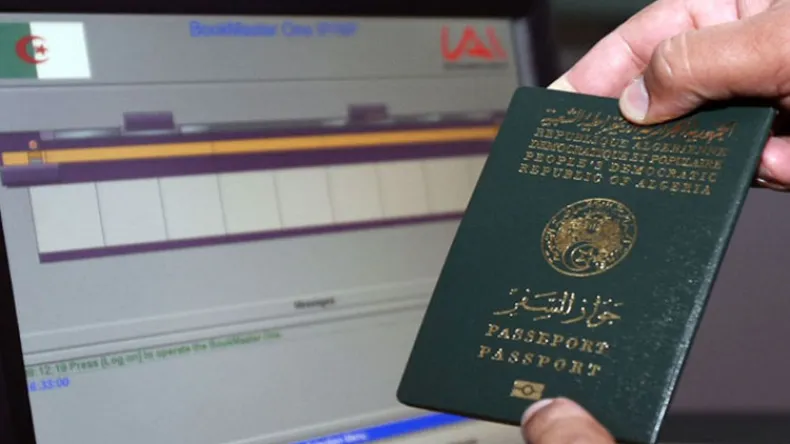
Algerian authorities have uncovered a "parallel administration" operating within the biometric services department in the Hussein Dey municipality, Algiers, which illegally issued passports abroad. This illicit network reportedly charged individuals between 5 and 8 million centimes for these unauthorized services. Investigations revealed that the amounts were collected for biometric passports obtained through irregular channels. The discovery points to a sophisticated scheme that allowed individuals to circumvent official procedures for obtaining vital travel documents.
A key suspect, ب. إيمان (B. Iman), who was responsible for delivering biometric documents, admitted to facilitating the extraction of passports for individuals located in Dubai and other foreign countries. B. Iman confirmed that these passports were processed without the physical presence of the applicants, with a charge of 50,000 DZD per passport for the illicit service. This operation bypassed standard procedures, allowing individuals to obtain official documents through unofficial means. The discovery notes a sophisticated scheme to circumvent national passport regulations for profit, indicating a significant breach in the integrity of the passport issuance system.
The Illegal Operation Unveiled
The illicit administration reportedly facilitated the extraction of biometric passports for individuals without their physical presence, circumventing official requirements. This parallel administration, established within the biometric services department in the Hussein Dey municipality, Algiers, actively enabled the issuance of these documents. Investigations revealed that the suspect T. Rétiba stated a woman named Najia approached her in 2022 seeking assistance to extract biometric documents for her family members residing abroad. This initial contact set in motion a series of illicit activities. The scheme involved various illegal charges, including obtaining travel documents through false certificates, abuse of influence, offering undue advantages to public officials, and the intentional destruction of official documents. These practices show the depth of the corruption and procedural violations involved in the network's operations.
B. Iman, a key figure in the operation, confirmed her involvement in extracting five passports for individuals located abroad, all processed without the applicants being physically present. This admission provided key insight into the scale and nature of the illicit services. Najia requested assistance in obtaining biometric documents for several acquaintances, including those located outside Algeria, with charges for these services reaching up to 50,000 Algerian Dinars per document. This network allowed individuals to acquire official Algerian travel documents through an unauthorized parallel system, bypassing the standard legal procedures for passport issuance. The establishment of this parallel system within a government department represents a serious breach of public trust and national security protocols.
The operation's methodology was designed to bypass the stringent requirements typically associated with passport applications, particularly the mandatory physical presence of the applicant. This circumvention was central to the illicit service offered, enabling individuals abroad to obtain Algerian passports without returning to the country or appearing before official authorities. The fees charged for these services, ranging between 5 and 8 million centimes per passport, reflect the high demand for such illicit access to official documents. This pricing structure also indicates the significant profit motive driving the individuals involved in the parallel administration. The ability to issue official documents through such unauthorized channels raised serious questions about the oversight and security measures in place within the biometric services department.
Key Figures and Their Roles
The investigation into the parallel administration began with the suspect T. Abdelkader, who was placed in temporary detention on October 29, 2025. Authorities are examining his alleged involvement in the illicit passport scheme which operated out of the biometric services department in Hussein Dey municipality. The detention of T. Abdelkader marked a significant development in uncovering the network's operations and provided an initial lead for investigators. His case is central to understanding how the illicit system was put into practice and who were the primary facilitators.
Further details emerged regarding specific transactions within the network. In 2024, Najia reportedly contacted T. Rétiba to facilitate the extraction of a passport for T. Taybi Abdelkader, who was residing abroad. This service was provided for a payment of 50,000 Algerian Dinars, demonstrating the financial transactions involved in bypassing official procedures. The incident notes how individuals living outside Algeria utilized the illicit system to obtain official documents, showing the international reach of this parallel administration. This specific transaction illustrates the direct financial exchange for circumventing legal requirements, providing concrete evidence of the scheme's operational mechanics.
Another key figure, B. Iman, was compensated for her role in the scheme. She received 80,000 DZD for the last two passports she extracted for B. Abbas, according to investigative findings. This financial transaction shows the profit-driven nature of the operation and the specific roles individuals played in its execution. The payments confirm the systematic nature of the illicit services offered, demonstrating that the individuals involved were motivated by personal gain. B. Iman's admissions and the financial records provided key evidence of the network's internal workings and the distribution of illicit proceeds.
During the ongoing investigation, suspect T. Rétiba was also implicated. She was subsequently placed under observation for abuse of office, indicating her alleged involvement in leveraging her position to facilitate the illegal activities. The measure against T. Rétiba points to potential corruption within official channels that enabled the parallel administration to operate. Her role as a public official would have been critical in navigating bureaucratic hurdles and ensuring the illicit passports were processed and issued. The charges against her highlight the internal complicity required for such a scheme to thrive within a government department.
A biometric passport was officially issued for T. Abdelkader, born in 1987, on November 28, 2024. This issuance date provides a concrete example of a document processed through the discovered illicit network. The passport's issuance without the applicant's physical presence, as confirmed by other aspects of the investigation, further substantiates the claims of a parallel system circumventing standard regulations. This specific instance serves as tangible proof of the network's success in producing official documents through illicit means, directly challenging the integrity of the national identification system.
The investigation has meticulously pieced together the roles of various individuals, from those directly handling the documents to those facilitating payments and making initial requests. The interconnectedness of these figures, including Najia, T. Rétiba, B. Iman, and T. Abdelkader, paints a clear picture of a structured and organized criminal enterprise operating within a critical government service. The sustained nature of these operations, spanning from 2022 to at least 2025 based on the detention date of T. Abdelkader, suggests a deeply entrenched system that managed to evade detection for a considerable period.
Digital Evidence and Financials
The financial exchange for passport extraction ranged between 8 million and 10 million centimes, with the total amount intended to be split equally between involved parties. This detailed financial arrangement points to a well-organized profit-sharing model among the members of the parallel administration. Electronic searches of suspects' phones revealed their involvement in the illegal processing of biometric documents. These digital forensics provided invaluable evidence, connecting individuals to specific transactions and communications related to the illicit activities.
One suspect, Issam, reportedly paid 2,000 Algerian Dinars for his passport and an additional 20,000 Algerian Dinars for his biometric ID card, which was subsequently delivered to his brother. This particular transaction notes the range of documents being illegally processed and the methods of delivery employed by the network. Investigations uncovered conversations via Viber and WhatsApp on the suspects' devices, along with photos of passports and ID cards that provided irrefutable evidence of the illicit activities. These digital communications served as a direct window into the planning, execution, and financial aspects of the scheme. A specific conversation indicated a payment of 4 million centimes designated for one party, with the other party receiving the same amount, illustrating the precise financial arrangements within the network. This digital trail proved instrumental in corroborating witness statements and building a strong case against the implicated individuals. The presence of photos of official documents on personal devices further solidified the evidence of their direct involvement in the fraudulent issuance process.
The digital evidence, including messaging app conversations and photographic proof of documents, provided a full overview of the network's operations. It demonstrated how individuals communicated to arrange services, confirm payments, and coordinate the delivery of illegally obtained passports and ID cards. The careful documentation of these exchanges by the suspects themselves inadvertently provided law enforcement with a clear blueprint of the "parallel administration's" daily functioning and its financial logistics. This trove of digital information was key for investigators to understand the scope of the operation and to identify all involved parties.
Legal Proceedings and Court Date
The Hussein Dey court in Algiers was scheduled to issue its rulings on the case on Monday, September 14th. This date marks a significant point in the legal process following the extensive investigation into the "parallel administration" operating within the biometric services department. The court's decision will address the serious charges related to the illegal issuance of passports abroad and the involvement of various individuals in the elaborate scheme. The proceedings aim to conclude the judicial phase concerning the network that facilitated unauthorized travel document acquisition, bringing those responsible to justice. The outcome of these proceedings is highly anticipated, as it will not only determine the fate of the accused but also send a strong message regarding the integrity of official document issuance in Algeria. The legal process is expected to delve into all aspects of the evidence gathered, including witness testimonies, financial records, and digital forensics, to ensure a thorough and just resolution.