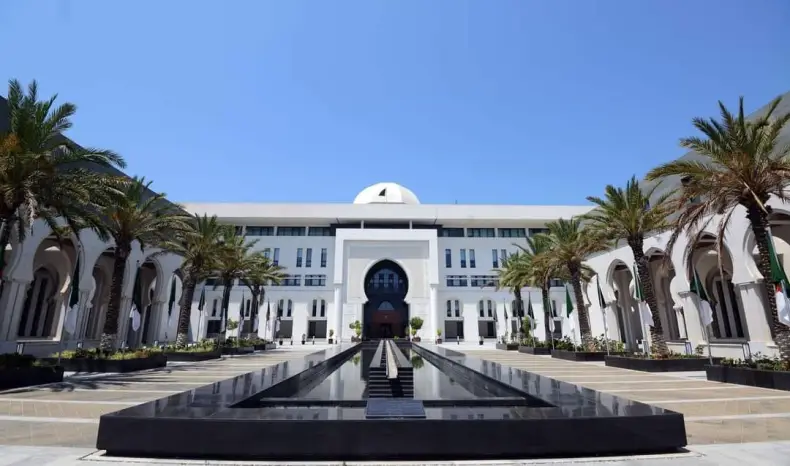
Algeria welcomed a framework agreement between the United States of America and the Islamic Republic of Iran, aimed at halting military operations in the Gulf region and the broader Middle East. The Algerian Ministry of Foreign Affairs issued a statement on Monday, June 15, describing the development as a positive step toward reducing tensions and promoting regional stability. The Ministry affirmed, "Algeria welcomes the framework agreement reached between the United States and the Islamic Republic of Iran to cease military operations in the Gulf region and the Middle East." This significant diplomatic achievement is seen by Algiers as a key step towards de-escalation in a volatile region. The framework agreement signifies a mutual commitment from both Washington and Tehran to move beyond military posturing and towards a more stable environment.
Regional Stability Hopes
Algeria expressed hope that the agreement would serve as a foundation for rebuilding confidence between the concerned parties. The Algerian government stated this could create favorable conditions for addressing remaining disputes through dialogue and diplomacy. Algiers further expressed its expectation that the initiative could contribute to achieving "lasting and sustainable security" in the region. The Algerian government reaffirmed its support for diplomatic efforts aimed at maintaining peace and stability in the Middle East, while also seeking to reduce the risk of wider regional confrontation. This commitment to fostering an environment conducive to peaceful resolutions notes Algeria's consistent foreign policy stance. The nation believes that sustained dialogue is the most effective path to resolving complex international issues and preventing further escalation of conflicts.
Appreciation for Diplomacy
The Algerian Ministry of Foreign Affairs expressed appreciation for the diplomatic efforts that culminated in the agreement, specifically acknowledging the mediation roles played by Pakistan and Qatar. The ministry emphasized the significance of these contributions in fostering dialogue between the United States and the Islamic Republic of Iran. A statement from the Ministry reiterated Algeria's stance, affirming, "Algeria welcomes the framework agreement reached between the United States and the Islamic Republic of Iran to cease military operations in the Gulf region and the Middle East." The ministry further stressed the critical importance of all involved parties adhering to their commitments and implementing the understandings established within the framework of the agreement to ensure its success and durability. This adherence, according to the Algerian government, is critical for the long-term effectiveness of the agreement and for building lasting trust. The acknowledgement of Pakistan and Qatar's mediation shows the value Algeria places on multilateral diplomatic engagement in resolving international disputes.
Algeria's Stance
Algeria has historically championed political solutions, dialogue, and respect for international law as primary means of addressing regional and international conflicts and crises. The country's diplomatic approach has consistently favored de-escalation and negotiated settlements over military intervention. This long-standing position shows its current welcome of the framework agreement between the United States and the Islamic Republic of Iran. Algiers has frequently advocated for multilateral engagement to resolve disputes, aligning with its broader foreign policy principles. The Algerian government's emphasis on adherence to commitments reflects its consistent call for all parties to uphold international agreements and legal frameworks. This principled approach aligns with Algeria's deep-seated belief that international cooperation and mutual respect are essential for global peace and security.
Context of Tensions
The agreement between the United States and the Islamic Republic of Iran follows a period of heightened tensions between Washington and Tehran. This phase of increased friction had lasted for more than 100 days prior to the framework agreement being announced. The prolonged period of elevated tensions had raised concerns across the international community about potential wider instability in the Middle East. The framework agreement, therefore, represents a significant de-escalation from a period marked by considerable geopolitical unease and military readiness. Its announcement offers a potential pathway out of a cycle of confrontation that had characterized the relationship between the two nations for several months.