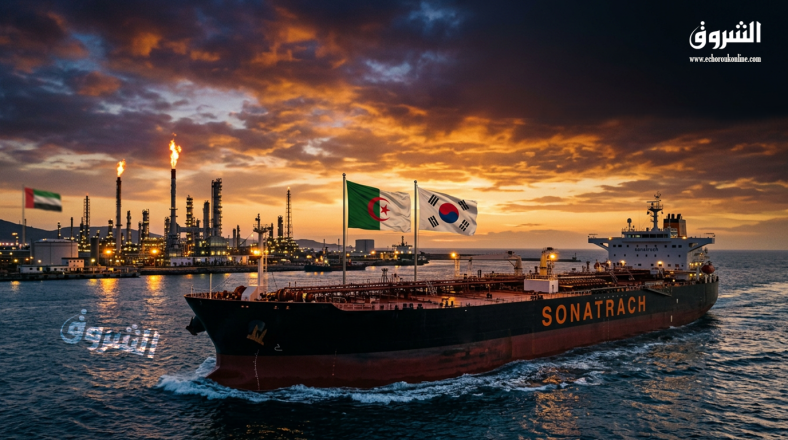
Algeria emerged as the leading supplier of naphtha to South Korea during the first half of 2026, marking a significant shift in trade dynamics. Its share of South Korea's naphtha imports reached 17.2% for the period. This advancement saw Algeria surpass the UAE for the first time, as the UAE had been the top supplier in both 2024 and 2025. This development shows Algeria's growing importance in the global energy market, particularly for key industrial nations like South Korea. Naphtha is an essential raw material for the Korean petrochemical industry, which continues to rely heavily on imports to meet its operational demands. The increasing volume of Algerian naphtha notes a successful diversification of supply for South Korean refiners and chemical manufacturers.
Shifting Trade Dynamics
During the first half of 2026, the UAE accounted for 14.5% of South Korea's naphtha imports. The United States supplied 13.0% of these imports, establishing itself as another significant source for the East Asian nation. India's share stood at 9.7%, contributing to the diverse portfolio of suppliers. The Sultanate of Oman contributed 9.3% to South Korea's naphtha imports for the same period, further illustrating the broad geographic spread of South Korea's energy procurement. Algeria's market share in South Korea's naphtha imports has shown a consistent increase, rising from 12.9% in 2024 to 15.6% in 2025, according to trade data. This upward trajectory positioned Algeria as a significant and growing supplier to the South Korean market, culminating in its top position in the first half of 2026. This consistent growth reflects a strategic shift in South Korea's import patterns and Algeria's enhanced export capabilities.
Algeria's Export Strengths
Hydrocarbons constitute approximately 90% of Algeria’s total exports and account for about 65% of the country's state revenues, emphasizing the sector's critical role in its economy. Algeria possesses five refining complexes, including the Skikda complex, which collectively have an annual processing capacity exceeding 30 million tons. This substantial domestic refining capacity supports Algeria's ability to process crude oil into various products, including naphtha, for international sale, rather than solely exporting raw crude. A notable advantage for Algeria’s energy exports to Asian markets is that its supply routes do not traverse the Strait of Hormuz. This bypass of a critical maritime chokepoint offers logistical and security benefits for shipments destined for regions like South Korea, providing a more secure and potentially more reliable alternative compared to traditional Middle Eastern suppliers. This geographical advantage contributes to the attractiveness of Algerian energy products for long-term supply agreements.
South Korea's Import Reliance
The reported figures detailing South Korea's naphtha imports are derived from trade statistics compiled by the Korea International Trade Association (KITA). Additional data from the Korea Trade-Investment Promotion Agency (KOTRA) also contributed to these findings, ensuring a full and verified dataset. Both organizations base their assessments on customs heading HS 2710.12.4000, which specifically categorizes light oils and preparations, including naphtha. This specific classification ensures consistency in tracking the trade of this key petrochemical feedstock, allowing for accurate comparison of import volumes and supplier shares over time. The reliance on these established trade bodies provides a standardized framework for understanding the shifts in South Korea's supply chain for imported naphtha, which remains vital for its industrial output. South Korea's petrochemical industry, a cornerstone of its economy, depends heavily on a steady and diversified supply of naphtha.
Future Cooperation Outlook
The Embassy of the Republic of Korea in Algeria has affirmed its commitment to fostering stronger economic ties between the two nations. This support specifically extends to facilitating the expansion of cooperation in various sectors, including energy. The embassy's statement indicates a continued diplomatic effort to build upon existing trade relationships, such as the recent surge in Algerian naphtha exports to South Korea. Such sustained engagement suggests a strategic interest in diversifying and strengthening supply chains for critical industrial raw materials, aligning with South Korea's broader energy security goals. The ongoing discussions and diplomatic assurances point towards potential further collaboration beyond current trade volumes, possibly encompassing investments or technology transfers in the energy sector. This mutual interest in economic partnership could pave the way for even deeper trade relations in the coming years.