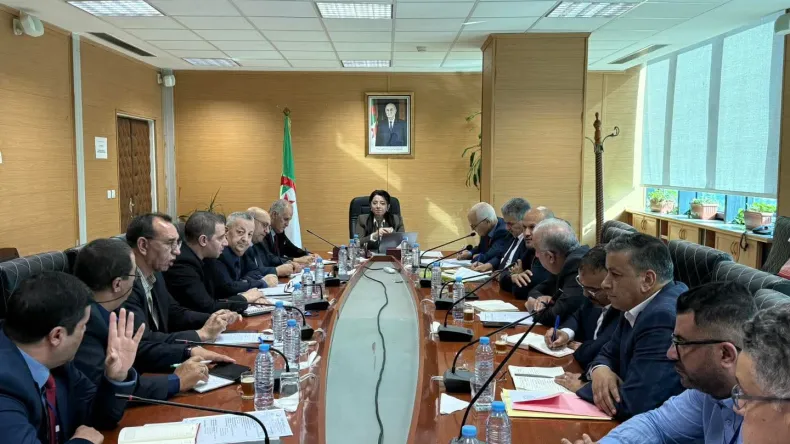
Minister of Internal Trade and Market Regulation Amel Abdel Latif convened a coordination meeting with economic operators within the sugar and oil production sector on 26 October 2026. This gathering in Algeria aimed to organize supply chains ahead of the upcoming Ramadan period. Participants discussed the distribution logistics required to maintain consistent market availability for these essential commodities. Amel Abdel Latif reviewed current production capacities and storage levels to ensure that retailers remain adequately stocked during the high-demand season. The discussions also addressed potential bottlenecks in the supply chain that could impact consumer access to sugar and oil. Industry representatives provided updates on their distribution schedules, confirming their readiness to meet the projected market requirements throughout the month.
Monitoring Regional Supply Chains
Amel Abdel Latif conducted a remote meeting with regional trade directors on 20 October 2026. The discussion focused on establishing a decentralized mechanism for the daily monitoring of both commodity prices and supply chain integrity across the country. By delegating oversight to regional offices, the Ministry of Internal Trade and Market Regulation intends to track market fluctuations in real-time as the Ramadan season approaches.
The Ministry of Internal Trade issued an official statement on 19 October 2026 to remind economic operators of their legal obligations regarding consumer transparency. All businesses are required to display prices and tariffs for every product and service offered to the public. Compliance with these posting requirements remains mandatory for retailers and service providers throughout Algeria.
Regulations dictate that failure to display prices and tariffs carries specific financial penalties for non-compliant businesses. Violations result in a fine ranging from 5,000 to 100,000 Algerian Dinars. These enforcement measures aim to ensure price stability and prevent arbitrary cost increases during periods of high consumer demand.
Digital oversight capabilities expanded on 25 October 2026 when the Ministry of Internal Trade launched a platform titled 'Tawasol - Voice of the Consumer'. The portal provides a mechanism for citizens to report price violations and supply issues directly to authorities. Data submitted through 'Tawasol - Voice of the Consumer' is intended to assist the Ministry in identifying local shortages or instances of non-compliance with established pricing regulations.