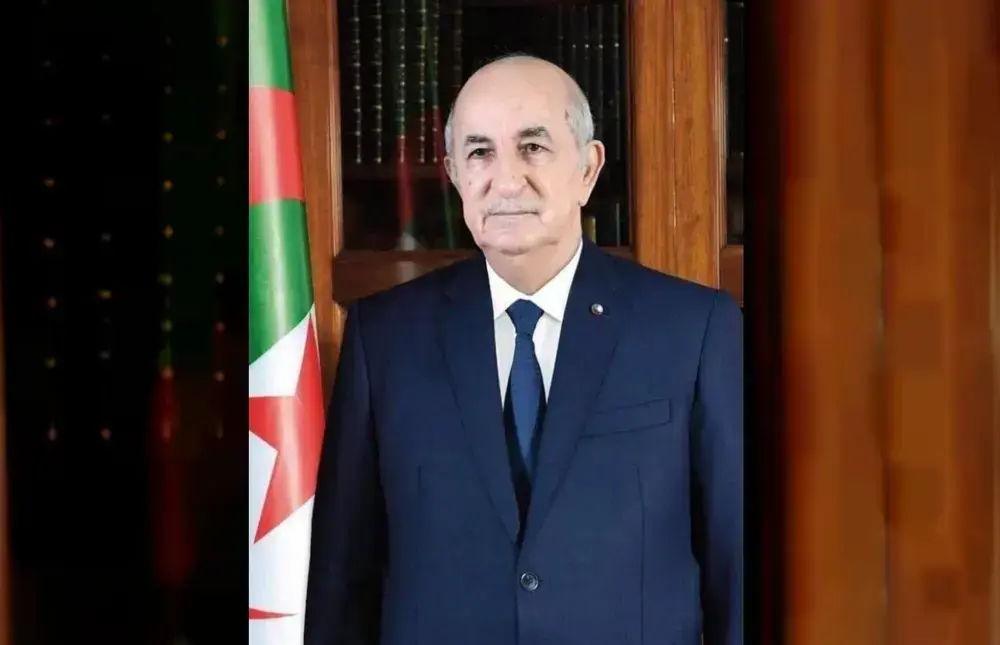
Prime Minister Sifi Ghrieb delivered an address on behalf of President Abdelmadjid Tebboune at the Third Russia–Africa Summit in Moscow on 29 October 2026. In the statement, President Abdelmadjid Tebboune noted that "our continent, with its rich history of struggle against all forms of colonialism, exploitation, and imposed fait accompli, remains steadfastly committed to the principle of self-determination in line with international legality." The President asserted that "achieving full security and stability on our continent imperatively requires eradicating the last remnants of colonialism in Africa, namely the issue of Western Sahara." President Abdelmadjid Tebboune further argued that "true stability cannot be imported or imposed by force; rather, it is a natural outcome of respecting state sovereignty, territorial integrity, and inclusive political dialogue led by the citizens of the country themselves."
The formal address, delivered by Prime Minister Sifi Ghrieb at the Third Russia–Africa Summit in Moscow on October 29, 2026, served as a platform for Algeria to outline its vision for continental security. During the proceedings, the Algerian leadership emphasized that the current geopolitical climate necessitates a renewed focus on the fundamental rights of African nations to govern their own affairs. By presenting this message at the Third Russia–Africa Summit in Moscow on October 29, 2026, the delegation sought to align its diplomatic objectives with the broader themes of the event.
Addressing Colonialism and Security
President Abdelmadjid Tebboune identified the issue of Western Sahara as the last remnant of colonialism on the African continent. His address detailed how this situation represents a direct obstacle to the collective progress of African nations. President Tebboune identified the issue of Western Sahara as the last remnant of colonialism in Africa, framing it as a primary concern for the African Union and the international community at large.
President Abdelmadjid Tebboune stated that illegal foreign interference in African states fuels tension and hinders development. He maintained that such external meddling prevents the establishment of stable political environments required for economic growth. According to his assessment, sovereignty must be preserved to ensure that African countries can address internal challenges without outside pressures disrupting their developmental trajectories. President Tebboune stated that illegal foreign interference in African states fuels tension and hinders development, noting that such actions create systemic instability that ripples across various sectors of society.
Algeria commended the UN Security Council's efforts regarding the resumption of negotiations between the parties to the Western Sahara conflict earlier in 2026. This acknowledgment followed recent diplomatic activities aimed at re-engaging the involved factions. Algeria expressed support for the established international framework intended to facilitate these discussions. The government maintains that the UN-led process provides the necessary path for resolving the ongoing dispute through structured dialogue. By advocating for this specific diplomatic channel, the administration in Algeria showed its belief that a lasting solution must be rooted in international consensus rather than unilateral maneuvers or the influence of external actors who do not share the continent's long-term interests.