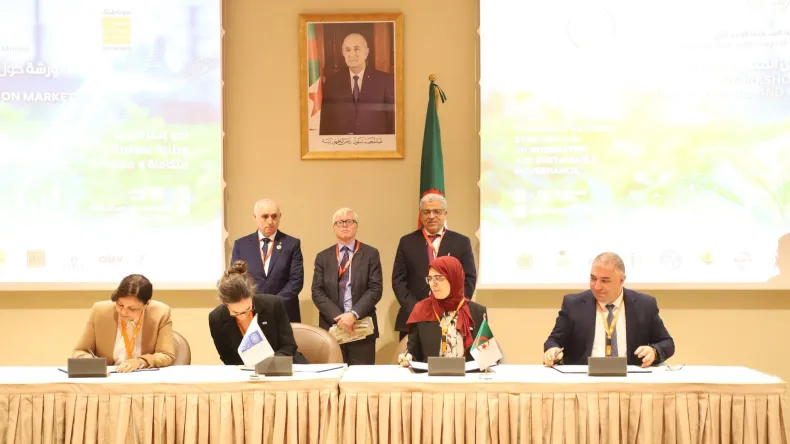
Minister of Labor, Employment and Social Security Mohamed Hattab announced that Algeria is prioritizing large-scale industrial and infrastructure developments to generate significant employment opportunities. These initiatives include the Gara Djebilet mine, the Baladna project, and several new seawater desalination plants. Mohamed Hattab stated that the zinc and lead mine located in Oued Amizour also forms a central part of this strategy. According to the Minister, these combined projects will create thousands of direct and indirect jobs for the national workforce. Government officials expect the construction and operational phases of these sites to provide a measurable boost to the domestic labor market.
The strategic focus on these industrial hubs is intended to diversify the national economy while simultaneously addressing the demand for professional roles across various sectors. By investing in mining, agriculture, and essential water infrastructure, the state aims to build a sustainable pipeline of employment that extends beyond the initial development phases of these projects. Each facility is being designed to integrate into the broader national strategy for economic growth, ensuring that the labor market benefits from both the physical construction of these assets and their long-term operational requirements.
Digitizing National Employment Services
The National Employment Agency maintains its operational framework under Law No. 04-19, which was dated 25 December 2004. This legislation governs the placement of workers and the monitoring of employment across Algeria. The National Employment Agency operates under Law No. 04-19, dated December 25, 2004, regarding the placement of workers and monitoring of employment. This regulatory foundation ensures that all job placement activities are conducted in accordance with established legal standards, providing a secure and organized environment for both employers and job seekers.
To improve mediation between job offers and applications, the National Employment Agency has provided 37 electronic services. These digital tools aim to streamline the processing of employment data and increase efficiency for the national workforce. By reducing the administrative burden associated with traditional recruitment, these services allow for a more rapid matching process between available vacancies and the skills held by the local workforce. The agency continues to refine these digital offerings to ensure they meet the evolving needs of the labor market.
Management also introduced the 'Wassit Online' service to facilitate remote interactions for users. This platform allows individuals to perform the registration, extension, and activation of job applications without visiting physical offices. The 'Wassit Online' service was introduced to allow for remote registration, extension, and activation of job applications. By enabling these core functions to be performed via the internet, the agency has significantly reduced the necessity for in-person appointments. This transition to a digital-first approach is part of a wider effort to modernize public services and improve accessibility for applicants residing in various regions across the country. Through these technological advancements, the National Employment Agency seeks to enhance the transparency and responsiveness of the national labor market.