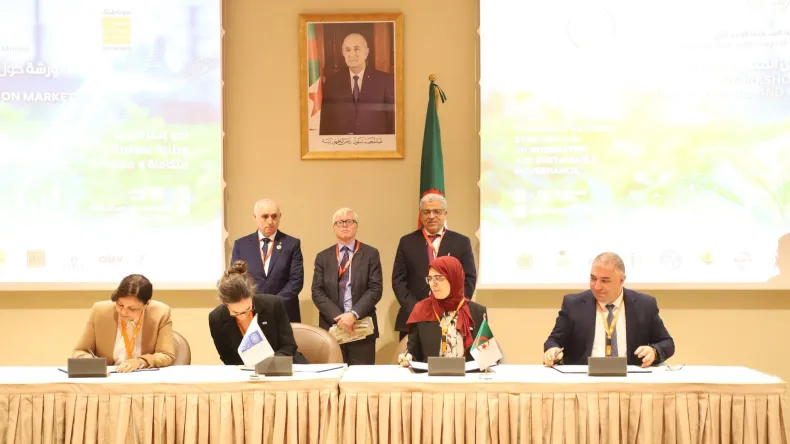
Algeria and the United Nations Development Programme signed a cooperation project agreement on Tuesday, November 3, 2026. This initiative focuses on two core energy objectives. The project aims to enhance Sonatrach's capabilities in measuring, reporting, and verifying methane emissions within its operations. In addition to emission monitoring, the agreement includes a technical and economic feasibility study for green hydrogen potential in Algeria. Both parties intend for the partnership to support the state energy company’s efforts to align with international environmental standards while evaluating the viability of sustainable fuel production. Officials finalized the documentation to initiate the collaborative work immediately.
Context of the Agreement
Officials signed the cooperation agreement on the sidelines of the National Workshop on Climate Finance and Carbon Markets. This event served as the venue for formalizing the partnership between Algeria and the United Nations Development Programme to address methane emissions and green hydrogen feasibility. The workshop provided a platform for representatives to discuss the integration of climate-conscious policies into the broader framework of the national energy sector.
Mohamed Arkab, Minister of State, Minister of Energy and Mines, stated: "Climate change has become one of the most prominent strategic challenges given its repercussions on national economies, energy and food security, water resources, and sustainable development."
The scope of this project is designed to provide Sonatrach with the necessary technical tools to improve transparency in its industrial processes. By focusing on the measurement, reporting, and verification of methane, the state energy company seeks to modernize its operational standards. The inclusion of a technical and economic feasibility study for green hydrogen potential in Algeria represents a strategic assessment of the country's future energy portfolio. This study will examine the logistical and financial requirements necessary for the potential development of green hydrogen, ensuring that any future infrastructure projects are grounded in rigorous data analysis.
Algeria maintains a defined target for emissions reductions under its nationally determined contribution. The country aims to reduce greenhouse gas emissions by 14 percent as part of its current climate strategy. This target could be raised to 31 percent, contingent upon the provision of international support. The alignment of the new methane and green hydrogen project with these national goals remains a key focus for the government. By working alongside the United Nations Development Programme, Algeria intends to leverage international expertise to meet these specific environmental benchmarks.
The collaborative effort between the Algerian government and the United Nations Development Programme shows a commitment to transitioning toward more sustainable industrial practices. The agreement facilitates a structured approach to assessing the potential of green hydrogen while simultaneously addressing the reduction of methane emissions within the energy sector. Through this partnership, officials aim to establish a framework that supports the long-term environmental objectives of the nation, ensuring that energy production remains consistent with international standards for climate responsibility and sustainable development. The initiative remains a central component of the ongoing efforts to integrate climate finance and carbon market strategies into the national energy landscape.