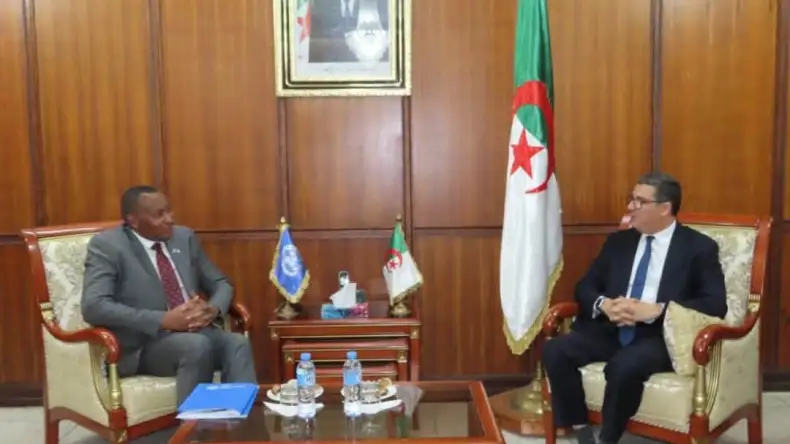
Algeria's Minister of Health, Mohamed Sidiq Ait Mesoudan, met with the World Health Organization (WHO) Representative in Algeria, Fanuel Habimana, on Wednesday, July 1st. The high-level meeting saw Minister of Health Mohamed Sidiq Ait Mesoudan formally receive WHO Representative in Algeria Fanuel Habimana to discuss the ongoing and future cooperation strategy between Algeria and the WHO for the period of 2026-2027. This significant gathering, which took place on Wednesday, July 1st, aimed to review future health collaboration between the North African nation and the global health body, emphasizing shared objectives in public health and regional development. The dialogue showed the commitment of both parties to advancing health outcomes and strengthening healthcare systems across the region.
Strategic Health Initiatives Discussed
During the meeting, officials delved into a range of strategic health initiatives. Discussions included the presentation of training programs offered by Algeria's National School of Management and Health Administration, noting the country's capabilities in professional development within the health sector. A key focus of the discussions was Algeria's pursuit of new international health certifications, a move aimed at enhancing the country's health standards and global recognition. This initiative is expected to elevate the quality and credibility of Algeria's healthcare services on an international scale. Additionally, the representatives addressed the provision of technical support for the Center for Tropical Disease Control located in Tamanrasset. This center plays a key role in managing and preventing tropical diseases within the region, and enhanced support from the WHO is anticipated to bolster its effectiveness in combating these endemic health challenges. The full agenda reflected a broad commitment to improving various facets of public health infrastructure and expertise in Algeria.
Algeria's Regional Health Ambitions
The discussions between Algeria and the WHO also centered on strengthening Algeria's role as a regional hub for health training and logistics across North Africa. This strategic focus aims to bolster the country's capacity to support health initiatives beyond its borders, positioning Algeria as a key player in regional health security and development. The parties discussed enhancing Algeria's position as a regional center for health training and logistics in North Africa, a role that would involve sharing expertise and resources with neighboring countries. This ambition aligns with the WHO's broader goals of fostering regional cooperation and building resilient health systems. The meeting showed Algeria's planned participation in the forthcoming WHO Regional Committee for Africa. The committee is scheduled to convene in Addis Ababa from August 25 to 28, where regional health priorities and strategies will be deliberated among health ministers and representatives from across the continent. Algeria's presence at this important event signifies its commitment to regional health leadership and cooperation with the World Health Organization on a continental level, further solidifying its influence and contributions to African health policy.
Commitment to Future Collaboration
The World Health Organization (WHO) representative, Fanuel Habimana, acknowledged the distinguished level of cooperation between the organization and Algeria's health sector, praising the collaborative spirit and effective partnership demonstrated over the years. Discussions during the meeting also included strengthening the national road safety strategy, aiming to enhance public health outcomes related to accident prevention and injury reduction. This particular initiative notes a multi-sectoral approach to public health, recognizing that health extends beyond traditional medical services. The officials addressed the objective of Algeria reaching Maturity Level 3 (ML3) in pharmaceuticals and vaccines. Achieving this level would signify a significant advancement in the country's regulatory and manufacturing capabilities for medical products, potentially enabling Algeria to produce more of its own essential medicines and vaccines, thereby enhancing health security and self-sufficiency. Both sides reaffirmed their joint will to continue strengthening bilateral cooperation and expanding its scope across various health domains, from disease control and prevention to health system strengthening and policy development. The full nature of the discussions shows a strong and forward-looking partnership between Algeria and the WHO, dedicated to improving public health for the nation and the broader region.