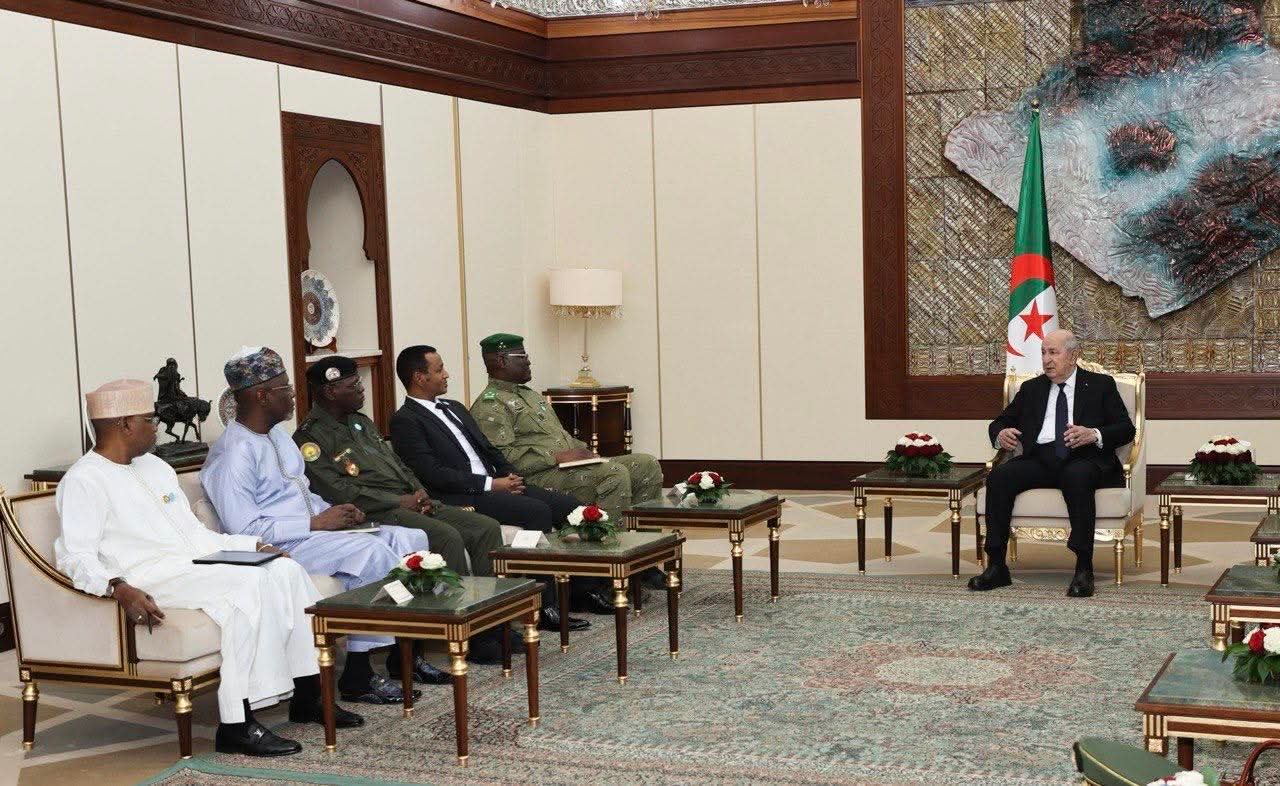
President Abdelmadjid Tebboune received a Nigerien delegation led by Major General Mohamed Toumba on Tuesday at the historic Palais d'El Mouradia in Alger. The high-level meeting brought together an extensive array of officials from security, diplomacy, and economy sectors from both countries. This multisectoral engagement, encompassing a broad spectrum of governmental expertise, aimed to lay the groundwork for a significantly strengthened partnership between Algeria and Niger. The detailed discussions focused on addressing pressing regional challenges collaboratively, emphasizing a full and integrated approach to shared concerns.
High-Level Delegation Meets
The Algerian delegation at the meeting was notably full, reflecting the strategic importance of the discussions. It included the Minister of Interior, Saïd Sayoud, overseeing internal security matters; Commander of the National Gendarmerie, General-Major Sid Ahmed Berroumana, responsible for national law enforcement; and Director General of National Security, Ali Badaoui, who leads the country's intelligence and security operations. Also present were Minister of State for General Inspection of State Services, Brahim Merad, noting governance and oversight; Minister of Foreign Affairs, Ahmed Attaf, guiding diplomatic efforts; and Presidential Advisor for Diplomatic Affairs, Amar Abba, providing high-level strategic counsel. The Algerian Ambassador to Niger, Ahmed Saadi, and the Director General of the Algerian Agency for International Cooperation for Solidarity and Development, Abded Hallouz, also attended, showing the commitment to bilateral relations and development initiatives. Minister of Energy and Renewable Energies, Mourad Adjal, and Minister of Agriculture, Rural Development and Fisheries, Yacine El-Mahdi Oualid, completed the Algerian contingent, signifying the economic and resource-focused dimensions of the talks.
Niger's delegation, led by Major General Mohamed Toumba, also represented key governmental functions. It included the High Commander of the National Guard, Colonel-Major Ahmed Sidian, and the Director General of the National Police, Commissioner General Ebankawel Assahaba, both key figures in national security. Minister of Foreign Affairs, Bakary Yaou Sangaré, contributed to the diplomatic dialogue, while Minister of Energy and Renewable Energies, Mme Amadou Haoua, and Minister of Agriculture and Livestock, Colonel Mahaman Elhadj Ousmane, focused on critical economic and resource development aspects. The presence of such high-ranking officials from both nations showed the seriousness and breadth of the proposed strategic alliance.
Focus on Security and Economy
Security and border issues formed a central part of the bilateral discussions between Algerian and Nigerien officials. The high-level meeting in Alger addressed these concerns as a key aspect of the new strategic partnership, recognizing the imperative of shared security in a dynamic regional landscape. Discussions focused on enhancing cooperation to manage and secure their extensive shared border, which is vital for regional stability and combating illicit activities.
Economic cooperation was also noted as a significant ambition for both nations, with particular emphasis placed on energy and food security. The delegations explored avenues for collaboration to strengthen these vital sectors in both Algeria and Niger, aiming to foster sustainable development and resilience. Among the specific initiatives discussed were potential energy interconnection projects. These projects aim to link the energy infrastructures of the two countries, fostering greater regional stability and development in the energy sector by facilitating mutual energy supply and distribution. Such initiatives are seen as foundational for long-term economic growth and mutual prosperity.
Broader Regional Implications
The multisectoral engagement between Algerian and Nigerien officials demonstrates a strategic understanding that regional stability is intrinsically linked to economic prosperity and sustainable development. The discussions spanned security, diplomatic, and economic portfolios, reflecting a full approach to regional challenges. This convergence of interests shows a shared belief that addressing the root causes of instability requires integrated solutions beyond traditional security measures. Both nations appear to be moving towards a framework where economic cooperation and development initiatives are seen as critical components of maintaining peace and security in the Sahel region. The focus on energy and food security, alongside border issues, notes a coordinated strategy to foster resilience and growth across the two countries' shared geopolitical concerns, aiming to build a more secure and prosperous future for their populations.