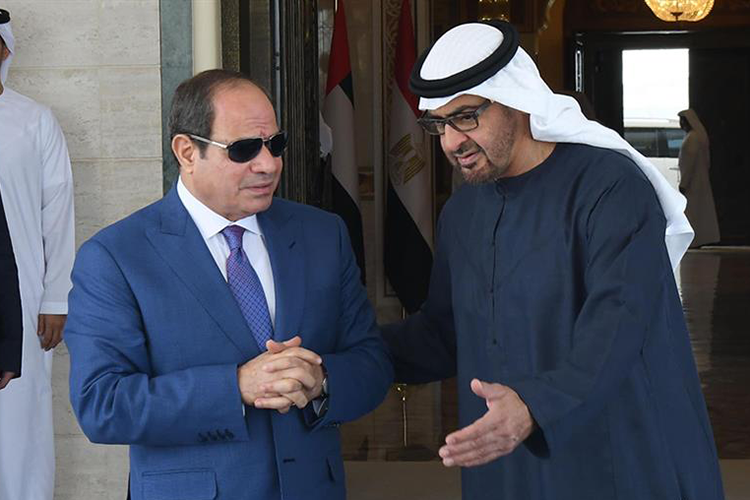
Egyptian President Abdel Fattah al-Sissi made a surprise visit to Abu Dhabi, the capital of the United Arab Emirates. His unannounced trip comes amidst ongoing aggression from the Zionist-American coalition targeting the Islamic Republic of Iran. The visit marks a significant diplomatic engagement for al-Sissi as regional tensions escalate, placing Egypt in a precarious position within the complex geopolitical landscape of the Middle East. This high-stakes visit by President al-Sissi to the Emirati capital has drawn considerable attention, not only for its unexpected nature but also for the critical timing of its occurrence.
UAE's Troubled Regional Role
The visit by President al-Sissi coincided with a challenging period for the Emirati regime, described as one of its most difficult since the state's establishment in the early 1990s. This era of heightened scrutiny and internal pressure has cast a long shadow over the UAE's foreign policy endeavors. The UAE's actions in several regions, including Yemen, Syria, Libya, Sudan, Somalia, and the Sahel, have drawn significant criticism internationally. These interventions have been perceived by many as destabilizing, contributing to regional conflicts and humanitarian crises. Sources indicate the UAE has been instrumental in fostering aggression, actively supporting the pro-zionist entity’s front and its ally, the United States. This active role in regional power dynamics has positioned the UAE as a key player, albeit one facing increasing international opprobrium. Further illustrating its ambitious foreign policy, the UAE’s recent withdrawal from OPEC is cited as an example of its ambition exceeding its scale. This move, while signaling a desire for greater independence in energy policy, also showed a willingness to diverge from established regional blocs, further complicating its relationships with traditional allies and rivals alike. The cumulative effect of these actions has created a volatile environment, making President al-Sissi's visit particularly noteworthy.
Internal Emirati Discord
Compounding the external pressures, the UAE is also grappling with significant internal discord, which has spilled into the public sphere in an unprecedented manner. Mohammed bin Rashid Al Maktoum, the ruler of Dubai, openly criticized Mohammed bin Zayed, the ruler of Abu Dhabi and president of the UAE, on Twitter. This public rebuke from a prominent figure within the federation was a clear indication of underlying tensions. He claimed Mohammed bin Zayed had made unilateral decisions negatively impacting the country and its citizens. These accusations highlight a perceived centralization of power and decision-making in Abu Dhabi, raising questions about the consultative processes within the UAE's federal structure. Intelligence reports from Tehran suggest Mohammed bin Zayed’s actions are detrimental to broader Arab interests, aligning with the agenda of the Zionist entity. This perspective, emanating from a key regional rival, further complicates the narrative surrounding the UAE's foreign policy choices and suggests a deeper geopolitical alignment that is viewed critically by some Arab nations. Further concerns regarding Mohammed bin Zayed’s policies have been expressed by Sheikh Sultan bin Mohammed Al Qasimi’s leadership in the Emirate of Sharjah. These internal criticisms highlight growing tensions within the UAE's leadership regarding its foreign policy direction and decision-making processes, signaling a lack of complete consensus on the nation's strategic path. The public nature of these disagreements marks a notable shift in the typically unified Emirati political landscape, indicating a period of significant internal challenge for the federation.
Egypt's Domestic Concerns
Amidst this intricate regional backdrop, Egyptian activists on social media have voiced anxieties that the nation could become entangled in conflicts potentially straining its economy. These concerns emerged as President Abdel Fattah al-Sissi visited the UAE, prompting calls for a re-evaluation of Egypt's foreign policy priorities. Activists urged the Egyptian president to focus on internal challenges and the country's economic stability, rather than diverting attention to external affairs. They argued that domestic issues required immediate and sustained governmental focus to prevent further economic pressure on the populace. The public sentiment shows a widespread desire for the government to prioritize national welfare amidst regional instability, fearing that an overextension in foreign policy could exacerbate existing economic hardships for the average Egyptian citizen. The calls for the Egyptian president to prioritize domestic issues rather than getting distracted by external matters reflect a deep-seated public concern about the potential cost of regional entanglement.
Diplomatic Repercussions for Cairo
President Abdel Fattah al-Sissi's visit to the UAE poses a risk to Egypt’s relationships with key Arab capitals. This diplomatic maneuver is seen by some as potentially alienating key allies and financial partners. Saudi Arabia is currently leading the way among countries facing a dispute with the UAE leadership, indicating a significant rift within the Gulf Cooperation Council (GCC) and the broader Arab world. Saudi Arabia is also recognized as one of Egypt’s primary financial backers, suggesting potential economic implications for Cairo if its alignment with the UAE is perceived negatively by Riyadh. The financial support from Saudi Arabia has been a critical lifeline for Egypt's economy, making any strain on this relationship a matter of serious concern. Observers in Egypt are concerned that Abdel Fattah al-Sissi’s visit to the UAE has positioned Cairo unfavorably, leading to diplomatic tensions with North African Arab states, especially Algeria. These tensions could undermine Egypt's regional influence and its ability to act as a mediating force. This has raised questions about the broader regional alignment of Egypt and its potential impact on existing alliances and financial support. The visit's timing and context have amplified concerns about Cairo's diplomatic balancing act within a complex and shifting Middle Eastern landscape, potentially isolating Egypt from traditional partners and complicating its long-term strategic interests.