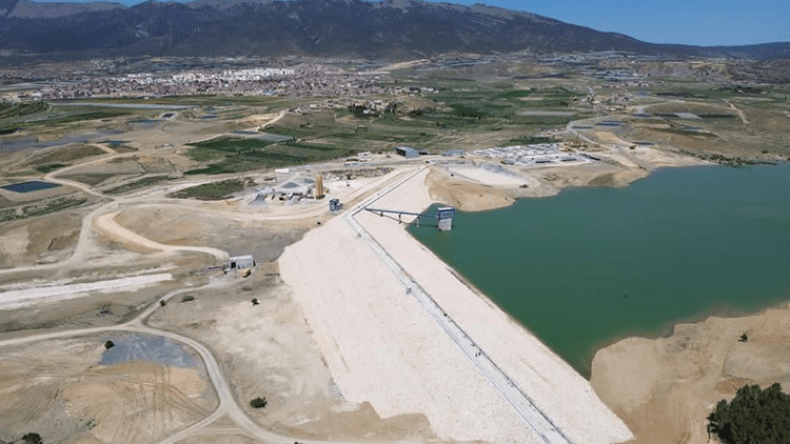
Construction of the Wadi Lazraq dam, designed to enhance water security and agricultural development, is underway in Algeria's Khenchela province. This significant infrastructure project is strategically located in Bouhamama, Khenchela province, approximately 1 kilometer from the municipality of Bouhamama itself. The dam project is situated in the Bouhamama region, a key area within the province. This strategic infrastructure is positioned about 60 kilometers from the provincial capital of Khenchela, aiming to serve the surrounding areas with vital water resources. The Wadi Lazraq dam project is poised to create a qualitative leap in water security and agricultural development for the region, addressing critical needs in the face of environmental challenges.
Dam Specifications and Construction
The Wadi Lazraq dam’s design evolved significantly from an initial concept as a simple reservoir into an integrated dam featuring modern specifications. This evolution shows a commitment to strong and efficient water management. Its construction incorporated a homogeneous earthfill dam body, a substantial undertaking that utilized over 330,000 cubic meters of material. This massive volume of earthfill provides the structural integrity necessary for the dam's long-term operation. The flood spillway, a key safety feature designed to manage excess water flow, measures more than 46 meters in width, ensuring effective discharge during periods of heavy rainfall.
A prominent 24-meter high water intake tower was built as a key component of the dam's infrastructure, responsible for regulating water release. To facilitate access to this vital tower for maintenance and operational purposes, a 60-meter long bridge was constructed, meticulously supported by four strong concrete pillars. Construction teams encountered several challenges throughout the project's duration, including significant climate fluctuations that impacted work schedules, the inherent nature of the construction site with its unique geological characteristics, and the widespread presence of rocky debris which required extensive removal and preparation.
In response to these formidable obstacles, a continuous work system was implemented, demonstrating the project's priority and the determination of the teams involved. This intensive approach involved the deployment of additional teams and substantial material resources to overcome delays and accelerate progress. This strategic measure aimed to expedite the construction timeline, ensuring that the project remained on track despite the difficulties. The primary objective of this accelerated effort was to complete the dam's structural work before the onset of the winter season, a critical deadline to ensure it would be prepared to receive and store rainwater effectively from the very first seasonal downpours. The Ministry of Water Resources actively monitored the project's development, working diligently to remove technical and administrative obstacles encountered during construction, thereby ensuring a smoother progression of works.
National and Provincial Context
The Wadi Lazraq dam project is a fundamental component of a supplementary program sanctioned by the President of the Republic specifically for the province of Khenchela. This initiative shows a broader national commitment to enhancing Algeria's water infrastructure and securing its future. The project aligns smoothly with Algeria's nationwide strategy to bolster its capacity for water storage and utilization, a critical endeavor for the nation's long-term sustainability. This effort is particularly critical given the challenges posed by climate change and the increasing prevalence of water scarcity across various regions of the country. Algeria has been actively pursuing projects designed to secure its water resources, recognizing the long-term implications of environmental shifts and the growing demand for water.
The dam in Khenchela province contributes directly to these national objectives, aiming to provide a stable and reliable water supply for both agricultural and potentially domestic use in the region. Such initiatives are seen as vital for ensuring sustainable development and supporting local economies, especially in areas heavily reliant on irrigated agriculture. The focus on strengthening water infrastructure reflects a proactive and forward-thinking approach to managing natural resources in the face of evolving environmental conditions and increasing population needs. This national effort to strengthen Algeria's water storage and utilization capabilities is critical, especially in light of the ongoing impacts of climate change and the persistent challenge of water scarcity. By investing in projects like the Wadi Lazraq dam, Algeria is taking concrete steps to safeguard its future water supply and support its agricultural sector.
Agricultural and Environmental Impact
The Wadi Lazraq dam aims to create a qualitative improvement in water security and agricultural development for the region, bringing significant benefits to the local populace and economy. The project is also expected to contribute significantly to safeguarding neighboring areas from floods, providing a key layer of protection to communities and infrastructure. It will facilitate the rationalization of water resource utilization, promoting more efficient and sustainable water management practices across the region. Officials say the dam is anticipated to play a key role in supporting the agricultural sector by providing a sustainable and ample water reserve. This reserve is intended to allow for the expansion of irrigated areas, transforming previously arid or rain-fed lands into productive agricultural zones. This expansion is expected to lead to a significant improvement in overall agricultural productivity within Khenchela province, boosting food security and economic prosperity for farmers. The project will also contribute to protecting neighboring areas from floods, a recurring issue in many regions, and will aid in the rationalization of water resource utilization, ensuring that this precious resource is managed efficiently for long-term benefit.
Ministerial Approval and Future Outlook
The Minister of Water Resources visited Khenchela to inspect the project's progress, expressing satisfaction with its achievement and the dedication of the teams involved. The Ministry of Water Resources actively monitored the project's development from its inception, working tirelessly to remove technical and administrative obstacles encountered during construction, ensuring the project's smooth execution. Following the inspection, the Minister oversaw the initiation of the dam's filling process, a symbolic and critical step marking its operational readiness. The Minister stated that the dam's completion in approximately one year stands as a model for overcoming challenges, noting the project as an example of successful infrastructure development despite difficulties. This successful completion is a testament to the collaborative efforts and strategic planning involved, promising a brighter, more water-secure future for Khenchela province.