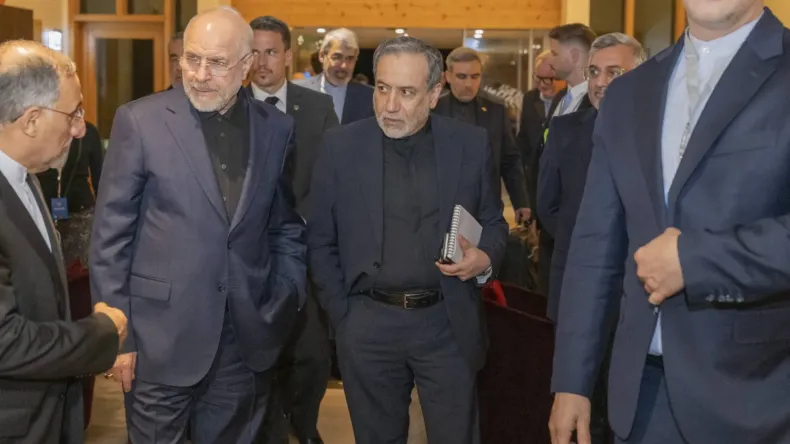
The United States reportedly warned Iran about potential Israeli assassination plots targeting senior negotiators involved in ceasefire discussions. The Washington Post, citing current and former US officials, reported that Washington took the unusual step this spring of asking intermediaries to alert Iran to the "Zionist entity's" intentions. This warning specifically concerned the assassination of Iranian Foreign Minister Abbas Araghchi and Iranian Parliament Speaker Mohammad Bagher Ghalibaf, reflecting strong US opposition to such actions. The United States' objection to the assassination of these senior Iranian officials was so strong that it prompted this exceptional step of asking intermediaries to inform Iran of the "Zionist entity's" intentions regarding these plots.
Specific Threats Detailed
Washington's strong objection to the assassination of Iranian Foreign Minister Abbas Araghchi and Parliament Speaker Mohammad Bagher Ghalibaf prompted the United States to ask intermediaries to inform Iran of the "Zionist entity's" intentions. US officials had previously informed their Israeli counterparts in March not to proceed with assassinating Iranian political leadership, according to a diplomat. Despite this warning, a tangible Israeli threat against Mr. Ghalibaf reappeared on April 12. This occurred as the Parliament Speaker was returning to Iran from Islamabad, following talks with US Vice President J.D. Vance in Pakistan. The report by The Washington Post, citing current and former US officials, specifically stated that Washington's objection to the assassination of Iranian Foreign Minister Abbas Araghchi and Iranian Parliament Speaker Mohammad Bagher Ghalibaf was so strong that it took the exceptional step this spring of asking intermediaries to warn Iran of the "Zionist entity's" assassination intentions.
Diplomatic Track Imperiled
US officials stated that Iranian Foreign Minister Abbas Araghchi and Parliament Speaker Mohammad Bagher Ghalibaf could have been considered legitimate military targets earlier in the conflict. However, once negotiations began in April, Washington concluded that any attempt to assassinate the two men would jeopardize the diplomatic track. Before a scheduled meeting in Islamabad with US Vice President J.D. Vance, Iranian officials sought assurances via Pakistani and Qatari intermediaries that the Israelis would not target their delegation. Despite these concerns, Mr. Araghchi and Mr. Ghalibaf continued to participate in talks, later traveling to Qatar and Switzerland for further rounds of discussions with US officials. In response to the threats, Iran tightened security measures around its negotiating team. US officials stated that Araghchi and Ghalibaf could have been considered legitimate military targets during the initial phase of the conflict, but once negotiations seriously began in April, Washington concluded that any attempt to assassinate the two men would jeopardize the diplomatic track.
US Stance on Negotiators
The United States considered Iranian Foreign Minister Abbas Araghchi and Parliament Speaker Mohammad Bagher Ghalibaf as potential legitimate military targets earlier in the conflict. However, US officials determined that any attempt to assassinate them would imperil the diplomatic track once negotiations commenced in April. This assessment led Washington to caution Israel against such actions. Iranian officials, ahead of a scheduled meeting in Islamabad with US Vice President J.D. Vance, sought assurances through Pakistani and Qatari intermediaries that their delegation would not be targeted. Despite the threats, Mr. Araghchi and Mr. Ghalibaf proceeded with talks, subsequently traveling to Qatar and Switzerland for further discussions with US officials. Iran, in response to these perceived threats, tightened security measures around its negotiating team to ensure the safety of its negotiators.
Broader Implications
During the early stages of the conflict, the "Zionist entity" engaged in targeting senior Iranian officials who were in contact with Washington. These officials included Ali Larijani, Iran's top national security official, and former Foreign Minister Kamal Kharazi. This targeting occurred at a time when diplomatic channels were being established between Washington and Tehran. The specific circumstances or outcomes of these earlier targeting efforts were not detailed in the report, but they indicate a pattern of actions against high-ranking Iranian figures. The "Zionist entity" targeted senior Iranian officials, including Ali Larijani, Iran's top national security official, and former Foreign Minister Kamal Kharazi, both of whom were in contact with Washington, during the early stages of the conflict.