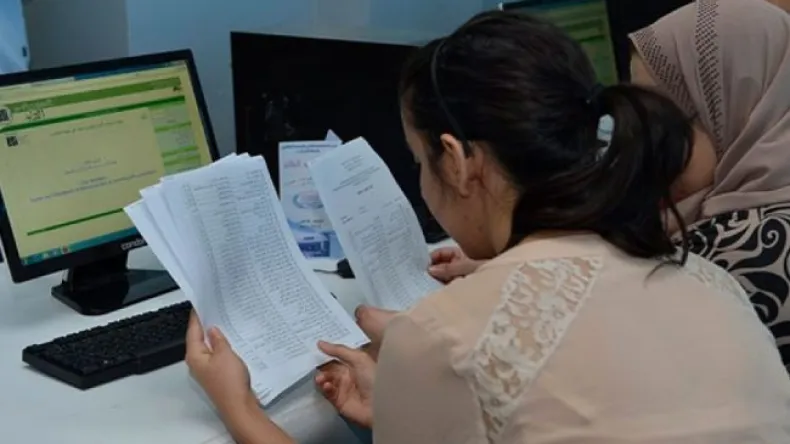
Preliminary university registrations for successful 2026 baccalaureate graduates are scheduled to begin on Wednesday, July 15, and continue until July 19. This period marks the start of the التسجيلات الأولية الخاصة بالناجحين في شهادة البكالوريا دورة 2026. The Ministry of Higher Education and Scientific Research (وزارة التعليم العالي والبحث العلمي) announced the timetable for these initial registrations, outlining a clear path for new university entrants. Over 876,000 candidates sat for the baccalaureate examination on June 7, with the official success rate reaching 56.18 percent. Schools specializing in artificial intelligence and cybersecurity led the list of programs with the highest required admission scores for the upcoming academic year, reflecting a growing demand for these key fields.
Key Dates and Online Process
Baccalaureate results were announced on July 12, providing students with their gateway to higher education. The initial registration process will take place entirely through the dedicated university guidance electronic platform, accessible at https://orientation-esi.dz. This digital approach streamlines the application process, allowing students to manage their choices efficiently from anywhere. Following this initial registration phase, the period from July 20 to September 20, 2026, has been designated for students to access support lessons via the distance learning platform. This extended period for remote learning support, known as الفترة الممتدة من 20 جويلية إلى 20 سبتمبر 2026 مخصصة لالتحاق الطلبة بدروس الدعم عبر منصة التعليم عن بعد, aims to ensure a smooth academic transition and provide additional resources to help students adapt to university-level studies. This structured timeline aims to streamline the transition for new university entrants, offering both clarity and support.
Admission Requirements by Specialization
Admission to various university programs is determined by minimum average scores from the baccalaureate examination, ensuring a merit-based selection process. A minimum average score of 14 out of 20 is required for participation in the admission ranking for health sciences baccalaureate specializations with national registration at the University of Health Sciences in Algiers. This specific requirement ensures that students pursuing a Bachelor's degree (ليسانس) in health sciences meet a foundational academic standard. For local registration specializations in medicine, pharmacy, and dentistry, a higher minimum average of 16 is necessary, reflecting the competitive nature and rigorous demands of these fields. Admission to the National Higher School of Artificial Intelligence and the National Higher School of Cybersecurity requires a minimum average of 17, noting the prestige and advanced curriculum of these specialized institutions.
Holders of the technical-mathematics (تقني رياضي) specialization require a minimum average of 15 for health sciences programs, acknowledging their specific academic background. For the National Higher School of Veterinary Medicine, students from experimental sciences (العلوم التجريبية) and mathematics (الرياضيات) specializations need a minimum average of 14.5. Students from the technical-mathematics specialization aiming for the National Higher School of Veterinary Medicine must achieve a minimum average of 15. These varying requirements ensure that candidates from different baccalaureate streams are assessed fairly based on their preparation for the specialized veterinary curriculum.
National registration for veterinary institutes at the universities of Constantine 1, Batna 1, and Tiaret begins with a minimum average of 12, offering broader access to veterinary education across different regions. Entrance scores for the National Higher School of Mathematics start at 16 for students from the mathematics specialization. For students from the experimental sciences specialization, the minimum is 16.5, while those from the technical-mathematics specialization require a minimum average of 17 for admission to the National Higher School of Mathematics. These differentiated entry points for the National Higher School of Mathematics reflect the specific academic aptitudes expected from each baccalaureate stream for advanced mathematical studies.
Context and Future Commitments
The 2026 university offerings encompass multiple academic paths, designed to cater to a wide range of interests and career aspirations. These include bachelor's degrees (ليسانس), integrated master's programs (الماستر المدمج), state engineer training (تكوينات مهندس دولة), and specializations in medicine (الطب), pharmacy (الصيدلة), dentistry (طب الأسنان), veterinary medicine (البيطرة), and architecture (الهندسة المعمارية). The Higher Teacher Training Schools (المدارس العليا للأساتذة) are also part of this diverse academic landscape, preparing future educators. This full array of programs, forming the العرض الجامعي لسنة 2026, ensures that successful baccalaureate graduates have numerous options for their higher education journey.
A significant commitment is required from students admitted to the National Higher Schools within the Sidi Abdellah Scientific and Technological Hub (القطب العلمي والتكنولوجي بسيدي عبد الله) who achieve an "excellent" distinction. These students are committed to five years of service in public administrations, public institutions, or national economic enterprises following their graduation, a policy designed to retain top talent within the national workforce. All students accepted into the National Higher Schools will receive their training entirely in English, preparing them for a globalized professional environment and enhancing their technical and communication skills in an international language.
Among the candidates who sat for the baccalaureate examination, 588,615 were enrolled students (متمدرسين), while 287,586 were private candidates (أحرار), indicating a broad participation across different educational backgrounds. The examination itself was conducted across 2,973 testing centers nationwide, a logistical undertaking of significant scale to accommodate the large number of participants. These figures show the importance of the baccalaureate examination as a key event in the national education system, determining the academic future for hundreds of thousands of young people each year.