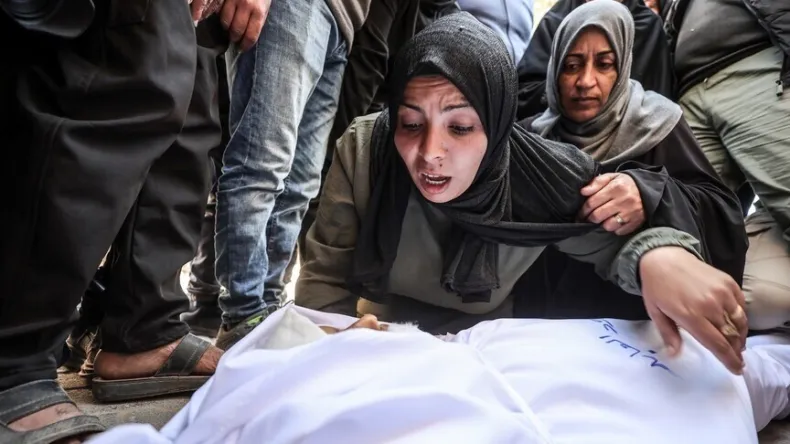
The Commission d’enquête internationale indépendante des Nations unies sur les territoires palestiniens published a new report within the framework of the 62nd session of the UN Human Rights Council. The report affirms that Israeli authorities and security forces continue to commit genocide, crimes against humanity, and war crimes by deliberately targeting Palestinian children in the Gaza Strip. It also states that war crimes are being committed in the West Bank. The document calls on Israel to cease the violations and crimes committed against Palestinian children. The report asserts that Israel's presence in the occupied Palestinian territories, particularly in the West Bank, must end. This full document details a range of alleged abuses and their profound impact on the Palestinian child population.
The Commission d’enquête internationale indépendante des Nations unies sur les territoires palestiniens, a body established to investigate human rights violations in the region, presented its findings to the international community, drawing significant attention to the plight of children. The report notes a consistent pattern of actions that it describes as systematic and widespread, affecting all aspects of children's lives. It shows the urgent need for international intervention and accountability to address the ongoing situation. The framework of the 62nd session of the UN Human Rights Council provides a formal platform for such reports to be discussed and for recommendations to be considered by member states.
Grave Accusations Against Israeli Forces
The Commission d’enquête internationale indépendante des Nations unies sur les territoires palestiniens report claims the scale and systematic nature of Israeli attacks persist, resulting in unprecedented deaths, injuries, and trauma for Palestinian children. The report asserts that the deliberate targeting of children is a key element demonstrating the genocidal intent of Israeli authorities and security forces to destroy, in whole or in part, the Palestinian population of Gaza. This targeting, the report elaborates, is not merely incidental but forms a critical component of a broader strategy. According to the document, Palestinian children are arrested and detained in Israeli prisons and detention centers, where they are subjected to torture and other severe forms of mistreatment without information regarding their location. These allegations include physical abuse, psychological torment, and prolonged periods of isolation, all contributing to severe trauma among the detained minors. The report details that such practices constitute grave violations of international human rights law and the Convention on the Rights of the Child, to which Israel is a signatory.
The report also mentions cases of sexual violence committed against children by Israeli security forces. Such acts are described as egregious violations that inflict deep and lasting harm on the victims. Israeli attacks targeting neonatal units and maternity centers in Gaza have directly impacted the survival of newborns and the reproductive future of the Palestinian population, the report states. These impacts include an increase in miscarriages, congenital malformations, and persistent vulnerabilities in newborns. The destruction of these vital healthcare facilities not only deprives infants of essential care but also creates a public health crisis for mothers and their offspring. The destruction of orphanages and educational facilities in Gaza and the West Bank has severely hindered the cognitive, social, and emotional development of children, according to the Commission. The report details how the loss of safe spaces for learning and development exacerbates the psychological impact of conflict, leading to long-term developmental challenges. The Commission concludes that Israel systematically ignores the ceasefire and the protection of Palestinian children as provided by international law. This systemic disregard, the report argues, points to a deliberate policy rather than isolated incidents.
Broader Context and Previous Findings
The Commission d’enquête internationale indépendante des Nations unies sur les territoires palestiniens had previously concluded in its report last year that Israel was committing genocide against Palestinians in the Gaza Strip. This earlier finding established a pattern of grave accusations against Israeli actions in the region, setting a precedent for the current report's conclusions. The continuity of these findings shows the Commission's consistent assessment of the situation. The previous report provided extensive documentation and analysis, which are now further reinforced by the latest evidence presented.
Even following the ceasefire announced in October 2025, children continue to be killed and severely injured, indicating ongoing hostilities despite formal agreements. This persistent violence against minors shows the enduring nature of the conflict and its impact on the most vulnerable population segments. The report emphasizes that even in periods supposedly marked by a cessation of hostilities, the safety and well-being of Palestinian children remain critically compromised. This continued violence notes the fragility of peace efforts and the urgent need for more effective protection mechanisms. The Commission's observations suggest that the announced ceasefire has not translated into a tangible improvement in the security situation for children on the ground.
Impact on Children and Future
Famine is causing the death of Palestinian children and severely affects the health of many other children by depriving them of basic nutrition, according to the Commission d’enquête internationale indépendante des Nations unies sur les territoires palestiniens. The report notes that this deprivation contributes to widespread health issues among the youngest population, including severe acute malnutrition, stunted growth, and increased susceptibility to infectious diseases. The lack of adequate food supplies is presented not as a natural disaster but as a consequence of actions that impede humanitarian aid and access to essential resources.
The Commission also claims that decreased vaccination rates, widespread food insecurity, and the extensive destruction of health infrastructure have collectively increased the risks of various diseases. These factors, it states, create a precarious health environment for children across the affected territories, leading to outbreaks of preventable illnesses and a general decline in public health standards. The report details how the collapse of medical services and the inability to maintain vaccination programs have reversed years of progress in child health. The combination of malnutrition and disease creates a vicious cycle, where weakened immune systems make children more vulnerable to infections, and illness further depletes their nutritional reserves. This dire situation is projected to have long-term consequences for the health and development of an entire generation of Palestinian children.
Call for Accountability
The Commission d’enquête internationale indépendante des Nations unies sur les territoires palestiniens has identified Israeli soldiers it deems responsible for the death and injury of Palestinian children. The Commission recommends that these soldiers be held accountable. This call for accountability aligns with the report's broader assertions regarding violations of international law. The document emphasizes the necessity of addressing individual responsibility for the alleged crimes against children, rather than attributing them solely to systemic issues. It shows the urgency of implementing mechanisms to ensure justice for the victims and their families. The Commission's findings aim to contribute to a framework where perpetrators of such acts are subjected to legal processes, thereby upholding international humanitarian law and deterring future violations. The report further suggests that accountability is not only key for justice but also for fostering a lasting peace in the region.