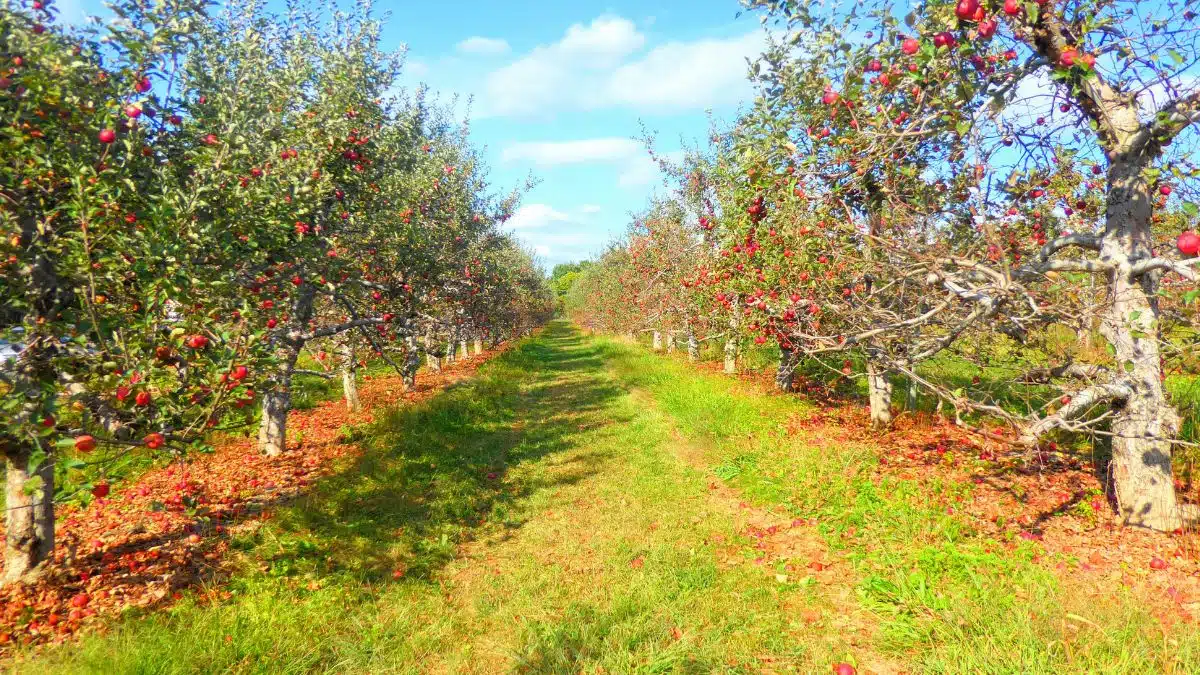
Algeria produced 591,700 tonnes of apples in 2024, as the nation increasingly establishes production hubs such as Tiaret to supplement output from traditional regions. Data released by FAOStat indicates that national apple production grew by 27% between 2014 and 2024. These figures reflect a decade of expanding agricultural activity across the country. Faostat reports confirm that this cumulative growth trajectory notes the shifting dynamics of domestic fruit cultivation. Officials monitor these production levels to assess the impact of new orchards on the overall supply chain. The rise in output coincides with a broader effort to modernize farming practices in regions outside the historical agricultural heartlands.
National Apple Production Trends
Algeria utilizes nearly 32,000 hectares of land for apple harvesting across the country. Agricultural authorities monitor this total area to track the expansion of orchards into emerging production zones like Tiaret. Alongside the growth in cultivated land, productivity metrics provide insight into the efficiency of current farming operations. The average yield for apple production in Algeria stands at 18.6 tonnes per hectare. These figures represent the output efficiency achieved across national growing regions as cultivators modernize their practices. Officials continue to evaluate these yield statistics to determine the capacity of the sector to meet domestic demand. The data confirms the current scale of apple cultivation activities within the agricultural landscape of Algeria.
Investment in Tiaret Orchards
Amine Derrar initiated an apple plantation project in June 2025 on a 28-hectare site located in Tiaret. Regarding the early stages of this development, Amine Derrar, arboriculteur, stated: "Nous avons commencé en juin 2025 et vous voyez les bons résultats. Nous travaillons en respectant le processus technique, nous avons des ingénieurs et un réseau d’irrigation de goutte à goutte. Et nous suivons de près les nouveautés dans le domaine agricole." He further explained the environmental factors influencing the orchard, noting: "Notre verger est situé à 1.000 mètres d’altitude, et cumule plus de 800 heures de froid par an, un seuil thermique indispensable pour lever la dormance des arbres et garantir une bonne floraison. Le froid et le soleil sont les conditions de la qualité."
Infrastructure support remains a primary factor for regional expansion. More than 1,300 agricultural operations in the wilaya of Tiaret are currently connected to electricity and irrigation networks. These utilities provide the necessary resource access for farms to maintain consistent cultivation standards across the territory.
Market pricing reflects the commercial value of produce originating from these developing zones. High-quality apples can reach prices of 1,000 dinars in the Algiers market. Traders and producers track these price points as an indicator of the demand for premium fruit grown within the nation's emerging agricultural hubs.