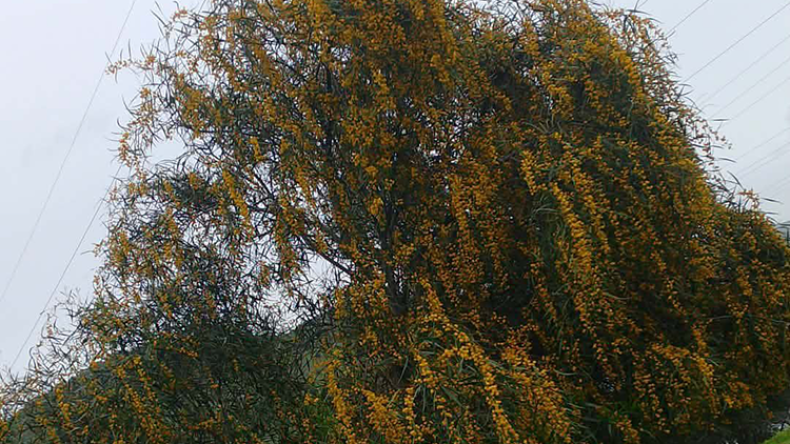
The "Challaleg" tree, a significant natural landmark, stands prominently on the 30-kilometer road that connects the localities of Khairan and El-Walja in the southern part of Khenchela province, Algeria. This particular location, stretching across a considerable distance, notes the tree's enduring presence within the region's landscape. The tree itself is widely recognized for its distinctive mimosa leaves, which are highly valued and utilized by local herb sellers for a range of traditional medicinal applications. These practitioners, deeply rooted in local knowledge, report employing the leaves to effectively treat inflammation, facilitate the healing of various wounds and burns, and aid in improving digestion, showing the tree's practical importance in local health practices.
Local Folklore and Customs
The "Challaleg" tree is central to a deeply ingrained local tradition involving the hanging of pieces of cloth on its branches. This practice, rich in historical significance, traditionally served as a unique and public way to announce marriage intentions within the community. According to long-standing local custom, families would carefully divide a single piece of cloth. One part of this cloth would then be conspicuously hung on the tree's branches, while the other portion was kept at the entrance of their house, creating a clear and visible signal of an impending union. This ritual speaks volumes about the community's past social structures and communication methods.
Folklorists who have studied these practices interpret them as profound old social symbols. They suggest that these traditions were not merely quaint customs but rather sophisticated methods used for indirect expression during historical periods when direct communication about personal matters, especially marriage, was often more constrained by social norms or practical limitations. This indirect form of communication allowed for public declarations while maintaining a degree of decorum.
Resilience and Medicinal Uses
The "Challaleg" tree has been definitively identified as a yellow mimosa, a species particularly notable for its remarkable resilience, especially in challenging arid conditions. A defining characteristic of this tree is its ability to maintain its vibrant green foliage even during prolonged periods of drought, a trait that significantly distinguishes it within the often harsh Khenchela region. This natural hardiness is not limited to drought resistance; observations indicate that the mimosa tree remains largely unaffected by extreme heat, staying green even when ambient temperatures soar to an impressive 50 degrees Celsius. This exceptional adaptability to environmental extremes contributes immensely to its ecological significance in the local ecosystem and explains its continued strong presence along the Khairan and El-Walja road, serving as a beacon of natural endurance. The mimosa leaves, as previously noted, are a cornerstone of local herbal medicine, with herb sellers consistently using them for their anti-inflammatory properties, their efficacy in healing wounds and burns, and their beneficial effects on digestive health.
Historical Context and Skepticism
Despite the rich tapestry of local beliefs and traditions surrounding the "Challaleg" tree, Karima Derraji, a local observer, states there is no scientific or religious basis to link the tree to outcomes such as marriage, success, or blessings. However, this scientific perspective does not entirely diminish the power of certain folk beliefs. Some local lore suggests that not asking the tree for its "permission" or failing to acknowledge its spiritual significance can lead to negative consequences, including unhappiness, social failure, or even travel mishaps, noting the deep-seated nature of these superstitions. Historically, the tree offered key shade and respite to mujahideen, including the revered symbolic martyr Abbas Laghrour, during periods of conflict, cementing its place in the region's resistance narrative. In the 1990s, a notable incident occurred when a man attempted to exploit these deeply held beliefs for personal gain. He constructed a makeshift shrine near the tree and began making audacious claims that the tree possessed the power to grant children to barren couples, facilitate marriages for spinsters, and heal the sick, all for a fee. This opportunistic endeavor showed the potent influence of the tree's folklore on the local populace, even in more recent times.