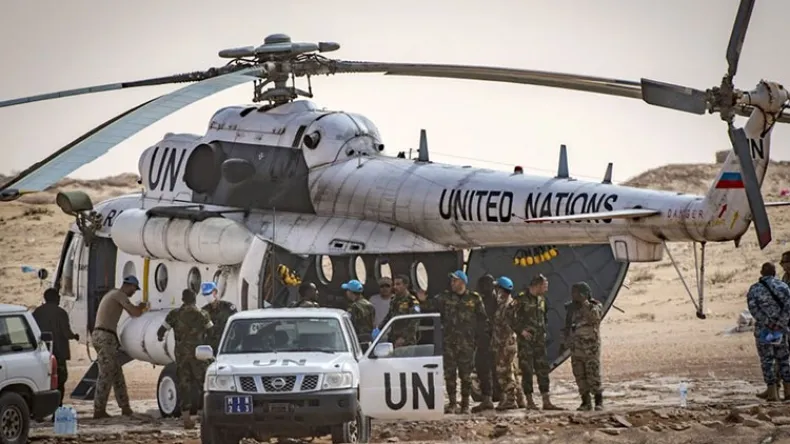
The United Nations Security Council failed to renew the mandate of the MINURSO mission in Western Sahara following a veto from Russia. Russia blocked a US-sponsored resolution that sought to extend the peacekeeping operation, effectively ending the mission's authority in the region. MINURSO had been monitoring the field situation and limiting escalation risks for 35 years before the mandate lapsed. The withdrawal leaves the territory without an international monitoring presence as security concerns grow across North Africa. Diplomatic efforts to reinstate the mission remain stalled after the vote, marking a shift in the status of the United Nations presence in the region.
Analysis of Regional Instability
The Middle East Institute for International Peace published an analysis on 4 November 2026. The report, titled 'Beyond the UN Mission for the Referendum in Western Sahara: Managing Tension and Preventing Conflict', examines the consequences of the current security environment. It addresses potential methods for managing regional friction and preventing the outbreak of hostilities in the absence of a formal monitoring presence. By evaluating the shifting dynamics in Western Sahara, the organization outlines specific challenges regarding the maintenance of stability. The document focuses on the operational requirements for stakeholders to mitigate risks across the territory. This analysis provides a framework for understanding how local actors might interact following the cessation of the United Nations mandate.
Territorial Control and Demographics
Approximately 20 percent of the Western Sahara territory lies outside Moroccan control. This area, often referred to as the liberated zone, remains geographically distinct from the regions administered by the Moroccan government. The population currently residing in these areas outside Moroccan control is estimated to be between 30,000 and 40,000 people. These individuals inhabit zones that lack the formal administrative oversight previously associated with international monitoring efforts.
Researcher Sabina Henberg addressed the implications of this territorial division for regional stability. She recommended that the United States administration send high-level officials, including senior advisor Massad Boulos, to hold direct talks with officials in Algeria and Morocco. According to the proposal, such diplomatic engagement is necessary to manage the shifting security environment following the end of the United Nations mandate. Direct negotiations between these parties are intended to facilitate communication regarding the status of the territory and the management of populations living in these non-controlled zones. By involving senior advisors, the initiative seeks to establish a framework for dialogue in a region where existing monitoring mechanisms have ceased to function.