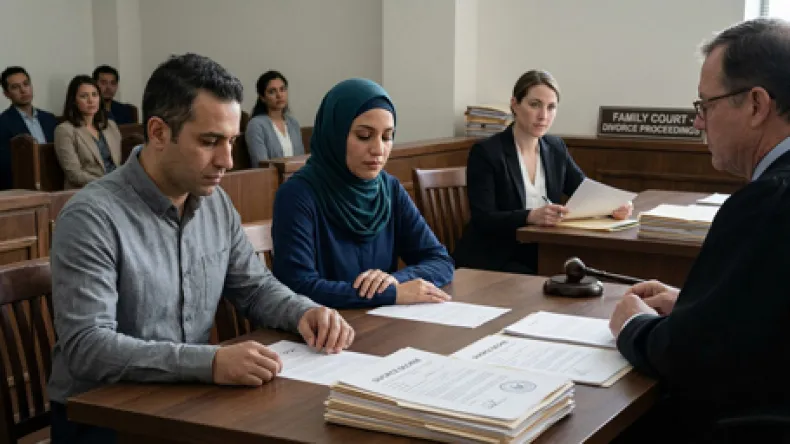
Algeria is experiencing a significant shift in marital stability as official data indicates a sharp increase in the frequency of legal separations. The current divorce rate in the country stands at approximately one case every 6 minutes throughout the day. This statistic reflects ongoing societal changes across the nation, placing a strain on traditional family structures. Authorities continue to monitor these figures as the number of dissolved marriages remains high across all regions. The sustained pace of these filings suggests that the trend is deeply embedded in the current social fabric of the country. These figures are being scrutinized by administrative bodies tasked with tracking demographic shifts and the overall health of the domestic population.
Statistical Trends in Marriage
Official records from 2005 indicate that Algeria registered 28,000 divorce cases during that calendar year. Legislative adjustments enacted that same year through the Family Code amendments expanded the legal frameworks governing women’s rights to khul', a process allowing a wife to initiate a divorce. These amendments also increased the financial independence of women within the legal system. By providing a clearer legal pathway for women to seek separation, the state fundamentally altered the mechanisms by which marital unions are terminated in the country. The implementation of these legal changes marked a transition in how the judicial system processes the dissolution of families, moving away from older, more restrictive protocols that previously governed the marital contract.
Long-term data shows a notable climb in the frequency of marital dissolutions over the last several years. The divorce rate in Algeria increased from 20.9% of total marriages in 2019 to 33.5% in 2023. This rapid escalation in the percentage of marriages ending in divorce notes a broader transformation in how citizens approach the legal dissolution of their domestic partnerships. As the gap between the number of marriages and the number of divorces continues to narrow, the cumulative impact on the national demographic profile becomes increasingly apparent.
Sociologist Mohamed Rouafi (محمد روافي) suggests that shifting expectations regarding marriage have contributed to these changing patterns. "If marriage seemed more stable in the past, it is due to several factors, including a different perspective on it," Rouafi stated. "It was considered an institution that had to continue regardless of difficulties and problems. Women were also more financially dependent on their husbands, making separation more difficult even in unhappy marriages. The roles between spouses were clearly defined. Marriage was not expected to meet the emotional and psychological needs of the spouses. Social norms also exerted strong pressure to preserve the family, even at the expense of the comfort and happiness of the partners. The priority was the continuation of the marriage and the cohesion of the family." These insights from Mohamed Rouafi (محمد روافي) show the evolving nature of the domestic sphere in Algeria, where the prioritisation of individual fulfillment is increasingly challenging the traditional emphasis on marital longevity.