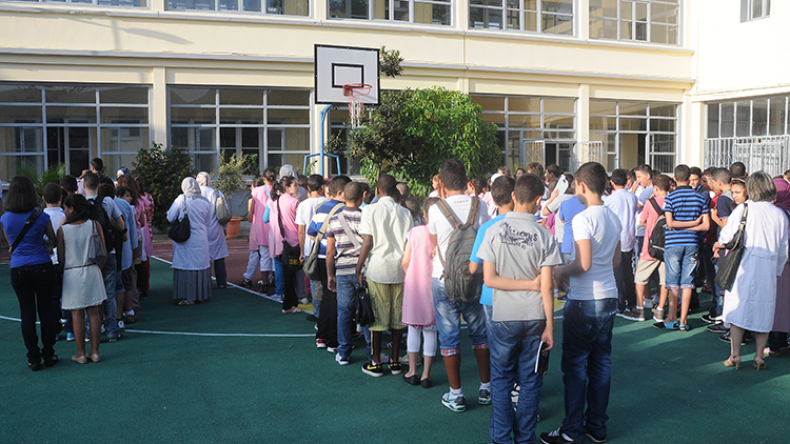
Algeria's education sector faces significant challenges due to an annual intake of approximately 500,000 additional students, leading to widespread overcrowding in institutions. This substantial increase in student numbers year after year places immense pressure on existing infrastructure and resources across the national education sector. Authorities propose utilizing proactive data analysis of registration and transfer records before each school year to predict which educational institutions will experience high student numbers. This forward-looking approach aims to identify potential bottlenecks and resource strains before they escalate. Overcrowding in educational institutions is identified as one of the most prominent challenges facing administration, teachers, and students alike. A successful academic year, according to officials, is defined by providing suitable, safe, and stimulating educational conditions, rather than merely ensuring schools open on schedule. This emphasis on quality and environment shows the full nature of the challenge.
The Widespread Overcrowding Problem
Overcrowded classes can reach between 1,200 and 1,400 students, a phenomenon particularly prevalent at the middle school level. Such high student numbers directly impact the quality of education delivered within these institutions. The ability of teachers to effectively monitor and engage with individual students is compromised, leading to difficulties in maintaining discipline and potentially affecting academic results. The extensive overcrowding also has broader implications for the psychological well-being of both students and teaching staff, according to observations from the education sector. This detrimental effect on mental health and academic performance notes the urgent need for full solutions. The sheer volume of students in a single class makes personalized instruction nearly impossible, creating a less effective learning environment for everyone involved.
Shifting to Proactive Planning
Addressing overcrowding requires a transition from crisis management to proactive planning, rather than focusing solely on temporary or immediate fixes. This strategic shift is key for long-term sustainability and effectiveness in the education system. Proposed solutions involve a balanced redistribution of students and classes, intelligent reorganization of classroom and specialized hall usage, and rational exploitation of available educational spaces. These measures aim to optimize existing infrastructure by making the most efficient use of every available square meter. The goal is to ensure that all educational facilities are utilized to their maximum potential, thereby alleviating pressure on the most congested areas.
Coordination between geographically close educational institutions can serve as a temporary solution, allowing for the redirection of students to facilities with greater capacity. This immediate measure can provide some relief while more permanent solutions are being implemented. However, a more enduring solution necessitates providing new educational structures in areas experiencing high pressure and accelerating the completion of projects already planned. This approach aims to expand overall capacity where it is most needed, directly addressing the root cause of overcrowding. A successful school year, according to officials, begins weeks before its official start date, emphasizing that earlier diagnosis of issues and faster coordination lead to a more stable and successful educational system. This proactive stance is seen as essential for preventing annual crises and ensuring a smoother start to the academic calendar.
Implementation and Coordination Needs
Addressing the infrastructure deficit, officials assert that construction timelines for new educational facilities must be significantly shortened. It is deemed unacceptable for a new high school construction project to extend over 10 years, or for a school complex with six classes to require more than seven years for completion. Such prolonged construction periods exacerbate existing overcrowding and delay much-needed capacity expansion. Alongside infrastructure, there is a recognized need to expand the human resources available to the education system. Opening additional financial positions for teachers and administrative staff is necessary, particularly in subjects and educational stages experiencing shortages. This ensures that new facilities can be adequately staffed and that the teacher-to-student ratio can be improved.
Improved coordination and localized decision-making are also noted as critical. Education directorates must enhance their proximity to the field and coordinate more closely with governors and public works and equipment directorates. This collaborative approach aims to streamline the identification of needs and the implementation of solutions at a local level, ensuring that interventions are tailored to specific community requirements. The involvement of school principals in decision-making processes regarding student distribution and the utilization of existing structures is considered essential. Their direct experience and understanding of specific school environments are seen as vital for effective planning and resource allocation, providing invaluable insights that can lead to more practical and sustainable solutions. This decentralized approach empowers those closest to the problem to contribute meaningfully to its resolution.