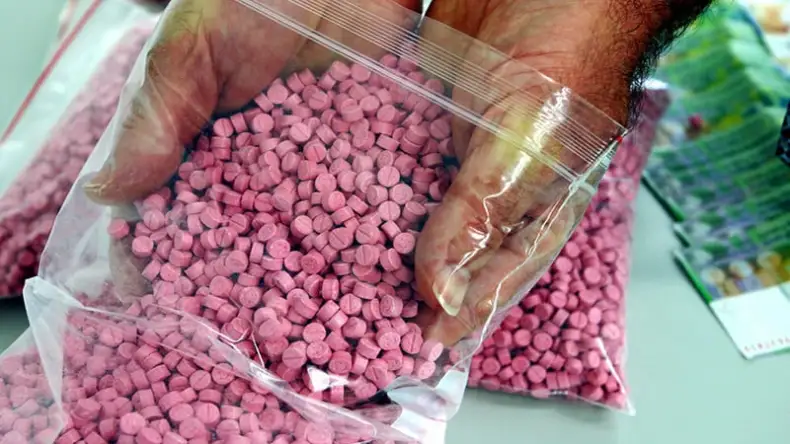
The Court of First Instance Criminal Court at the Oran Court of Justice in Algeria issued rulings recently in a significant case concerning the smuggling of psychotropic substances. The illicit pills, specifically ecstasy, originated from Spain, entering Algerian territory via the port of Mostaganem before being transported towards the city of Oran. Among those convicted, defendant 'L-A-H', identified as the owner of the vehicle used to transport the drugs, received a stringent sentence of 20 years imprisonment. This substantial penalty shows the gravity with which the court views the illicit trafficking operation involving these dangerous substances. The judicial proceedings have brought to light the intricate details of a sophisticated criminal network involved in the large-scale importation and distribution of psychotropic pills.
The Smuggling Operation Uncovered
The complex case commenced in early July 2024 after the regional judicial police obtained critical intelligence regarding a substantial quantity of hallucinogens being illicitly transported through the port of Mostaganem. This initial tip-off was key in launching the investigation. Acting on this intelligence, authorities then successfully apprehended the main suspect, 'L-A-H', inside a Kia Sorento vehicle bearing Spanish license plates. The arrest marked a significant breakthrough in dismantling the smuggling route. A subsequent careful search of the vehicle uncovered 53 bags containing a staggering total of 2,650,500 ecstasy pills. The illicit cargo, with its immense quantity, weighed a considerable 93 kg, noting the scale of the operation. Further investigation into the logistics of the smuggling revealed the involvement of tow truck drivers 'Sh-S' and 'A-M', who were responsible for transporting the vehicle from Mostaganem to Oran. In connection with the operation, the court acquitted defendant 'B.T.', who was responsible for transporting vehicles for customs clearance, finding him not guilty of involvement in the illicit activities. Additionally, three other defendants, identified as drivers of tow trucks for broken-down vehicles, were also acquitted of charges related to the smuggling operation, suggesting their roles were deemed independent of the criminal enterprise.
Charges and Sentences Detailed
The charges laid against the defendants were full and severe, reflecting the multi-faceted nature of the crime. These included illegally possessing, transporting, storing, and buying for sale psychotropic substances within an organized criminal group. The defendants faced accusations of smuggling that directly threatens the national economy and public health, showing the broader societal impact of such illicit activities. Defendant 'S-A' received a 15-year imprisonment sentence for his specific role in transporting and distributing the hallucinogens, a key function within the network. Two brothers, identified as customs declarants at the port of Mostaganem, were each sentenced to 10 years imprisonment, indicating their complicity in facilitating the entry of the contraband.
Additional accusations against the individuals involved participation in smuggling, money laundering within an organized criminal group, and abuse of office, particularly targeting those in positions of authority. The chief inspector at the customs inspection department, 'A-Kh', was sentenced to five years in prison in connection with the case, implicated for his failure to adhere to established protocols. During the intense trial proceedings, the main defendant, 'L-A-H', admitted to the charges brought against him, a confession that significantly impacted the case. However, defendant 'Y-A' vehemently denied the accusations, stating that the substantial sum of money discovered in his possession was intended for a legitimate cattle transaction, not for illicit dealings. The public prosecutor had earlier requested a 20-year prison sentence for the main defendant, a request that was ultimately upheld by the court.
Network and Confessions
The criminal network involved in this extensive smuggling operation consisted of 10 defendants in total, with two individuals currently still at large and evading capture. The painstaking investigation identified customs declarants 'D-Sh' and 'D-M' as having played a key role in clearing the vehicle containing the illicit substances through the port, bypassing official checks. Chief customs inspector 'A-Kh' was specifically implicated for not utilizing the scanner to verify the vehicle's contents as required by customs regulations, a critical lapse that allowed the drugs to pass undetected. The two defendants who remain at large, one of whom is a customs inspection officer, were both sentenced in absentia to life imprisonment, reflecting the severity of their alleged involvement and their fugitive status.
Defendant 'S-A' admitted during proceedings to using his residence as a primary storage location for the psychotropic substances, providing a safe house for the illegal cargo. He also confessed to receiving a substantial sum of one billion centimes in exchange for facilitating customs procedures, noting the financial incentives driving the operation and the corruption involved. The suspect further stated that he was an integral part of an international criminal network, indicating the transnational scope of the smuggling ring. He claimed he was operating under the explicit direction of individuals he identified only as the "barons" 'Yahya' and 'Redwan', suggesting a higher echelon of leadership in the illicit trade. This confession provided valuable insight into the structure and command chain of the criminal enterprise.