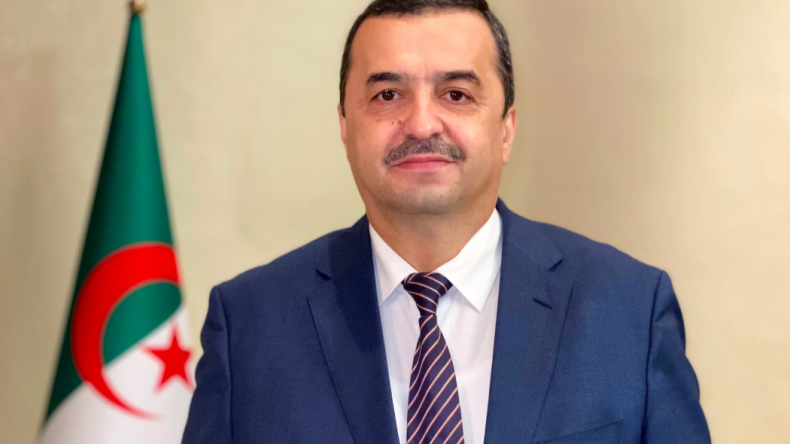
Minister of Energy and Mines, Mohamed Arkab, will participate in a coordination meeting of the Group of Seven within the OPEC+ framework via videoconference, according to the Ministry of Energy. The meeting aims to enhance coordination among the seven participating countries in the "Declaration of Cooperation" (OPEC+). The group’s ministerial monitoring committee met on Sunday, May 3, 2026. Reports indicated the meeting will specifically include Algeria, Saudi Arabia, Iraq, Kazakhstan, Kuwait, Oman, and Russia. The Ministry of Energy provided the information, stating that the gathering is part of the regular monitoring of the global oil market situation.
Market Outlook and Production Discussions
Ministers are scheduled to conduct an in-depth exchange on the short-term oil market outlook, specifically considering supply and demand fundamentals. They will also discuss the current state and future prospects of the international oil market, according to the Ministry of Energy. The meeting forms part of OPEC+ efforts to support the stability and balance of the global oil market. Sunday's meeting will discuss OPEC+ quotas for May, sources familiar with the discussions stated. OPEC+ may approve an oil output increase on Sunday, four sources from the group indicated, adding that this "will largely exist on paper as its key members are unable to raise production due to the U.S.-Israeli war with Iran." The countries involved are currently implementing voluntary adjustments to their production levels. The videoconference is set for April 5, 2026, at 7:30 AM UTC.
Impact of Geopolitical Disruptions
OPEC+ has warned that damage to Middle East energy assets will have a prolonged impact on oil supply even after the Iran war concludes. The ministerial monitoring committee stated that "Any action that jeopardizes security of supply, whether that’s an attack on infrastructure or disruption of export routes, increases market volatility and weakens OPEC+’s efforts." The U.S.-Israeli war with Iran has effectively shut the Strait of Hormuz since the end of February, cutting exports from OPEC+ members Saudi Arabia, the UAE, Kuwait, and Iraq. Other group members, such as Russia, are unable to increase output due to Western sanctions and damage to infrastructure inflicted during the war with Ukraine. The oil supply disruption is estimated to have removed 12 to 15 million barrels per day, representing up to 15% of global supply. Consultancy Energy Aspects described any potential production increase as "academic" as long as disruptions in the strait persist.
Price Volatility and Future Projections
Crude prices have soared to a four-year high, settling at $120 a barrel, according to reports. JPMorgan reported on Thursday that oil prices could spike above $150 per barrel, an all-time high, if flows via the Strait of Hormuz remain disrupted into mid-May. On Friday, U.S. West Texas Intermediate crude futures for May jumped 11%, or $11.42, to close at $111.54 per barrel. International benchmark Brent crude rose nearly 8%, or $7.87, to close at $109.03. At its last meeting on March 1, OPEC+ agreed to a modest output boost of 206,000 barrels per day for April and approved a symbolic increase in output quotas for next month.