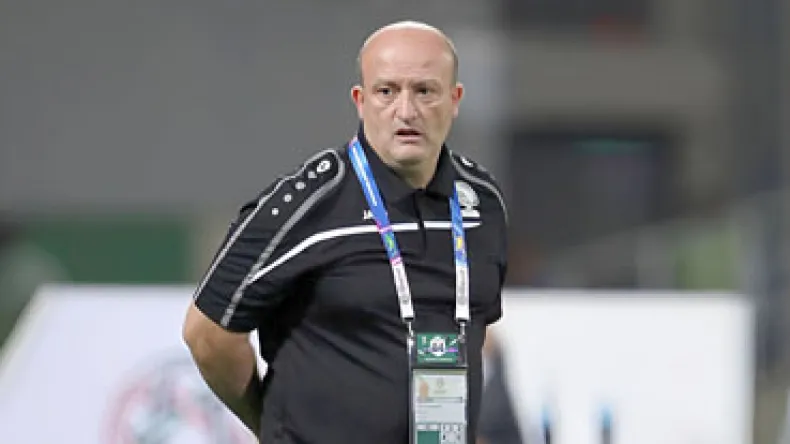
Coach Nourredine Ould Ali recently discussed his full coaching philosophy and extensive career spanning across the African continent and the Arab region. He revealed aspects of his deep commitment to field work and his strategic approach to football management, emphasizing that his methodology is rooted in practical, on-the-ground engagement. Ould Ali also confirmed his full readiness to return to coaching within the Algerian professional league, provided specific conditions regarding a professional work environment are met.
During his reflections, Ould Ali revealed his pride in discovering and nurturing several prominent players who have since become key figures in the senior national team. He stated, "أنا رجل يقدس العمل الميداني البحت، وأرفض رفضًا قاطعًا الرضوخ لـ “ضغوط الهاتف”، أو أي إملاءات من أطراف خارج الإطار الفني" (I am a man who reveres pure field work, and I absolutely refuse to succumb to "phone pressures" or any dictates from parties outside the technical framework). This assertion shows his unwavering independence from external influences and his dedication to autonomous technical decision-making.
Philosophy and Player Development
Nourredine Ould Ali emphasized his profound dedication to hands-on coaching, reiterating his core belief: "I am a man who sanctifies pure field work, and I categorically refuse to submit to 'phone pressures' or any dictates from parties outside the technical framework." This principle guides his entire coaching approach, prioritizing direct involvement and technical autonomy. He maintains that a potential return to work in Algeria would necessitate the establishment of integrated sports projects, which must encompass technical, administrative, and marketing dimensions for sustainable success. This holistic view reflects his understanding of modern football's complex requirements.
Ould Ali expressed immense pride in his contribution to identifying and developing several players who have since achieved significant prominence. These players, who went on to become key pillars of the senior national team, include Farès Chaibi, Hadj Moussa, Jaouen Hadjam, Yacine Titraoui, and Saâdi Belghali. His ability to spot and cultivate such talent is a testament to his keen eye and developmental skills. Within the football community, Ould Ali is often characterized as a "man for difficult tasks," reflecting his reputation for effectively tackling challenging assignments and turning around difficult situations. His extensive coaching career commenced in 1995 when he began working with the youth teams of Chlef Union, laying the groundwork for his future successes.
International Coaching Journey
Nourredine Ould Ali acknowledged his lack of success with the Olympic national team, attributing it directly to a short work period of less than six months. This brief tenure, he explained, did not allow sufficient time to implement his strategies and build a cohesive team. Following this, he spent a significant six years with the Palestinian national team, a period during which he achieved a notable milestone by leading them to a historic qualification for the 2019 AFC Asian Cup. This qualification was a landmark achievement for Palestinian football, showcasing Ould Ali’s strategic capabilities on an international stage.
During the 2019 AFC Asian Cup, Ould Ali found himself facing prominent and highly experienced coaches, including the likes of Carlos Queiroz and Marcello Lippi, further noting the competitive level of his international engagements. He also recalled a historic friendly match between Algeria and Palestine at the 5 July Stadium, showing the cultural and sporting significance of the event. Throughout his tenure with Palestine, Ould Ali praised the consistent support he received from Jibril Rajoub, President of the Palestinian Football Association, and Mohamed Raouraoua, the former president of the Algerian Football Federation, which proved key for his work.
Currently, Ould Ali is coaching the Yemeni national team, a role he undertakes amidst significant security and economic crises in the country. Despite these formidable challenges, he successfully led Yemen to qualify for the next AFC Asian Cup finals after defeating Lebanon, a team coached by Majid Bougherra. His ambition with the Yemeni national team is to surpass the group stage, a feat he noted was previously denied by circumstances during his time with Palestine. Earlier in his career, before his international head coaching roles, Ould Ali worked as an assistant coach to François Bracci at both JS Constantine and MC Alger, gaining valuable experience in the Algerian domestic league.
Conditions for Algerian Return
Nourredine Ould Ali affirmed his complete readiness to return to coaching within the Algerian professional league. His return, however, would be strictly contingent on the availability of a genuinely professional work environment that actively prevents external interference and fully guarantees the independence of technical decision-making, he stated. This condition shows his consistent philosophy of prioritizing autonomous technical oversight, a principle he has previously articulated regarding his field-work approach and his refusal to succumb to "phone pressures."
Ould Ali also conveyed his immense love for JS Kabylie and expressed significant respect for both MC Alger and USM Alger, indicating his deep connection to Algerian football clubs. His past experience includes serving as an assistant coach to Roland Courbis at USM Alger, further cementing his familiarity with the league. His readiness to consider opportunities in Algeria's top football division reflects a sincere desire to contribute to the domestic game, provided the structural conditions align with his professional standards and his belief in integrated sports projects. He envisions a future where Algerian clubs operate with the highest levels of professionalism, allowing coaches to focus solely on technical development and strategic implementation.