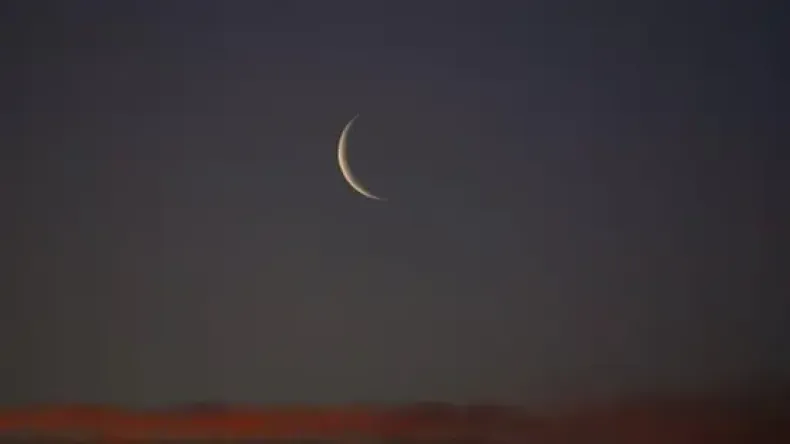
The Ministry of Religious Affairs and Endowments announced that Tuesday, June 16, 2026, will mark the first day of Muharram 1448 AH. The announcement was made on Monday evening in a statement issued by the ministry. This officially confirms the start of the new Islamic year, according to the religious authority responsible for such declarations in Algeria. The Ministry of Religious Affairs and Endowments is specifically tasked with overseeing religious matters and endowments within the country, including the key determination of Islamic calendar dates based on astronomical calculations and crescent moon sightings. The declaration provides essential clarity for observers of the Islamic calendar within Algeria, allowing for proper planning of religious observances and public holidays.
Observances and Recommendations
The Ministry of Religious Affairs and Endowments reminded the public that it is recommended to observe fasting on the day of Ashura, which falls on June 25. This guidance aligns with established traditional Islamic practices for the tenth day of Muharram, a day of significant spiritual reflection. Additionally, the first day of Muharram, June 16, will be observed as a paid holiday for all employees across public and private institutions and administrations throughout Algeria. This measure ensures that workers can participate in any religious observances, family gatherings, or personal reflections associated with the beginning of the new Islamic year without experiencing any loss of income or disruption to their professional commitments. The provision of a paid holiday shows the cultural and religious importance of this date within the nation.
Spiritual Significance of Ashura
Ashura, corresponding to 10 Muharram 1448 AH, will be observed on Thursday, June 25, 2026. This day holds profound and multifaceted spiritual significance for Muslims globally, though its observance varies significantly between Sunni and Shia traditions. For Sunni Muslims, Ashura is primarily recognized as a day of gratitude and remembrance. It commemorates the day Prophet Musa (Moses) and the Israelites were miraculously saved from Pharaoh by the parting of the Red Sea. Many Sunni Muslims observe voluntary fasting on this day, often accompanied by fasting on the ninth or eleventh of Muharram, following the practice of Prophet Muhammad to differentiate it from Jewish observances. This practice is rooted in Hadith and emphasizes a day of thanksgiving.
For Shia Muslims, Ashura is a somber day of deep mourning and remembrance, marking the martyrdom of Imam Hussein ibn Ali, the grandson of Prophet Muhammad, at the Battle of Karbala in 680 CE. Shia commemorations often involve solemn processions, lamentations, and dramatic reenactments of the historical events, such as the Ta'zieh passion plays, reflecting deep sorrow, devotion, and a commitment to justice as embodied by Imam Hussein. The disparate interpretations of Ashura highlight the rich and varied spiritual traditions within Islam concerning this important date in the Islamic calendar, each with its unique historical and theological foundations.
Financial and Administrative Directives
Public institutions and administrations must implement necessary measures to ensure the continuity of services within departments that operate on a rotation system during the Muharram observance. This directive is key for maintaining essential public functions and ensuring that critical services remain accessible to citizens without interruption, even during a public holiday. Such measures often involve staggered shifts or designated staff to cover key operational areas.
The Ministry of Religious Affairs and Endowments also issued a call to individuals intending to pay their Zakat, one of the five pillars of Islam. The Ministry specifically requested that Zakat payments be deposited into its designated postal accounts. This process is intended to facilitate the centralized collection and ensure the proper, transparent, and equitable distribution of Zakat funds in accordance with Islamic law, benefiting those in need across the community. This systematic approach aims to maximize the impact of charitable giving.
Broader Context and Sighting
The Saudi Supreme Court announced on Monday that Tuesday, June 16, 2026, would be the first day of Muharram 1448 AH. This declaration followed the successful sighting of the crescent moon, confirming the start of the new Islamic year according to Saudi Arabian astronomical observations and religious interpretations. The consistency in dates between different Islamic authorities, such as those in Algeria and Saudi Arabia, often reflects shared methodologies for lunar calendar determination, contributing to a unified start of the Islamic new year for many Muslim communities worldwide.