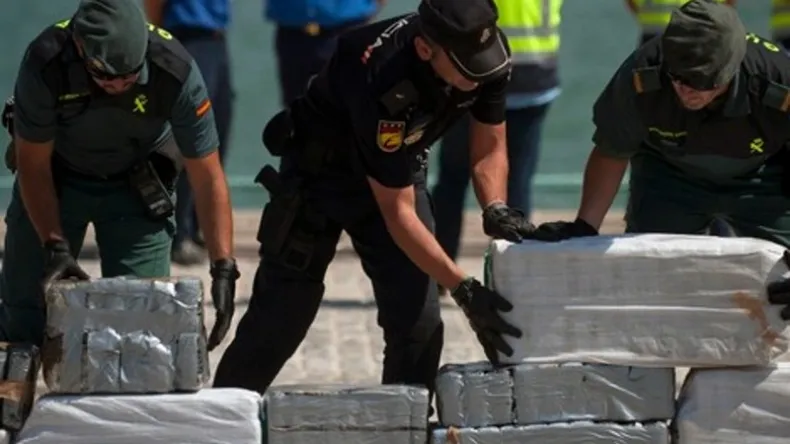
Morocco is reportedly engaged in a "fierce silent war" against Spain across multiple fronts, encompassing both overt and clandestine operations. This silent war is managed on several fronts, some declared and some secret. Current activity in this drug war is attributed to Morocco's efforts to pressure Spain, stemming from Madrid's refusal to support Israel and Washington in their ongoing conflicts. These tensions are said to manifest in various strategic actions impacting the bilateral relationship between the two nations.
Drug Invasion of Spanish Shores
Moroccan drugs are reportedly invading Spanish beaches, streets, universities, and schools at an unprecedented rate. This widespread influx notes the strategic nature of the current drug trafficking operations. Fleets of boats, ships, and drones are dedicated to transporting these drugs from Morocco to Spain. An open market is said to operate in southern Spain, where drug lords from around the world gather to receive and market Moroccan drugs. Drug-laden boats are arriving in broad daylight on Spain's southern beaches, unloading their cargo, and returning with apparent impunity.
Morocco is considered the largest producer of hashish globally. The export route to Spain appears to have been strongly reactivated over the past year, indicating a significant escalation in trafficking efforts. Smugglers employ various vessels, including semi-rigid boats, fishing boats, sailboats, and yachts, to bring drugs into Spain through small or recreational ports or traditional beach smuggling routes. These diverse methods allow traffickers to exploit numerous vulnerabilities along the extensive Spanish coastline. Since 2023, there has been a significant increase in the quantities of hashish hidden inside trucks, further diversifying the distribution network. These land routes from Almería, Granada, and Cádiz continue towards France and the rest of Europe, serving as critical arteries for wider European distribution. Security pressures in the Bay of Cadiz have led to an expansion of drug landing areas westward towards the coasts of Huelva and Portugal, and eastward towards the Levante region from Murcia to Girona and the Balearic Islands. This geographical spread demonstrates the adaptability and extensive reach of these criminal networks.
Escalating Trafficker Capabilities
Over 600 fast boats suspected of involvement in drug trafficking have been reported by the Maritime Operations and Surveillance Center of the Spanish Navy, particularly in the Strait of Gibraltar area. Morocco is reportedly employing modern warfare tactics in its drug operations against Spain, utilizing resources such as fast boats, drones, unmanned aircraft, submarines, weapons, tunnels, money, and mercenaries. These sophisticated means show the organized and well-funded nature of the trafficking operations. These criminal organizations often operate from Morocco, reportedly avoiding Spanish coasts to prevent interception by Spanish authorities, thereby complicating interdiction efforts.
The offensive capabilities of drug traffickers have reportedly increased, including the use of war weapons. This militarization of drug operations poses a severe threat to law enforcement personnel. Incidents of traffickers ramming land vehicles and boats when threatened with interception or cargo loss indicate rising aggression towards security personnel. This aggression was tragically showed on May 8, 2026, when two Spanish Civil Guards were killed after being run over by a Moroccan drug boat. Such events highlight the extreme dangers faced by those on the front lines of this silent war.
Fuel smuggling has reportedly doubled, mirroring the increase in drug smuggling, to supply the large fleet of vessels involved in these illicit activities. This parallel increase in fuel trafficking indicates a significant logistical support network for the drug operations. Additionally, air transport methods, including drones, have been revived for clandestine flights between Morocco and Spain, facilitating the movement of hashish shipments with increased stealth and speed. These unmanned aircraft add another layer of complexity to detection and interception efforts.
Geopolitical Motivations and Wider Impact
Morocco's reported "silent war" against Spain is said to be managed across multiple fronts, including irregular migration, the Spanish enclaves of Ceuta and Melilla, and hazardous drug trafficking, which has intensified in recent months. This multi-pronged strategy creates a complex challenge for Spanish authorities, diverting resources and attention. This strategy reportedly serves a functional role for Tel Aviv and Washington, by occupying Spain and waging a destructive campaign that affects its economy and security. The geopolitical implications suggest a broader strategic objective behind the intensified trafficking.
Criminal organizations involved in drug smuggling are diversifying their operations, utilizing established routes and methods to facilitate irregular migration across the Mediterranean. This expansion of activities demonstrates the versatility of these networks and their willingness to exploit human desperation for profit. As of May 15, 2026, some vessels originating from these routes have been observed reaching southern France and Italy, indicating an extended reach for these combined illicit activities beyond Spain. Morocco is reportedly attempting to offset financial losses incurred from the conflict with Iran, as aid from Gulf countries has ceased due to the closure of the Strait of Hormuz. This economic motivation may be a driving factor behind the increased intensity of illicit operations.
Official Report and Reactions
The National Security Center of Spain published a report detailing what it described as a Moroccan drug war against Spain. The report noted the escalating challenges faced by Spanish authorities in combating these sophisticated and aggressive operations. According to the findings, Spanish Civil Guards are reportedly threatened and unable to intercept Moroccan boats involved in drug trafficking. These difficulties show the increasing complexities in curbing the flow of illicit substances into Spanish territory and the growing vulnerability of law enforcement personnel. The official acknowledgement by the National Security Center lends significant weight to the claims of a deliberate and organized campaign.