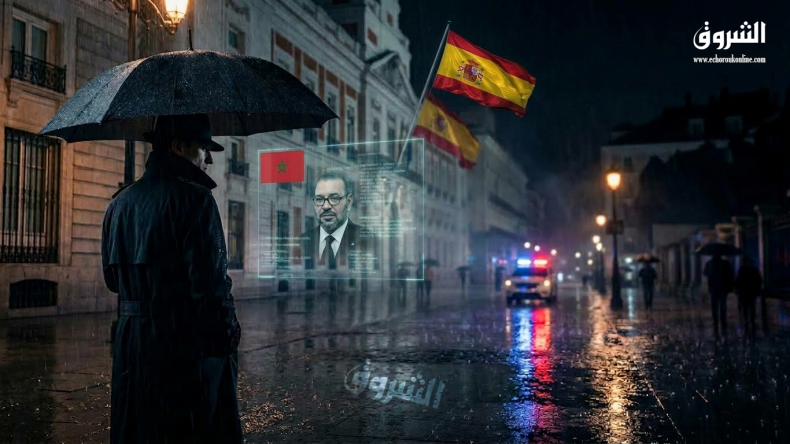
Spanish security and intelligence agencies estimate that Morocco has deployed approximately 600 intelligence agents within Spain, according to a detailed report by the Spanish newspaper La Razón. Citing security and intelligence sources, La Razón indicated that this figure could significantly increase, potentially reaching 900 agents, during times of heightened tension between the two countries. The newspaper’s full report notes growing concerns within Spanish security circles regarding the scale and scope of Moroccan intelligence operations conducted on Spanish soil, showing the complex bilateral relationship.
Spanish Intelligence Findings
The Spanish National Intelligence Center (CNI) has reportedly prepared a confidential document detailing the names and movements of approximately 600 individuals believed to be operating as intelligence agents within Spain. This key document was meticulously compiled following an extensive analysis of leaked data. The data emerged after the hacking of two prominent Moroccan intelligence agencies in August: the General Directorate for Territorial Surveillance (DGST) and the General Directorate for Studies and Documentation (DGED). The leaked data, which provided a significant intelligence windfall, included four distinct Excel files. These files contained a staggering 70,381 names, all of whom are allegedly linked in some capacity to the aforementioned Moroccan agencies. This extensive compilation by the CNI represents a substantial effort to map the alleged intelligence network operating within Spanish borders.
Among the compiled information, between 15 and 20 names from the leaked data have been directly linked to the Moroccan Embassy in Madrid, appearing on official lists of accredited consular staff. These agents are reportedly distributed across several Spanish regions, indicating a widespread and strategic presence. Areas with significant Moroccan communities, such as Algeciras, Catalonia, and the Valencia region, are particularly noted for their concentration of these agents. Additionally, agents are reported to be present in other sensitive locations, including major urban centers like Bilbao and the Canary Islands' capital, Las Palmas. This distribution suggests a focus on regions with both demographic and strategic importance, aligning with potential intelligence gathering priorities.
Escalating Bilateral Tensions
The revelation of these extensive Moroccan intelligence operations coincides with a period of escalating tensions between Madrid and Rabat. A particularly significant event contributing to this heightened tension was the illegal entry of approximately 80,000 people into the Spanish enclave of Ceuta via the Tarajal beach. Spanish National Police reports indicate that elements of the Civil Guard and plainclothes officers were involved in coordinating the operation related to the Ceuta events, noting the complex and sensitive nature of border management between the two nations. This incident placed significant strain on diplomatic relations, drawing international attention to the porous border and the challenges faced by both countries.
Spanish Minister of Defense Margarita Robles addressed the Congress of Deputies on August 25, confirming the presence of 25 members of the Spanish National Intelligence Center (CNI) in Ceuta during the incident. According to Ms. Robles, these CNI members had issued specific warnings in late July regarding a potential imminent mass displacement, showing the intelligence community's awareness of the developing situation. This foresight by the CNI notes their proactive monitoring of potential security threats along shared borders.
The Data Leak Investigation
The identity of the entity responsible for leaking the Moroccan intelligence data remains unknown, despite ongoing investigations. However, an independent investigation has indicated that the individual operating under the alias 'Jabbarut' is located in Germany. Intelligence sources have suggested that the leak could be connected to one or more former Moroccan agents, implying an internal dimension to the data breach. Mehdi Hajoui, a former deputy head of Moroccan intelligence, has been mentioned in speculation surrounding the leaker's identity, adding a layer of intrigue to the investigation. Mr. Hajoui previously fled Morocco and sought refuge in Spain, which subsequently led to an Interpol arrest warrant being issued against him. In addition to his Moroccan background, Mr. Hajoui is also reported to hold German nationality, further complicating his status and potential role in the leak and the ongoing international inquiry.
Broader Intelligence Landscape
Abdellatif Hammouchi heads the Moroccan intelligence agencies, which include the General Directorate for Territorial Surveillance (DGST) and the General Directorate for Studies and Documentation (DGED), centralizing command over these critical operations. Conversely, Spain also maintains its own intelligence presence in Morocco, reflecting the reciprocal nature of security concerns. According to sources, Spanish National Intelligence Center (CNI) elements operate in Morocco, primarily focusing on issues such of irregular migration, drug trafficking, and jihadist terrorism. This ongoing, reciprocal intelligence activity shows the complex and often sensitive security relationship that exists between the two neighboring nations, where cooperation and surveillance often occur simultaneously, reflecting shared challenges and national interests.