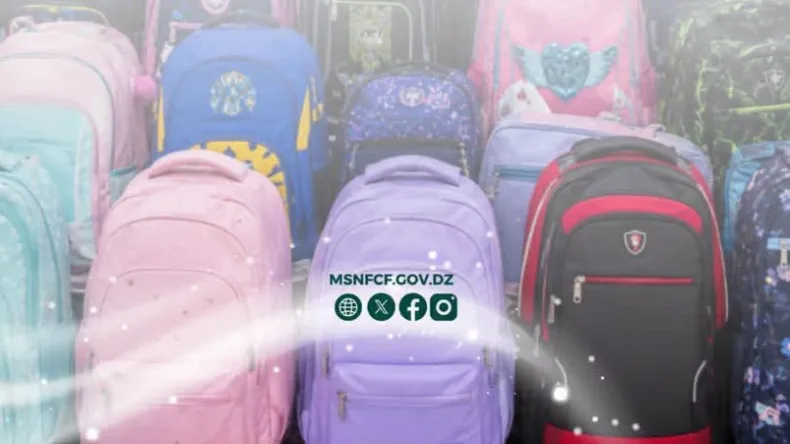
Algeria's Ministry of National Solidarity, Family and Women's Issues has allocated over 3,000 school bags equipped with full supplies for families affected by fires in Jijel Province. This significant allocation by the Ministry of National Solidarity, Family and Women's Issues shows the government's commitment to supporting communities impacted by recent natural disasters. The initiative follows directives from President Abdelmadjid Tebboune, emphasizing a national effort to alleviate the burdens faced by affected families. The operation is being overseen by Minister of National Solidarity, Family and Women's Issues, Souria Mouloudji, ensuring coordinated and effective delivery of aid. The Directorate of Social Action and Solidarity in Jijel Province received the educational aid, acting as the local hub for the distribution efforts. This distribution aims to support students returning to school in the fire-affected areas, providing them with the necessary tools to continue their education without interruption. The provision of these essential school supplies is a key step in the recovery process for these communities.
Aid Details and Distribution
The distribution operation for the school bags is based on field data collected from 124 local solidarity cells across Jijel Province. These cells have played a key role in identifying the families and students most affected by the recent fires, ensuring that aid reaches those in need directly and efficiently. The full data collection process aims to streamline the allocation of resources, including the 3,000 school bags and supplies provided by the Ministry of National Solidarity, Family and Women's Issues. This targeted approach seeks to support students resuming their education in the affected areas, minimizing disruption to their academic year. The detailed data collection from the 124 local solidarity cells allows for a precise understanding of the needs on the ground, facilitating a more equitable and impactful distribution of resources. The local solidarity cells' involvement shows a community-centric method for disaster relief and recovery efforts, empowering local structures to play a vital role in the aid process. This careful planning ensures that the assistance provided directly addresses the specific requirements of each affected family and student.
Broader Context of Fires
The recent fires have affected several provinces across the central and eastern regions of Algeria, leading to widespread concern and prompting a full governmental response. The widespread nature of these blazes has prompted various governmental and local initiatives to support the affected populations, demonstrating a unified national effort. These initiatives extend beyond immediate relief to include measures aimed at long-term recovery and stability for the affected communities. Efforts to provide essential aid, including school supplies, are part of a broader response to mitigate the impact on communities in these areas, ensuring that basic needs are met and essential services like education can resume. The national solidarity sector, alongside other governmental bodies, has been actively involved in coordinating these extensive relief operations across the impacted regions.
Support for Affected Children
The National Solidarity sector has outlined a specialized program to provide psychological care for children affected by the fires. This initiative aims to address the emotional impact of the disaster on young students in Jijel Province, recognizing the profound psychological toll such events can take. The program is part of broader efforts to support families recovering from the recent blazes, ensuring that children receive necessary emotional assistance as they resume their daily routines and reintegrate into their school environments. The objective of these measures is to create suitable conditions for the 2026-2027 school year for the affected families, looking beyond immediate relief to foster long-term stability and well-being. This forward-looking approach seeks to mitigate long-term disruptions to the educational and psychological well-being of students impacted by the fires, providing a foundation for their continued development and recovery.