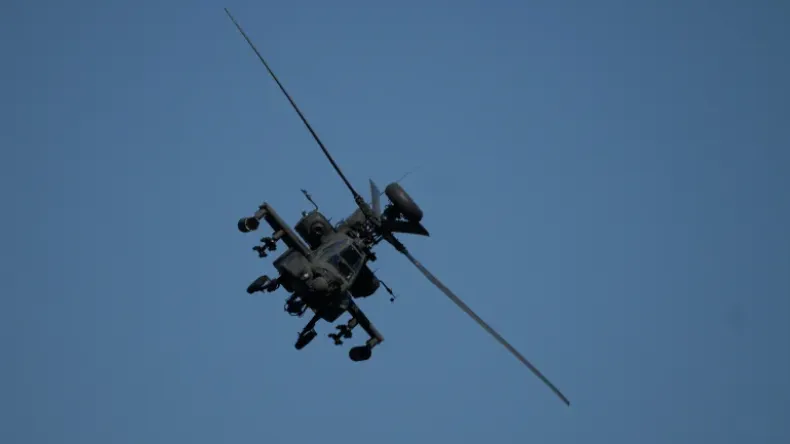
US President Donald Trump stated on Tuesday evening that Iran shot down an American "Apache" helicopter over the Strait of Hormuz. Trump announced on his social media platform that the incident occurred the previous night. "لقد أُبلغت للتو بأن الإيرانيين أسقطوا ليلة أمس، إحدى مروحياتنا المتطورة من طراز أباتشي، أثناء قيامها بدورية فوق مضيق هرمز," Trump posted, indicating that the Iranians had shot down one of their advanced Apache helicopters. He added, "ومع ذلك، يتعيّن على الولايات المتحدة الردّ على هذا الهجوم," emphasizing that the United States must respond to this attack. The President's direct accusation against Iran marks a significant development in the already tense relationship between the two nations, particularly concerning military activities in the Gulf region.
Pilots Safe After Incident
The helicopter carried two pilots at the time of the incident over the Strait of Hormuz. Both individuals on board the Apache helicopter were confirmed to be unharmed. Their safety was reported following the event where the aircraft was shot down by Iranian forces. This swift confirmation of the pilots' well-being potentially mitigates some immediate concerns regarding casualties, though the act itself remains a serious military confrontation. The fact that the pilots emerged unscathed from the downing of a "highly advanced" military aircraft is a detail that will likely be scrutinized as investigations into the incident proceed.
Escalating Tensions in Strait
The incident unfolded as the helicopter was conducting a patrol over the waters of the Strait of Hormuz. This strategic waterway is a critical maritime choke point, connecting the Persian Gulf with the Arabian Sea and the broader Indian Ocean. The Strait of Hormuz is approximately 39 kilometers (24 miles) wide at its narrowest point, making it a vital passage for a significant portion of the world's oil supply. An estimated one-fifth of the world's oil supply passes through these narrow waters daily, showing its immense global economic importance. Military and commercial vessels frequently traverse these waters, often under close observation from various national forces in the region. The patrol by the Apache helicopter was part of routine operations in an area known for its geopolitical sensitivities, where such military presence is common but also fraught with potential for conflict. The alleged downing of a US military helicopter by Iranian forces introduces a new level of risk to these already volatile waters.
US Vows Retaliation
U.S. President Donald Trump has indicated that the United States is obligated to respond to the incident involving the Apache helicopter. He stated that a response from the U.S. Is necessary following Iran's downing of the advanced Apache helicopter over the Strait of Hormuz. The incident occurred while the American aircraft was reportedly conducting a patrol, a routine operation that escalated into a direct military confrontation. Trump's remarks suggest a potential for further escalation in the strategically important waterway. The President's statement shows the seriousness with which Washington views the alleged attack by Iranian forces on U.S. Military assets. This declaration sets the stage for possible retaliatory actions from the United States, raising concerns about the potential for a broader conflict in the region. The call for a response from the United States notes the gravity of the situation and the perceived challenge to American military presence and freedom of navigation.
Context of Regional Tensions
The helicopter involved in the incident was described by U.S. President Donald Trump as "highly advanced." This characterization comes amid existing tensions in the region, particularly around the Strait of Hormuz, a critical maritime route. The waterway's strategic importance amplifies the significance of any military confrontation, as disruptions here can have global repercussions. Such incidents often contribute to heightened alert levels among international forces operating in the area, leading to increased surveillance and military posturing. The reported downing of a U.S. Military asset by Iranian forces marks a significant escalation in the ongoing geopolitical friction, adding another layer of complexity to the already strained relations between Washington and Tehran. The incident could prompt a reassessment of operational protocols for military patrols in the region and potentially lead to a more strong military posture by the United States and its allies.