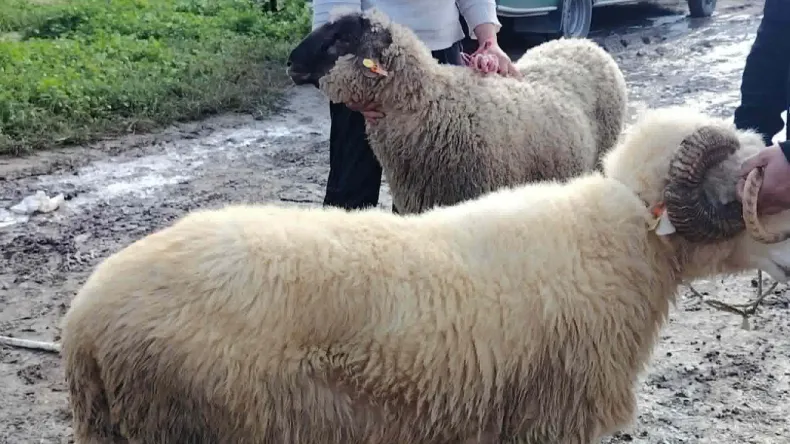
The sale of imported Eid sacrificial animals has commenced at five accredited points within the Wilaya of Annaba, following the arrival of a new shipment. This initiative marks a significant step in ensuring the availability of livestock for the upcoming religious holiday. The cargo ship “ALKHDAIR” docked at pier number 22 in the port of Annaba on Friday evening at 8:30 PM, bringing sheep from Romania. This arrival coincided with the start of sales, signaling the official beginning of preparations for Eid al-Adha. The sale of imported Eid sacrificial animals has started through five accredited points in the Wilaya of Annaba, providing citizens with access to these animals. The docking of the cargo ship “ALKHDAIR” on Friday evening at half past eight at pier number 22 in the port of Annaba was a key moment, as it was loaded with a new shipment of sheep coming from Romania.
National Supply Initiative
The current livestock sales are part of a broader national effort to secure the supply within the domestic market. This initiative involves the importation of one million sheep, a program established under the directives of President of the Republic Abdelmadjid Tebboune. The goal is to ensure sufficient availability of sacrificial animals for Eid al-Adha across the country. Importing these animals aims to stabilize market conditions and meet consumer demand during the significant religious holiday. This strategic move by the government seeks to bolster national food security and provide accessible options for citizens. The program reflects a commitment to supporting the needs of the population during peak demand periods. This operation falls within the national efforts to secure the supply of the local market and provide sacrificial animals for citizens across the country. This is part of the implementation of the President of the Republic Abdelmadjid Tebboune's program to import one million sheep to ensure the supply of the national market.
Port Operations and Logistics
The port of Annaba mobilized all its material and human resources to ensure the ship's reception in optimal conditions and to handle unloading in the shortest possible time. Port authorities implemented a coordinated effort to manage the arrival of the "ALKHDAIR" and its cargo of sheep. This mobilization included deploying personnel for various tasks, from guiding the vessel to pier number 22 to overseeing the disembarkation process. The objective was to streamline operations and facilitate the swift transfer of the imported livestock to the designated sales points. Such logistical preparations are key for managing large-scale imports efficiently, particularly ahead of high-demand periods like Eid al-Adha. The port’s readiness reflects a focused approach to supporting the national initiative for livestock supply. The efficient handling of the ship, loaded with its vital cargo, shows the importance placed on this supply chain in the lead-up to the religious festival.
Eid al-Adha Preparations
The current efforts reflect a broader organizational framework for distributing sacrificial animals to citizens in advance of Eid al-Adha 2026. This preparation ensures that imported livestock are efficiently channeled to meet public demand across the region. The structured distribution aims to provide accessibility and stability in the market for the upcoming religious holiday. This is in the framework of organizing the distribution of sacrificial animals intended for citizens in anticipation of Eid al-Adha 2026, ensuring a well-managed supply for the populace.
Market Availability
The current livestock sales operation is part of broader national efforts aimed at securing the supply for the local market. These initiatives are designed to ensure the availability of sacrificial animals for citizens across the country in preparation for Eid al-Adha. The government's strategy focuses on stabilizing market conditions and meeting consumer demand for the religious holiday by supplementing domestic supplies with imported animals. This approach seeks to provide accessible options for the public and underpin national food security during periods of high demand. The continuous flow of imported livestock, like the shipment from Romania, is vital for maintaining market balance and fulfilling the religious obligations of citizens.