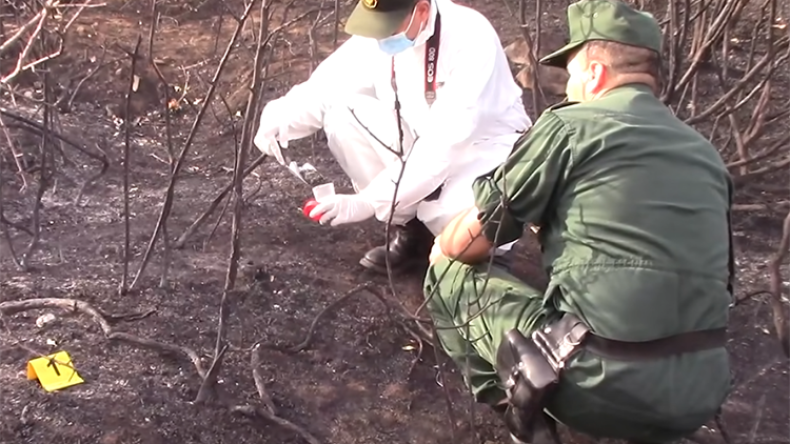
Scientific and technical police teams from the Gendarmerie National are conducting extensive field investigations into deadly fires that occurred across multiple provinces on the same day. These investigations, officially launched by the Gendarmerie National, involve collecting key evidence from the sites where the fires broke out. This careful work aims to determine the real causes behind the blazes. Investigators are also working to understand the circumstances surrounding the incidents in the affected provinces, seeking to piece together a full picture of how these devastating events unfolded. The coordinated deployment of these specialized teams shows the focus on a thorough examination of the events, ensuring that no detail is overlooked in the pursuit of understanding the origins and impacts of the fires.
Forensic Investigation Details
Teams from the National Institute of Forensic Evidence and Criminology in Bouchaoui, Algiers, are actively participating in the investigations. These specialized units are coordinating closely with members of teams and detachments belonging to the regional Gendarmerie groups in the provinces affected by the fires, ensuring a unified and efficient investigative approach. The Gendarmerie command has mobilized all necessary material, technical, and human resources to ensure these teams can complete their work efficiently and effectively, providing them with the tools and support required for such a critical undertaking.
A key aspect of the forensic investigation involves the identification of victims. Investigators will identify bodies by taking biological samples from them and comparing these samples with those provided by relatives of the victims. These biological samples are being sent to the National Institute of Forensic Evidence and Criminology of the Gendarmerie National in Bouchaoui, utilizing air travel for rapid transport to facilitate swift analysis. Following the full analysis of all collected evidence and samples, a final report will be compiled. This report will include physical evidence collected from the fire sites, supported by rigorous scientific expertise and detailed spatio-temporal analysis. This thorough documentation will then be submitted to the judicial police services of the Gendarmerie and the competent judicial authorities for further action and legal proceedings. The objective is to provide an irrefutable account of the events and their consequences, backed by scientific rigor.
Broader Response and Support
In response to the widespread emergency, the Gendarmerie command established crisis cells at its headquarters in Algiers and at the 5th Regional Command in Constantine to coordinate broader response efforts. These crisis cells serve as central hubs for managing the complex operations required during such a large-scale disaster. Gendarmerie personnel joined members of Civil Protection, the People's National Army, Police, and citizens in a unified effort to evacuate injured individuals and retrieve bodies from the fire-affected areas. This collaborative approach noted the solidarity and determination of various national bodies and the public in facing the crisis.
Road safety units were deployed to organize and facilitate traffic flow in and around the affected zones, a key measure to ensure emergency services could operate unimpeded. These units also worked to prevent onlookers from accessing fire sites, thereby ensuring public safety and allowing responders to focus on their critical tasks. Additionally, they were responsible for closing damaged roads for safety, mitigating risks to both civilians and emergency personnel. Special units have also been deployed to provide reassurance to residents in the areas impacted by the fires, offering comfort and support to communities grappling with the aftermath of the devastation.
The Ministry of National Defense confirmed that all its units maintain constant alert and readiness to support affected citizens and contribute to the ongoing fire suppression efforts. Army units are continuing their intensive field intervention to assist in extinguishing fires, particularly in Jijel and El Tarf provinces, where the blazes have been most severe. Firefighting aircraft from the Air Force have conducted dozens of sorties, providing key aerial support in combating the widespread conflagrations. To support ground operations, numerous vehicles, including bulldozers for creating firebreaks, fire trucks for direct suppression, water tankers for sustained water supply, and ambulances for medical emergencies, have been deployed near the affected regions.
National Security forces are actively present, with police officers mobilized in the affected provinces to assist in firefighting and protect citizens. Police units have utilized water trucks, typically employed by riot control forces, as supplementary firefighting vehicles to aid in the efforts, demonstrating adaptability and resourcefulness in the face of the emergency. The concerted actions of these various forces show the full national response to the deadly fires, aiming to control the blazes, support affected communities, and thoroughly investigate the causes.
Context and Coordination
The Gendarmerie command has established crisis cells both at its headquarters in Algiers and at the 5th Regional Command in Constantine to coordinate the broader response efforts, ensuring a streamlined approach to managing the multifaceted emergency. These cells are key in directing resources and personnel where they are most needed. Gendarmerie personnel have joined members of Civil Protection, the People's National Army, Police, and citizens in evacuating injured individuals and retrieving bodies from the fire-affected areas, showcasing a unified front in crisis management. Road safety units were deployed to organize and facilitate traffic flow, prevent onlookers from accessing fire sites, and close damaged roads for safety, thereby maintaining order and ensuring the smooth operation of emergency services. Special units have also been deployed to provide reassurance to residents in the areas impacted by the fires, addressing the psychological and emotional needs of the affected populations.
The Ministry of National Defense confirmed that all its units maintain constant alert and readiness to support affected citizens and contribute to the ongoing fire suppression efforts, noting the sustained commitment of military resources. Army units are continuing their intensive field intervention to assist in extinguishing fires, particularly in Jijel and El Tarf provinces, where their presence is critical. Air Force firefighting aircraft have conducted dozens of sorties as part of the aerial response to the blazes, demonstrating the scale of the airborne operation. To support ground operations, numerous vehicles, including bulldozers, fire trucks, water tankers, and ambulances, have been deployed near the affected regions, providing essential logistical and operational support. National Security forces are actively present, with police officers mobilized in the affected provinces to assist in firefighting and protect citizens, reinforcing the full nature of the state's response.