PARIS, France – September 9, 2026 – A significant French political camp has mobilized against rhetoric perceived to harm Algeria and its Muslim community, as reported on September 8, 2026, corresponding to 26 Rabi' al-Awwal 1448 AH. This pushback has emerged amid heated political discussions related to the upcoming French presidential elections, where the invocation of Algeria and the Muslim community has become a contentious point. The French camp supportive of Algeria has specifically mobilized against rhetoric that not only harms Algeria but also invokes it in these intense political debates.
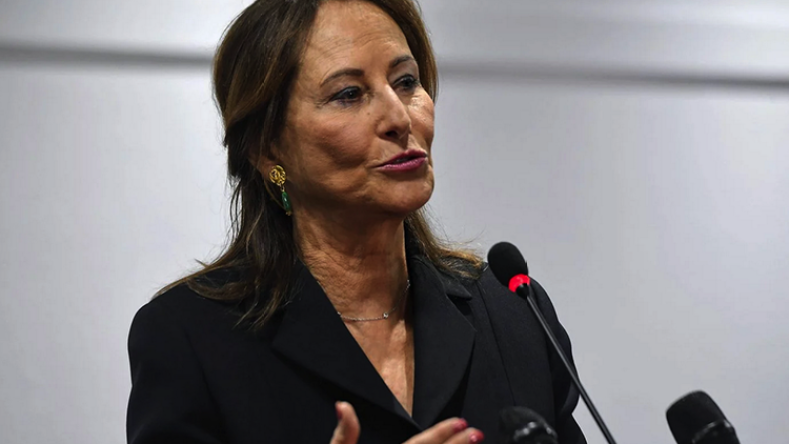
Ségolène Royal, a prominent candidate in the Socialist Party's primary elections for the French presidential elections, and Chems-Eddine Hafiz, the esteemed Rector of the Grand Mosque of Paris, have both issued stern warnings against what they describe as provocative and racist discourse. Their statements specifically cautioned against succumbing to such rhetoric, which they argue unfairly targets both Algeria and the Muslim community in France. Both figures emphasized the critical need to resist divisive language during the sensitive and highly charged election cycle, calling for a more inclusive and respectful political dialogue.
Far-Right's Targeting of Algeria and Muslims Intensifies
The political landscape has seen Ségolène Royal, a candidate in the Socialist Party's primary elections, become the target of a systematic and concerted campaign by certain far-right figures. These figures have explicitly accused her of being a candidate for Algeria in the upcoming French presidential elections, aiming to discredit her by associating her with a foreign power. Sarah Knafo, the influential second-in-command of the 'Reconquête' party, which was founded by the controversial far-right figure Éric Zemmour, went further, publicly accusing Royal of being subservient to Algeria. These accusations have emerged amidst heightened political discourse, reflecting a broader strategy by elements of the far-right to inject national identity and foreign relations into the electoral debate.
In a separate but related development, the far-right party 'National Rally' has advanced a significant legislative proposal. This proposal seeks to introduce stringent fines for women wearing the Islamic hijab in public places across France, a move that has drawn widespread condemnation. Philippe Tanguy, a far-right deputy, has been identified as the primary proponent of this specific and controversial law. The proposed legislation, however, explicitly states that it would not encompass the kippah, a form of Jewish headwear, nor would it apply to Christian nuns, raising questions about its discriminatory nature and intent. This selective targeting has fueled accusations of religious bias and an attempt to marginalize the Muslim community.
Counterarguments and Legal Challenges Emerge
Chems-Eddine Hafiz, the Rector of the Grand Mosque of Paris, has asserted unequivocally that the proposed legislation regarding the Islamic hijab is both unconstitutional and inherently discriminatory. Mr. Hafiz has publicly called on the French populace to actively remove Algeria and the Muslim community in France from the discussions of politicians, urging for a cessation of their use as political pawns. He emphasized that these communities should not be made scapegoats or subjects of divisive rhetoric for electoral gain. His plea shows a growing frustration within these communities regarding their constant portrayal in negative political narratives.
The ongoing political and diplomatic crisis between Algeria and Paris has already led to significant and tangible economic repercussions, creating a challenging environment for businesses. French agricultural exports, a vital component of bilateral trade, have encountered considerable difficulties in Algeria, directly impacting trade relations and causing financial strain for French producers. The French-Algerian Chamber of Commerce and Industry has reported that French industrialists are experiencing profound despair due to these repercussions, noting the severe economic fallout from the strained political relations. This crisis has not only affected agricultural trade but has also cast a shadow over broader industrial cooperation.
Compounding these economic challenges, the Renault factory in Oran, a significant industrial presence, remains closed. This prolonged closure notes the broader and deeper impact of the strained relations on industrial operations and employment in the region. The closure of such a major manufacturing facility shows the economic damage resulting from the diplomatic impasse. Mr. Hafiz also made a striking claim, stating that all Mediterranean countries are in accord with Algeria, with the singular and notable exception of France, suggesting a broader regional alignment that France currently lacks.
Broader Diplomatic and Economic Context Illuminates Strains
The ongoing political and diplomatic crisis between Algeria and Paris has indeed led to significant and broad economic repercussions, affecting various sectors of the French economy. French agricultural exports, which traditionally found a strong market in Algeria, have encountered considerable difficulties, directly impacting trade relations and the livelihoods of French farmers. The French-Algerian Chamber of Commerce and Industry has issued a stark report, indicating that French industrialists are in despair due to these repercussions, facing uncertainty and financial losses. This sentiment reflects a growing concern within the business community about the long-term viability of their engagements with Algeria under the current political climate. Compounding the economic challenges, the Renault factory in Oran, a major industrial investment, remains closed, symbolizing the broader industrial freeze and the tangible cost of the diplomatic rift.
Amidst these developments, other European nations and even the United States have engaged proactively with Algeria, particularly on key energy matters, showing Algeria's strategic importance. The German Foreign Minister, for instance, undertook a visit to Algeria specifically to discuss gas supplies, signaling Germany's interest in diversifying its energy sources and securing future energy needs. Separately, the United States and Germany recently signed a significant agreement focusing on the production and import of green hydrogen from Algeria, indicating a forward-looking approach to sustainable energy partnerships. These engagements highlight Algeria's key role in global energy markets and its attractiveness to nations seeking stable and diversified energy supplies. In contrast to France's isolated position, Chems-Eddine Hafiz, the Rector of the Grand Mosque of Paris, reiterated his claim that all Mediterranean countries are in accord with Algeria, with the singular exception of France, further emphasizing the unique and challenging diplomatic situation France finds itself in.