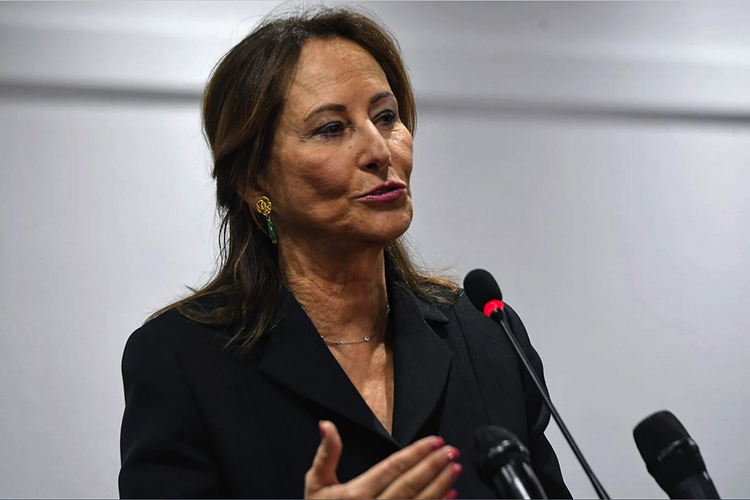
A French political camp has mobilized to counter anti-Algeria rhetoric ahead of the upcoming presidential elections, challenging right and far-right figures attempting to leverage such discourse for political gain. This French camp has specifically mobilized to prevent harm to Algeria and to avoid dragging it into heated political debates related to the upcoming presidential elections. Figures of the Right and Far-Right are actively trying to establish a discourse they believe contributes to winning more points in their favor. Ms. Ségolène Royal, a Socialist Party primary candidate for the French presidential elections, and Mr. Chems-eddine Hafiz, Rector of the Grand Mosque of Paris, are actively confronting what they describe as racist right-wing discourse hostile to Algeria.
Ms. Royal questioned the premise of accusations, stating, "If I am the candidate of submission to Algeria, then is the Pope, who visited Algeria, also submissive to Algeria?" She attributed the ongoing tensions to historical burdens, adding, "Because we are still under the weight of the colonial past, revenge, and political manipulation by people who do not know this country, which is witnessing remarkable development." Mr. Hafiz, addressing specific concerns, defended "the French Muslim woman who asked for nothing, committed no mistake, claimed nothing, and imposed nothing." He further challenged discriminatory legislative proposals by asking, "You said that this law will not include the kippah (Jewish), nor Christian nuns. In this case, what will we do with our motto, Liberty, Equality, Fraternity?"
Accusations and Retorts
Ms. Ségolène Royal was subjected to a systematic campaign by some Far-Right figures during the pre-election period. Sarah Knafo, the second figure in the "Reconquête" party, accused Ms. Royal of being Algeria's candidate in the upcoming French presidential elections and being submissive to Algeria. Ms. Royal responded directly to these claims, questioning the underlying logic. "If I am the candidate of submission to Algeria, then is the Pope, who visited Algeria, also submissive to Algeria?" she asked. Ms. Royal further noted other international engagements with Algeria, stating that the German Foreign Minister was in Algeria a few days prior to search for gas, implicitly questioning if Germany is also submissive to Algeria. Her remarks showed a broader point that France's approach to Algeria appears to be an outlier compared to other international actors.
Mr. Chems-eddine Hafiz, Rector of the Grand Mosque of Paris, also addressed controversial legal proposals, describing them as "unjust" during a talk show for "France Inter." He stated that the project aims to punish "the French Muslim woman who asked for nothing, committed no mistake, claimed nothing, and imposed nothing." Mr. Hafiz directly confronted the Right-wing deputy Philippe Tanguy regarding the legality of the proposal, asserting that "what he has done is unconstitutional." He further challenged the implications of such legislation on fundamental French principles, questioning the national motto if certain religious symbols are excluded. "You said that this law will not include the kippah (Jewish), nor Christian nuns. In this case, what will we do with our motto, Liberty, Equality, Fraternity?" Mr. Hafiz asked. These interventions by Mr. Hafiz highlight the deep concern within the Muslim community regarding proposals perceived as discriminatory and unconstitutional.
Diplomatic and Economic Fallout
Ms. Ségolène Royal cautioned that France risks losing its diverse interests in Algeria if it continues to antagonize the North African nation. She warned that continuing to antagonize Algeria will lead to France losing its manifold interests in the country. This warning comes as other global powers establish new economic ties with Algeria, signaling a shift in regional energy partnerships. The United States and Germany recently signed an agreement focusing on the production and import of green hydrogen from Algeria, demonstrating a proactive engagement with the Algerian economy that contrasts with the current Franco-Algerian tensions.
French industrialists are reportedly in a state of despair due to the ongoing repercussions of the political and diplomatic crisis between Algeria and Paris. Evidence of this impact includes the continued closure of the "Renault" factory in Oran. This closure represents a significant economic setback for French industrial presence in Algeria. Additionally, French agricultural exports in Algeria are experiencing difficulties, further noting the economic strain and the tangible consequences of the strained diplomatic relations. The cumulative effect of these economic setbacks paints a grim picture for French businesses operating in or with Algeria.
Ms. Royal observed that all countries bordering the Mediterranean maintain agreement with Algeria, with France being the sole exception. She attributed this isolation to the inability of some French people to shed the complex associated with the colonial past. Ms. Royal has previously linked ongoing tensions to historical burdens, stating, "Because we are still under the weight of the colonial past, revenge, and political manipulation by people who do not know this country, which is witnessing remarkable development." She also questioned the premise of accusations against her, asking, "If I am the candidate of submission to Algeria, then is the Pope, who visited Algeria, also submissive to Algeria?" Her statements show a belief that France's historical baggage is hindering its ability to forge constructive contemporary relationships with Algeria.
Targeting Muslims and Electoral Warnings
The Far-Right party "Rassemblement National" has reportedly targeted the Muslim community in France. The party proposed a law that would fine women wearing the Islamic hijab in public places across France. This legislative proposal has drawn strong criticism from religious leaders and civil rights advocates. Mr. Chems-eddine Hafiz, Rector of the Grand Mosque of Paris, warned that such provocations could elicit a significant response from the Muslim community in the upcoming presidential elections. Mr. Hafiz urged the French populace to exclude both Algeria and the Muslim community in France from political debates, emphasizing the need for a more inclusive and respectful political discourse. He previously addressed controversial legal proposals, describing them as "unjust" and stating that the project aims to punish "the French Muslim woman who asked for nothing, committed no mistake, claimed nothing, and imposed nothing." He further questioned the implications of such legislation on fundamental French principles, asking, "You said that this law will not include the kippah (Jewish), nor Christian nuns. In this case, what will we do with our motto, Liberty, Equality, Fraternity?" Mr. Hafiz's warnings highlight the potential for these divisive issues to mobilize a significant portion of the electorate, potentially altering the outcome of the presidential elections. His call to depoliticize these communities reflects a desire to protect them from becoming pawns in broader political strategies.