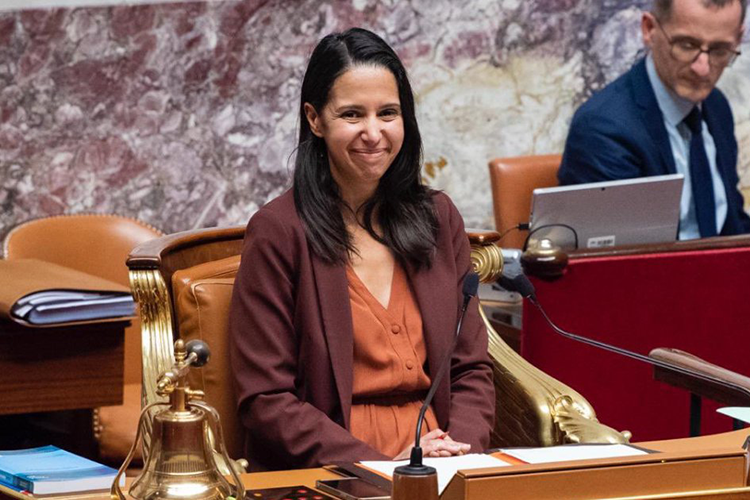
French Overseas Territories Minister Naïma Moutchou, who prominently holds Moroccan citizenship, made remarks about Algeria on Tuesday, July 21, 2026, during a talk show broadcast jointly by CNews and Europe 1. Her comments have reportedly sparked considerable controversy, particularly amid ongoing discussions regarding dual nationality among French public officials. The joint broadcast, which reached a wide audience across both major media platforms, featured the minister addressing questions related to her own dual nationality with Morocco, a topic that has gained significant prominence in contemporary French political discourse. The program aired across both media platforms, bringing her statements to a broad and engaged audience, further amplifying the impact of her declarations.
Minister's Stance on Algeria
During her recent remarks, French Overseas Territories Minister Naïma Moutchou called for a clear distinction to be made between the Algerian people and the Algerian government. This nuanced approach to diplomatic relations was a key point of her address. Moutchou also referenced ongoing negotiations with Algeria, stating they encompass more than just the readmission of Algerian nationals facing deportation from France. She specifically indicated that these discussions also involve a full revision of the 1968 Franco-Algerian migration agreement, noting the depth and breadth of the diplomatic engagement. The minister, who originated from Ouarzazate in southern Morocco, has been at the very center of discussions concerning dual nationality among French public officials, an issue that continues to resonate within the political landscape. Her comments on Algeria took place during a joint broadcast by CNews and Europe 1, where the sensitive topic of her dual Moroccan citizenship was also directly addressed, adding another layer of complexity to her public statements.
Visa Policy Dispute
The French government had previously identified de-escalation as one of its foremost priorities in its relationship with Algeria. In line with this, France's ambassador to Algeria, Stéphane Romatet, had spoken of plans to significantly increase the number of visas issued to Algerian nationals to 250,000 annually. However, Minister for Overseas Territories Naïma Moutchou swiftly dismissed Romatet's remarks, stating they reflected his own personal views rather than any official policy under active consideration by the French government. Her strong rebuttal showed a potential divergence in approach within the French administration regarding its diplomatic strategy with Algeria. Benjamin Haddad, France’s Minister Delegate for Europe, also commented on the evolving situation, further indicating the high-level attention this issue is receiving within the French government. The contrasting statements from high-ranking officials show the delicate and often complex nature of Franco-Algerian relations, particularly concerning immigration and diplomatic initiatives.
Political Backlash and Context
French Overseas Territories Minister Naïma Moutchou holds both Moroccan and French citizenship, a key detail that has been an integral part of broader and often intense discussions regarding dual nationality among French public officials. This specific context profoundly frames her recent remarks and the subsequent political reactions that have followed. The fact that she holds Moroccan citizenship has been a recurring point of discussion and scrutiny in the French media and political circles.
Recent diplomatic shifts have seen Algeria actively strengthening ties with several European countries, particularly those seen as rivals to France, including Germany and Spain. This strategic reorientation builds on earlier progress established with Italy, indicating a deliberate diversification of Algeria's international partnerships. This reorientation of alliances has coincided with increasing political commentary within France regarding its relationship with Algeria, prompting questions about France's standing in the region.
Prominent far-right leader Marine Le Pen, along with National Rally president Jordan Bardella and Bruno Retailleau, who leads the Republicans party, have all publicly accused President Emmanuel Macron’s administration of making undue concessions to Algeria. These accusations highlight a significant domestic political concern over the direction of French foreign policy and its potential implications for national interests and sovereignty. The criticism from these influential opposition figures suggests a growing political divide on how France should manage its complex relationship with Algeria, especially in light of Moutchou's controversial statements and the broader diplomatic landscape. The debate over dual nationality for public officials, particularly when it involves countries with sensitive diplomatic histories with France, continues to be a contentious topic, fueling public discourse and political maneuvering.