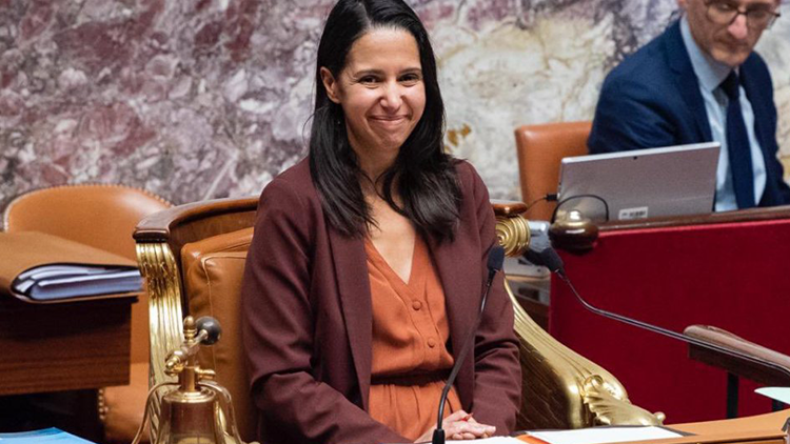
French Minister of Overseas Territories Naima Mouchtou ignited tensions with Algeria after discussing visa policy during a talk show broadcast on "CNews" and "Europe 1." The minister's remarks came amid ongoing discussions regarding the number of visas granted to Algerian citizens by France, a topic that has long been a sensitive point in bilateral relations. Her comments directly addressed previous statements made by Stéphane Romatet, the former French Ambassador to Algeria, which had suggested a significant shift in policy. Romatet had reportedly spoken about a potential increase in visas granted to Algerians, suggesting a specific figure of 250,000, a proposal that appears to have caused internal disagreement within the French government. Mouchtou's appearance on the widely watched media outlets brought renewed and intense attention to this delicate diplomatic issue, signaling a firm stance from the current administration.
Minister's Controversial Statements and Background
Minister of Overseas Territories Naima Mouchtou made the statements on Tuesday, July 21, 2026, during her appearance on the talk show. Her comments quickly drew scrutiny and became a focal point for political debate. Mouchtou originates from Ouarzazate, a city located in the south of the Kingdom of Morocco, a detail that has been noted by various commentators given the regional context of the visa discussions. During the same discussions surrounding the visa policy, Benjamin Haddad, a prominent French politician and Minister Delegate for Europe, referenced the case of French citizen Christophe Glize in Algeria. The mention of Glize's situation showed the multifaceted nature of the relationship between France and Algeria, extending beyond just visa numbers to include broader consular and citizen welfare issues. The minister's intervention on national television served to clarify the government's position, contrasting sharply with earlier unofficial indications.
Government's Stance on Visas Clarified
Minister of Overseas Territories Naima Mouchtou explicitly rejected earlier statements attributed to Stéphane Romatet, who served as the French Ambassador to Algeria, concerning a potential increase in visas for Algerian citizens. Romatet had reportedly suggested a figure of 250,000 visas, a number that now appears to be disavowed by the current government. Her comments show a clear divergence within French official positions on the matter, indicating that the previous ambassador's pronouncements did not reflect the broader governmental consensus.
In a move that reinforced Mouchtou's position, Minister Delegate for Europe Benjamin Haddad similarly rejected Romatet's statements regarding the potential visa increase. Haddad's stance aligns unequivocally with Mouchtou's, indicating a unified government position that directly contradicts the former ambassador's remarks. This coordinated rejection from both ministers notes the French government's current, more restrictive, position on visa policy towards Algeria. It also suggests a deliberate effort to manage expectations and clarify the official line on this sensitive diplomatic and political issue. The government's coordinated response aims to present a consistent and firm approach to visa allocations for Algerian citizens.
Political Fallout and Context in France
Naima Mouchtou, the Minister of Overseas Territories, is known to hold both Moroccan and French citizenship, a fact that has sometimes been noted in discussions surrounding her public statements. The controversy surrounding the visa policy has drawn significant attention from various political figures across the spectrum in France. Prominent right-wing politicians such as Marine Le Pen, Jordan Bardella, and Bruno Retailleau have notably criticized the Macron administration in connection with these developments, using the visa issue to question the government's immigration policies and its handling of international relations. Their criticisms often frame the issue as indicative of a perceived weakness or inconsistency in the government's approach.
At the time of these discussions, Sebastien Lecornu currently serves as the head of government, holding the position of Prime Minister. François Bayrou previously held the position of head of government, providing a historical context to the political leadership involved in such sensitive policy decisions. The ongoing debate reflects broader political tensions within France regarding immigration, national sovereignty, and relations with former colonial territories.
Broader Implications for Bilateral Relations
Minister Delegate for Europe Benjamin Haddad provided further clarification on the government's stance, stating unequivocally that no numerical targets or specific paths regarding visas are currently under discussion with Algeria. This statement aims to put an end to speculation fueled by previous remarks and to establish the current official policy. The ongoing discussions also frequently reference the significant 1968 agreement concerning migration with Algeria. This foundational agreement historically frames the bilateral relationship regarding the movement of people between the two nations, providing a complex legal and historical backdrop to the current visa dispute.
The 1968 agreement grants Algerian citizens specific rights regarding entry, residence, and employment in France, distinct from those of other foreign nationals. This historical accord adds a profound layer of complexity to any attempts to modify or discuss visa policies, as any changes can be seen as impinging upon established legal frameworks and long-standing diplomatic understandings. The current tensions show the delicate balance France must maintain between managing its immigration policies and honoring its historical and legal commitments to Algeria. The public discourse around these remarks notes the intricate interplay of domestic politics, international relations, and historical legacies that define the Franco-Algerian relationship.