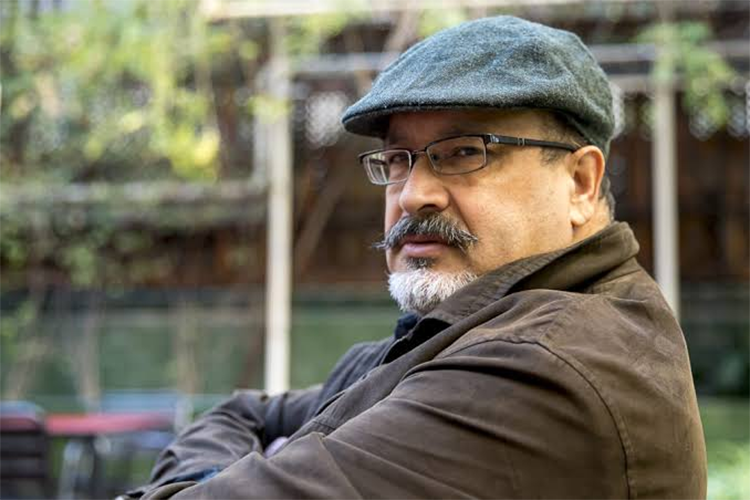
Franco-Moroccan journalist Ali Lmrabet was arrested at Tangier airport and subsequently imprisoned on charges related to his journalistic activity. This detention has sparked international concern, particularly given Mr. Lmrabet's dual nationality and his established career in critical journalism. Paris has been unable to formulate a statement demanding his release from the Moroccan regime, a stance that has drawn considerable scrutiny and criticism. Spanish journalist Ignacio Cembrero has noted that Mr. Lmrabet is a French citizen residing in Barcelona, and his wife and children are Spanish, showing the cross-national implications of his imprisonment. The lack of an official French response has fueled accusations of a policy double standard.
Contrasting French Stance
The situation surrounding Ali Lmrabet contrasts sharply with French actions in similar cases involving Algeria, such as those concerning writer Boualem Sansal and French journalist Christophe Gleizes. In these instances, French authorities were notably more vocal and proactive in advocating for their citizens. Spanish journalist Ignacio Cembrero has publicly accused French authorities of being conspicuously silent about the Moroccan regime, suggesting a preferential treatment that favors Rabat over Algiers, particularly concerning human rights violations and media freedom. Cembrero showed this perceived discrepancy by posting a picture of French President Emmanuel Macron on his X account, standing between Boualem Sansal and Ali Lmrabet. In his post, Cembrero pointedly asked, "Will President (French) Emmanuel Macron show the same interest in the fate of journalist Ali Lmrabet, who was imprisoned in Morocco, as he showed in his interest in the writer Boualem Sansal when he was imprisoned in Algeria?"
Cembrero elaborated on the perceived inconsistency, noting, "Both are French citizens. Sansal is of Algerian origin, while Lmrabet is of Moroccan origin." He further asserted that within the Élysée Palace in Paris, "there is generally a greater leniency toward Rabat compared to Algeria regarding human rights violations." This statement implies a deliberate policy choice by French authorities to overlook human rights issues in Morocco while actively addressing them in Algeria. Cembrero also mentioned that French authorities have ignored Franco-Moroccan historian Maati Monjib, who is being harassed by Rabat, further illustrating what he perceives as a pattern of selective engagement. Monjib's situation, according to Cembrero, is another example of Paris's reluctance to challenge the Moroccan regime on matters of human rights and academic freedom. Cembrero further noted that French media repeated a dispatch from Agence France-Presse (AFP) but did not transmit the statement from "Reporters Without Borders" criticizing the Moroccan regime, suggesting a broader media environment that may shy away from critical reporting on Morocco.
Cembrero extended his criticism to Spanish media, including El País, for an editorial he described as "unsuccessful" in covering Lmrabet's case, accusing them of "whitening the image of the Moroccan regime." He questioned the editorial's premise, asking, "Does the editorial writer know that there are currently no media outlets in Morocco that criticize the authorities?" This rhetorical question noted his belief that the editorial failed to accurately represent the restrictive media landscape in Morocco. Cembrero noted broader inaction, stating, "Madrid has not shown any interest in another political prisoner, Mohamed Ziane, 83 years old, born in Malaga and the son of a Spanish woman. Nevertheless, Lmrabet and his colleagues have shown a remarkable ability to mobilize in the past." He also said, "He had previously abandoned the political prisoner Mohamed Ziane (83 years old), a Moroccan born in Malaga to a Spanish mother, who will remain in prison until 2027," drawing a parallel between the lack of official Spanish concern for Ziane and the current situation with Lmrabet.
Spanish Official's Ambiguity
Spanish Foreign Minister José Manuel Albares stated he was unaware of the specifics regarding Ali Lmrabet's imprisonment when questioned about the journalist's case. This declaration came amidst growing concerns over Lmrabet's detention in Morocco, a situation that has drawn criticism from various quarters regarding press freedom and the treatment of journalists. The minister's remarks showed a perceived lack of detailed knowledge about the circumstances surrounding the French citizen, who resides in Barcelona and has a Spanish wife and children. Albares's position contrasted with the public discourse from journalists like Ignacio Cembrero, who has actively noted Lmrabet's plight and the perceived double standards in official responses from both France and Spain. The minister's statement contributed to a narrative of official indifference or lack of engagement regarding the human rights situation of individuals with ties to Spain in Morocco.
Separately, President Abdelmadjid Tebboune of Algeria criticized the Western system for its portrayal of the Moroccan Kingdom. Tebboune asserted that this system depicts Morocco as an "oasis of freedom and democracy," a characterization he implied was inconsistent with realities such as the imprisonment of journalists. His comments contribute to a broader narrative questioning the impartiality of international assessments of human rights and media freedom in the region, particularly in light of cases like Ali Lmrabet's and other political prisoners. This Algerian perspective adds another layer to the international debate, suggesting that Western nations often present a sanitized view of certain regimes, overlooking human rights abuses for strategic reasons.
Moroccan Media Landscape
Ignacio Cembrero has stated that Morocco currently lacks media outlets that openly criticize the authorities. This assessment comes amid broader scrutiny of press freedom in the Kingdom and raises significant concerns about the state of independent journalism. Cembrero's observation notes a significant shift from the media environment that existed when Mohammed VI ascended the throne in 1999. At that time, there were several critical media outlets operating, including 'Le Journal', 'Assahifa', 'Demain', and others, which provided a platform for diverse voices and critical analysis of government policies. The disappearance or silencing of such publications indicates a significant change in the Moroccan media landscape over the past two decades, moving towards a more controlled and less critical environment.
An editorial from El País, which Cembrero described as "unsuccessful," claimed that the Moroccan regime had turned the page on press restrictions. This editorial cited the King's pardon two years prior for a number of imprisoned Moroccan journalists as evidence of this change, suggesting a positive evolution in the country's approach to media freedom. However, Cembrero's perspective suggests that such pardons, while seemingly positive, did not fundamentally alter the underlying lack of critical media voices within the country. He implies that these actions might be superficial or isolated incidents rather than indicative of a systemic shift towards genuine press freedom, especially given the current absence of critical outlets and the ongoing detention of journalists like Ali Lmrabet.