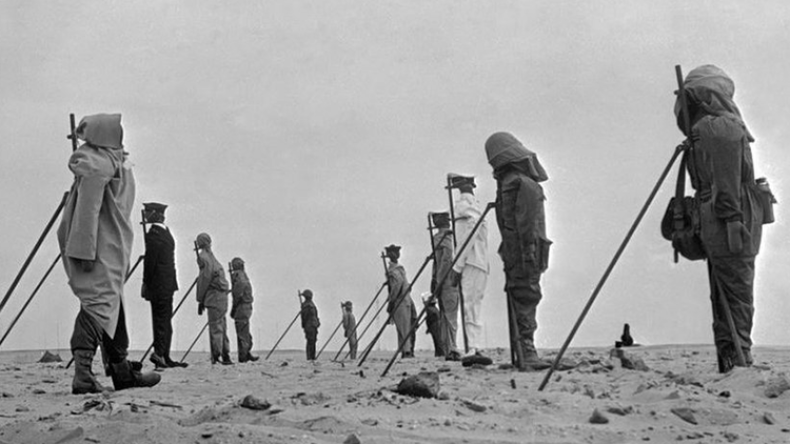
Algeria is continuing to demand detailed maps from Paris concerning all nuclear explosion sites and waste burial locations, stemming from France's extensive nuclear testing program in the North African nation. Between 1960 and 1966, France conducted a total of 17 nuclear experiments on Algerian territory. These tests, which included both atmospheric and underground detonations, were carried out at specific locations in the Sahara, namely Reggane and In Ekker. This period of testing spanned both the final years of French colonial rule and the nascent stages of Algerian independence, leaving a complex and enduring legacy. The ongoing demand for full information notes persistent unresolved issues surrounding the environmental and health impacts of these historical tests, which continue to affect the region and its inhabitants decades later.
Historical Context and Efforts to Address the Legacy
The nuclear experiments were primarily carried out at the remote Saharan sites of Reggane and In Ekker. Following the cessation of testing, the facilities established for these operations were subsequently dismantled. In accordance with the terms of the Évian Accords, which formally recognized Algeria's independence, these sites were then returned to Algerian authorities. The process of addressing the long-term consequences of these tests has been protracted and challenging.
Years later, in 1999, the international community began to engage more formally with the issue. The International Atomic Energy Agency (IAEA) dispatched a mission to evaluate the radiological conditions of these former French nuclear test sites. In support of this international assessment, France provided the IAEA with a summary of information detailing the test sites and the specific technologies employed during the experiments. Additionally, France had previously supplied a radiological assessment of the sites, conducted between 1966 and 1967, offering an early glimpse into the initial post-test conditions. An initial IAEA report on its findings was eventually published in 2005, but only after undergoing modifications and securing Algerian approval, showing the sensitive nature of the information.
Beyond international assessments, efforts were also made at a national level. A French parliamentary report, published in 2001, meticulously examined the environmental and health impacts resulting from the nuclear tests, acknowledging the profound consequences of these historical operations. Recognizing the need for bilateral cooperation, a Franco-Algerian working group was established in 2008. This group was specifically mandated to study the rehabilitation of the former nuclear test sites, aiming to mitigate the lingering effects and address the concerns of the affected populations. Despite these various initiatives, fundamental disagreements and information gaps persist.
Algeria's Persistent Demands for Transparency
France's nuclear testing program in Algeria was extensive and varied in its execution. It included 4 atmospheric tests, which dispersed radioactive materials over wide areas, and 13 underground tests, designed to contain the explosions but still posing risks of subsurface contamination. Algerian officials continue to press Paris for full information regarding these operations, emphasizing the need for detailed data to understand the full scope of the environmental and health risks.
A central point of contention revolves around the specific details of the test sites and waste disposal. France has steadfastly refused to provide key plans for both nuclear and chemical tests, along with precise details on waste burial sites and the equipment used during the experiments. The official reason cited for this unwavering stance is "military secrecy," a justification that has been consistently rejected by Algeria. This refusal to share critical information contributes significantly to the ongoing dispute over the legacy of the tests, impeding efforts to fully assess and remediate the affected areas.
Researcher Hasni Kheitouni has publicly stated that the issue is "political, not technical." This perspective suggests that the primary hurdles to information sharing are not related to technical difficulties in retrieving or interpreting historical data, but rather to broader political considerations and a reluctance on the part of France to fully acknowledge its historical responsibilities. This viewpoint shows the complex and deeply entrenched nature of the negotiations between Algeria and France concerning the historical nuclear tests. The lack of transparency, according to Algerian officials and observers, prevents a full understanding of the dangers posed by residual radiation and buried materials.
French Stance, Concerns, and Perceived Reluctance
The French position, while acknowledging some aspects of the legacy, has often been perceived as insufficient by Algerian authorities. French Minister Catherine Foutrain stated that French President Emmanuel Macron presented Algerian President Abdelmadjid Tebboune with a file containing maps and information on buried waste and radioactive areas during his visit from August 25-27, 2022. This gesture was intended to demonstrate a commitment to addressing Algeria's concerns.
However, despite this presentation, the French response has been described by Algerian officials and commentators as "ready-made and canned," indicating a lack of specificity and a failure to align with Algeria's precise and full demands for detailed information. This perception suggests that the information provided has not met the standard of transparency and detail that Algeria believes is necessary for a thorough assessment and remediation effort.
A significant underlying factor influencing France's reluctance to fully disclose information appears to be strategic concerns. French officials reportedly harbor concerns that any concessions made to Algeria regarding the nuclear test sites could establish a precedent. This precedent, they fear, might then lead other countries affected by French colonialism to demand similar information, compensation, or reparations for historical grievances. This apprehension about opening a "Pandora's Box" of colonial-era claims seems to be a key driver of France's cautious approach. History professor and researcher Hasni Kheitouni has further indicated that, in his assessment, French authorities are not serious about truly closing the file on the nuclear tests, suggesting a fundamental lack of political will to resolve the issue comprehensively. This ongoing deadlock perpetuates the suffering of affected communities and hinders the full reconciliation between the two nations.