French authorities have addressed Algeria's persistent demands for information and accountability concerning radioactive and chemical pollution resulting from French nuclear and chemical explosions in southern Algeria between 1960 and 1966. This response comes as Algeria seeks France to assume full responsibilities for the environmental and health consequences of these tests. French authorities presented their narrative regarding the repeated demands of the Algerian authorities concerning the assumption of their full responsibilities in addressing the issue of radioactive and chemical pollution, which was caused by the French nuclear and chemical explosions in southern Algeria in the period between 1960 and 1966.
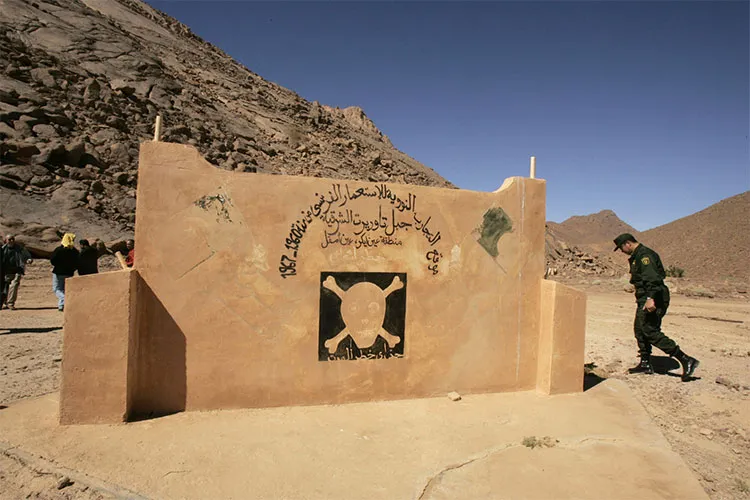
Catherine Vautrin confirmed that the French authorities maintain they have fulfilled their obligations regarding the legacy of these historical events. Vautrin confirms that the French authorities have done what they were supposed to do. The period between 1960 and 1966 saw France conduct a series of nuclear and chemical tests in the Sahara, specifically impacting areas like Reggane and In Ekker, which Algeria continues to highlight as sources of ongoing environmental and health concerns. The tests were conducted at the Reggane and In Ekker sites. These included 4 atmospheric tests and 13 underground tests.
France's Account of Nuclear Tests
Between 1960 and 1966, France conducted 17 nuclear tests in Algeria, according to Catherine Vautrin, the French Minister delegated for the Armed Forces and Veterans Affairs. Vautrin stated, "Between 1960 and 1966, France conducted 17 nuclear tests in Algeria, at the Reggane and In Ekker sites, including 4 atmospheric tests and 13 underground tests. The facilities were dismantled and the sites returned to the Algerian authorities, in accordance with the Evian Accords." These tests took place at the Reggane and In Ekker sites and included four atmospheric tests and thirteen underground tests. The facilities were subsequently dismantled, and the sites were returned to Algerian authorities, consistent with the Evian Accords. The French government's position emphasizes that all necessary steps were taken to manage the aftermath of these operations in line with the agreements in place at the time.
In 1999, Algeria requested that the International Atomic Energy Agency (IAEA) evaluate the radiological situation of the former French nuclear test sites. In 1999, at the request of Algeria, the International Atomic Energy Agency (IAEA) sent a mission to evaluate the radiological situation of the former French nuclear test sites. France provided the IAEA with a summary of information regarding the test sites and the techniques employed during the tests. This cooperation with an international body was presented by France as part of its commitment to transparency and addressing the legacy issues. France also furnished a radiological assessment of the sites dating from between 1966 and 1967, along with an extrapolation of the situation up to 1999. It also provided a radiological assessment of the sites between 1966 and 1967, as well as an extrapolation of the situation until 1999. The preliminary report from the IAEA was published in 2005, following amendments and with the approval of Algerian authorities. The publication of this report signified a joint effort to establish a scientific understanding of the radiological conditions.
A report from the French Parliamentary Office for Scientific and Technological Assessment, published in 2001, presented a study on the environmental and health effects of the nuclear tests conducted by France between 1960 and 1966. In 2001, a report from the French Parliamentary Office for Scientific and Technological Assessment presented a study of the environmental and health effects of nuclear tests conducted by France between 1960 and 1966. This report contributed to the public record and provided a French parliamentary perspective on the long-term consequences of the tests. In 2008, a French-Algerian working group on nuclear tests was established. This group, composed of experts, was tasked with studying the rehabilitation of the former nuclear test sites in the Sahara. The formation of this joint working group showed a bilateral approach to addressing the complex technical and environmental challenges posed by the test sites.
Algerian Concerns and Demands
Algeria continues to demand that Paris hand over detailed maps concerning all explosions and waste burial areas related to the nuclear tests. Algeria still to this day demands Paris to hand over detailed maps concerning all explosions and waste burial areas. Catherine Vautrin, the French Minister delegated for the Armed Forces and Veterans Affairs, presented the steps taken by her country regarding these historical events. Vautrin previously stated, "Between 1960 and 1966, France conducted 17 nuclear tests in Algeria, at the Reggane and In Ekker sites, including 4 atmospheric tests and 13 underground tests. The facilities were dismantled and the sites returned to the Algerian authorities, in accordance with the Evian Accords." Despite these assertions, Algeria maintains its requests for further detailed information, arguing that the existing data is insufficient for full remediation efforts.
French President Emmanuel Macron presented a file containing maps and information to his Algerian counterpart, Abdelmadjid Tebboune, during a visit to Algeria from August 25 to 27, 2022. French President Emmanuel Macron presented to his Algerian counterpart Abdelmadjid Tebboune, during his visit to Algeria from 25 to 27 August 2022, a file containing all the maps and information France possesses regarding buried waste and radiologically identified areas. This file included France's available data regarding buried waste and radiologically identified areas. The presentation of this file was an attempt to address Algeria's long-standing demands for transparency and accountability concerning the environmental and health impacts of the tests conducted in the Sahara. The Algerian government has consistently pressed for full access to records that would assist in the identification and remediation of contaminated sites, emphasizing the need for precise geographical data to ensure the safety of its citizens and environment.
Expert Critique of French Stance
The French clarifications came in response to a written question from Sabrina Sebaihi, a member of the French National Assembly. Ms. Sebaihi stated that Algerian authorities are demanding detailed information. "The Algerian authorities are demanding detailed maps and plans related, first, to buried waste, and second, precise data on radioactive areas," she said. Sabrina Sebaihi stated that the Algerian authorities are demanding detailed maps and plans related to buried waste and precise data on radioactive areas. This parliamentary inquiry notes the ongoing political pressure within France to fully address Algeria's concerns.
Hosni Kitouni, a professor and researcher in colonial history, believes France is not serious about resolving this issue. Hosni Kitouni, professor and researcher in colonial history, believes that the French authorities are not serious about closing this file. Professor Kitouni stated that Paris continues to refuse to provide key information. "The problem is that France still refuses to hand over the plans for nuclear and chemical tests, and the locations of buried waste and equipment used for that," Kitouni explained. Kitouni stated that France still refuses to hand over the plans for nuclear and chemical tests, and the locations of buried waste and equipment used for that. He attributed this refusal to unconvincing French justifications, such as "military secrecy." Kitouni attributed this to unconvincing French justifications such as 'military secrecy'.
Kitouni further elaborated that the "military secrecy" invoked by France has significantly hindered research conducted by specialists investigating crimes of genocide and crimes against humanity allegedly committed by France in Algeria. Kitouni explained that the 'military secrecy' invoked by France hindered much of the research conducted by specialists in crimes of genocide and crimes against humanity committed by France in Algeria. He asserted that the core issue in this context is "political and not technical," suggesting a deeper reluctance beyond mere logistical challenges. Kitouni stated that the problem in this regard is 'political and not technical'. Professor Kitouni believes that French officials fear the truth of their past actions being exposed. Kitouni believes French officials fear the truth of their crimes being exposed. He also suggested that any concession made to Algeria on this matter, particularly one resulting in reparations, could encourage other countries affected by French colonialism to demand similar compensation. Kitouni believes any concession in favor of Algeria in this file, which will result in reparations, will prompt other countries harmed by French colonialism to demand reparations. This perspective from Professor Kitouni shows the broader implications and potential precedents that any resolution to this dispute could set for France's post-colonial relationships.