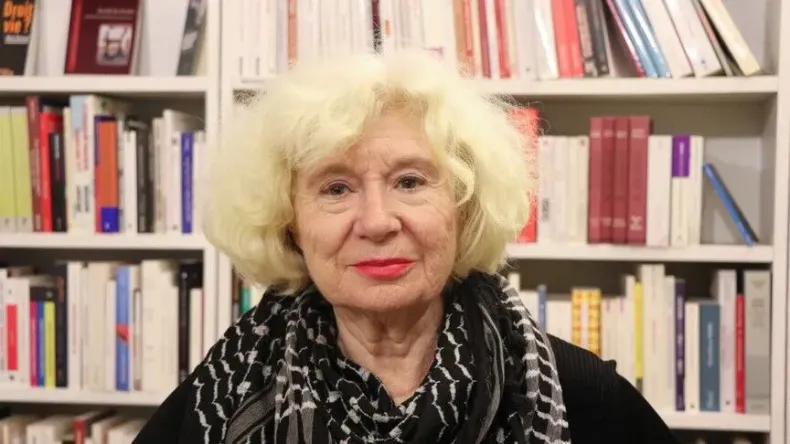
EuroPalestine has called for a demonstration in Paris on Saturday, September 5th, at 2:30 PM at Place du Châtelet, under the slogan "Le silence tue" (Silence kills). Olivia Zémor, president of CAPJPO-EuroPalestine, issued the call, stating that "the situation is grave" in Gaza. Zémor contrasted the beginning of the school year in France with the conditions for children in Gaza, asserting that "la faim, la soif, les épidémies ont fait leur réapparition" (hunger, thirst, epidemics have reappeared). She further claimed that "pogroms tous les jours" (pogroms every day) are occurring in the West Bank to "chasser un maximum de Palestiniens de leurs villages" (drive a maximum of Palestinians from their villages). The demonstration aims to draw attention to what EuroPalestine describes as an escalating crisis affecting Palestinians in both the Gaza Strip and the West Bank. The organization emphasizes the urgency of international awareness and action against the backdrop of these reported conditions.
Gaza's Dire Humanitarian Situation
Olivia Zémor, president of CAPJPO-EuroPalestine, accused Israel of blocking humanitarian aid to Gaza, claiming that "hunger, thirst, the epidemics have made their reappearance" in the territory. She noted the stark contrast between the normalcy of a new school year in France and the daily struggles faced by children in Gaza, who are contending with severe shortages and health crises. While recent United Nations data suggests a more nuanced situation regarding aid entry, humanitarian agencies continue to report significant restrictions and widespread needs on the ground. These organizations consistently show the challenges in delivering essential supplies to the besieged enclave. The food situation in Gaza remains fragile, despite a slight improvement from the famine conditions noted in 2025, according to reports from the Food and Agriculture Organization (FAO), the World Food Programme (WFP), and UNICEF. These international bodies continue to monitor the situation closely, emphasizing that despite any marginal improvements, the overall nutritional security for the population remains precarious.
Conversely, Israel asserts that it facilitates humanitarian aid into Gaza and denies any actions to prevent its entry. Israeli authorities maintain that they inspect aid shipments to prevent the entry of materials that could be used for military purposes, and that any delays are due to these security protocols or logistical challenges within Gaza itself. The Gaza Strip is currently grappling with massive destruction, extensive displacement of its population, and a profound health crisis. The infrastructure, including hospitals and sanitation systems, has been severely compromised by ongoing conflict. The United Nations Relief and Works Agency for Palestine Refugees in the Near East (UNRWA) has described Gaza's health system as having undergone a "systemic collapse" due to ongoing Israeli attacks. This collapse means that medical facilities are largely non-functional, leading to a severe lack of access to healthcare for a population already suffering from widespread injuries and disease. The agency has repeatedly called for unimpeded access for humanitarian aid and medical supplies to address the critical situation.
West Bank Violence and Displacement
Olivia Zémor, president of CAPJPO-EuroPalestine, characterized violence in the West Bank, attributed to settlers and Israeli soldiers, as "pogroms every day" designed to displace Palestinians. Zémor specifically mentioned the objective of these actions as an attempt to "drive a maximum of Palestinians from their villages" through systematic pressure and intimidation. Data from the United Nations Office for the Coordination of Humanitarian Affairs (OCHA) indicates a significant increase in settler violence during 2026. OCHA recorded more than 1,200 attacks by July 6th of that year, affecting over 240 Palestinian communities across the West Bank. These incidents have contributed to the displacement of a substantial number of residents, as communities face heightened insecurity and loss of livelihoods. The nature of these attacks often involves damage to property, destruction of agricultural land, and physical assaults, creating an environment of fear and instability for Palestinian residents.
Over 2,300 Palestinians have been displaced in the West Bank since January, according to OCHA figures. This total includes more than 1,000 children, who have been forced from their homes due to a combination of settler violence and restrictions on access. The displacement often results in families losing their homes, land, and access to essential services, further exacerbating humanitarian needs in the region. The OCHA data shows the escalating pressures faced by Palestinian communities in the region, noting a pattern of forced displacement driven by multifaceted factors. These figures represent a significant humanitarian concern, with a particular impact on vulnerable populations, including children, who are disproportionately affected by the loss of their homes and community structures.
Detention Conditions and Broader Concerns
Olivia Zémor, president of CAPJPO-EuroPalestine, asserted that Israel has detained "nearly 10,000 Palestinian men and women," and she condemned reports of violence, hunger, and torture within these prisons. Her statement reflects deep concern over the treatment of Palestinian detainees and the conditions under which they are held.
A report from the UN Secretary-General provided specific figures regarding these detentions, indicating that 9,384 Palestinians were held by Israel as of May 2026. The report further detailed that this total included 3,376 individuals who were in administrative detention, meaning they were held without charge or trial. This practice allows for indefinite detention based on secret evidence, raising significant human rights concerns regarding due process and fair trial standards. Additionally, 1,283 detainees were being held under the "illegal combatants" status, a designation that allows for prolonged detention without standard legal proceedings, often with limited access to legal counsel or judicial review. These figures from the UN Secretary-General's report offer a quantitative overview of the detention landscape in the context of the ongoing conflict, providing a detailed breakdown of the various legal statuses under which Palestinians are held by Israeli authorities. The report contributes to the broader international scrutiny of detention practices and human rights in the region.