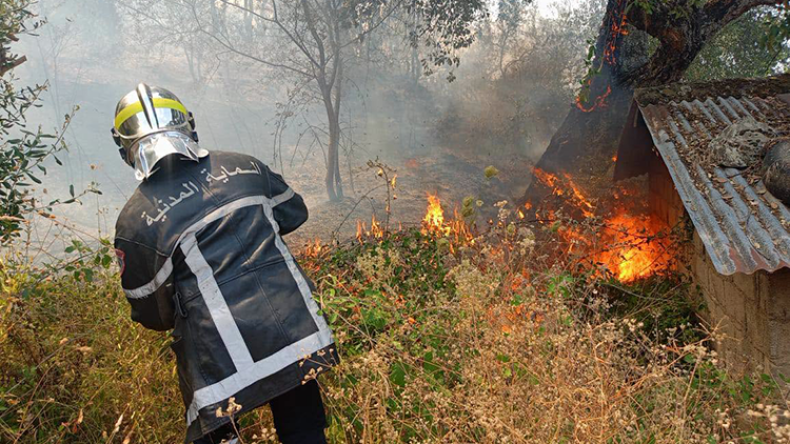
Devastating wildfires have swept across eastern Algeria in the latter half of August, leaving a trail of destruction and pain in several forested provinces. The second half of August will undoubtedly be remembered for its profound impact and the immense suffering it inflicted upon most eastern Algerian provinces, particularly those characterized by their dense forests. The fires represent a significant issue for the North African nation, impacting numerous communities and natural landscapes with an intensity that has drawn widespread concern. Provinces like Jijel, Skikda, and Mila have been particularly affected by the blazes, which have caused widespread concern across the region and noted the urgent need for strong disaster response and mitigation strategies. The scale of the devastation shows the critical challenges faced by authorities and residents alike in containing these fierce and rapidly spreading infernos.
Fires Rage Across Provinces
The scope of the wildfires has been extensive, with multiple provinces battling intense heat and rapidly spreading flames. In Mila, more than 300 hectares of forests were destroyed amidst temperatures that exceeded 47 degrees Celsius. This significant loss of forest cover represents a severe blow to the region's biodiversity and ecological balance. Meanwhile, the fires in Skikda affected 27 municipalities, demonstrating the broad geographical reach of the crisis within that province alone. Authorities in Skikda recorded 57 fires in the past two days, with 37 of these having been extinguished through diligent efforts by firefighting teams. Despite these successes, five fires remained ongoing in Skikda, including a particularly challenging forest fire in the municipality of Filfila that necessitated the intervention of a specialized firefighting aircraft to assist ground crews. Additionally, ten fires were still under surveillance and active management across eight municipalities in Skikda, indicating the persistent and widespread nature of the threat. To the south, temperatures in Guelma surpassed 50 degrees Celsius on Thursday, creating extremely hazardous conditions for both residents and emergency responders, before stabilizing at approximately 44 degrees Celsius during the night, offering a slight reprieve from the scorching daytime heat.
Evacuations and Road Closures
The immediate threat posed by the advancing wildfires necessitated swift and decisive action to protect human lives and property. More than 40 families in the M'Sila province were evacuated from their homes as a precautionary measure due to the advancing wildfires, ensuring their safety from the immediate danger. In Guelma, authorities also evacuated dozens of families from their residences to designated safe areas within the municipalities of Hammam N'Bail and Bouati Mahmoud, prioritizing the well-being of vulnerable populations. Specifically, 113 people were evacuated from the Makassa and Oum El Hench areas, both located in the municipality of Bouati Mahmoud in Guelma, noting the localized but intensive efforts to move residents away from harm's way. These evacuations were key in preventing potential casualties and minimizing the risk to human life. The expansion of the fires further led to the closure of National Road No. 77, which connects the localities of Takset and Jijel, as confirmed by local reports. This road closure was a necessary measure to ensure public safety, prevent civilians from entering dangerous zones, and facilitate the unimpeded movement of emergency services and firefighting equipment. These actions show the immediate response efforts to protect residents and manage public safety amidst the ongoing blazes in eastern Algeria, demonstrating the coordinated approach taken by local authorities.
Assessing Environmental and Economic Losses
The wildfires have inflicted significant and multifaceted damage on eastern Algeria's environment and tourism sector, alongside substantial losses for citizens' livelihoods. The blazes have destroyed pastures, which are vital for livestock, poultry farms, impacting agricultural production, and beehives, devastating local apiculture. Extensive fruit trees and vegetable fields were consumed by the flames, leading to considerable economic hardship for farmers and a potential impact on food supply chains in the affected areas. Beyond the material destruction, the fires have also resulted in casualties, a tragic reminder of the human cost of these natural disasters. The widespread impact notes the dual environmental and economic toll on the affected regions, posing long-term challenges for recovery and rebuilding. The destruction of natural habitats and agricultural land will have lasting consequences for the ecological balance and the economic stability of these communities.
Response and Recovery Efforts
Response efforts are underway in eastern Algeria, particularly in the provinces of Jijel, Skikda, and Mila, which have been significantly affected by the recent wildfires. The Algerian Red Crescent has been actively involved in providing assistance and support to the communities impacted by the blazes, offering humanitarian aid and relief to those displaced or otherwise affected. Their involvement notes the humanitarian dimension of the response, addressing the immediate needs of residents displaced or otherwise affected by the widespread destruction, including providing shelter, food, and medical assistance. This critical support is essential for mitigating the immediate suffering caused by the fires. Authorities and aid organizations are coordinating efforts to mitigate the ongoing crisis and support recovery in the devastated areas, a complex process that will require sustained commitment and resources. The focus is not only on extinguishing the remaining fires but also on planning for the long-term rehabilitation of the affected communities and natural landscapes.