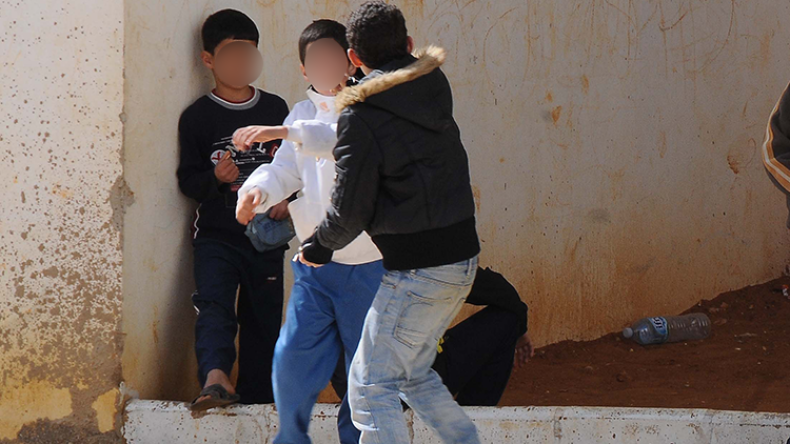
Guardians in الجزائر are reportedly instigating children to commit harmful acts against others, exploiting their young age and the belief that minors face less severe legal consequences than adults. This concerning trend notes a deliberate manipulation of the legal system's approach to juvenile offenders. Such instigation includes instances where children, encouraged by family members, direct insults and vulgar language at elderly individuals, as noted by one particular incident. A woman from العاصمة recently complained of repeated provocations by her neighbor's children, the oldest of whom is no more than 10 years old. These provocations included scratching her car and throwing stones, indicating a pattern of aggression orchestrated by adults, rather than typical childhood mischief. This exploitation stems from the guardians' understanding that the law does not punish minors in the same punitive way it does adults, leading them to use children as proxies in their disputes.
Escalating Incidents of Child Misconduct
Incidents of children being used in disputes have increased, with reports detailing minors committing acts of vandalism and assault. One particularly troubling case involved a child who destroyed a neighbor's car window after receiving explicit instructions from his father. This type of instigation extends to physical altercations within communities. Another reported incident described a minor assaulting a relative or peer within the neighborhood, an act directly linked to pre-existing conflicts between their respective families. Such assaults are often linked to pre-existing conflicts between the families involved, indicating that children are being drawn into adult disagreements, sometimes with severe consequences. The pattern suggests a troubling trend where children are manipulated to carry out actions intended to harm others, reflecting a broader issue of parental incitement in domestic disputes that demand serious attention from legal and social authorities.
Legal Framework for Juvenile Actions
Algerian legislation establishes a distinct system for juveniles, which differentiates minors from adults and focuses on reform and reintegration rather than punitive measures. This specialized approach guides the legal process when minors are involved in incidents, prioritizing their welfare and future. The Algerian legal framework recognizes that minors require a different handling than adults, aiming to rehabilitate rather than merely punish. In civil matters, when a minor causes damages, such as property destruction or assault, the liability for compensation may fall upon the guardian or supervisor. Judicial determination assesses these cases to assign responsibility for restitution, ensuring that victims are compensated while also considering the minor's developmental stage. This system shows the principle that while minors are held accountable, the responsibility often extends to those entrusted with their care and upbringing.
Consequences for Instigators and Guardians
If it is proven that a guardian or any adult instigated or pushed a child to commit an assault, that adult can bear legal responsibility for the act of incitement. This legal framework aims to hold individuals accountable for manipulating minors into committing harmful acts, recognizing the severe ethical and legal breach involved. The potential for adults to face charges for instigation shows the seriousness with which authorities view the exploitation of children in disputes. Legal experts indicate that such accountability is key to deter adults from using children as proxies for their conflicts, thereby protecting the most vulnerable members of society. The law seeks to protect children from being drawn into adult disagreements and to ensure that those who encourage minors to engage in illicit activities face appropriate consequences, including penalties that reflect the gravity of their actions.
Societal and Psychological Impact
Repeated actions by children against specific individuals, including the use of age-inappropriate language or behavior suggesting they are following orders, can indicate adult instigation. Such patterns differentiate significantly from mistakes made out of playfulness or recklessness, according to reports from social workers and legal observers. A child might make a mistake out of playfulness or recklessness, but persistent, targeted actions or the use of language beyond their typical vocabulary often signal external influence. This distinction is critical for judicial determination, as it helps identify instances where children are not acting on their own volition but under the direction of an adult. The psychological impact on children forced into such roles, as well as on the victims, can be profound and long-lasting.