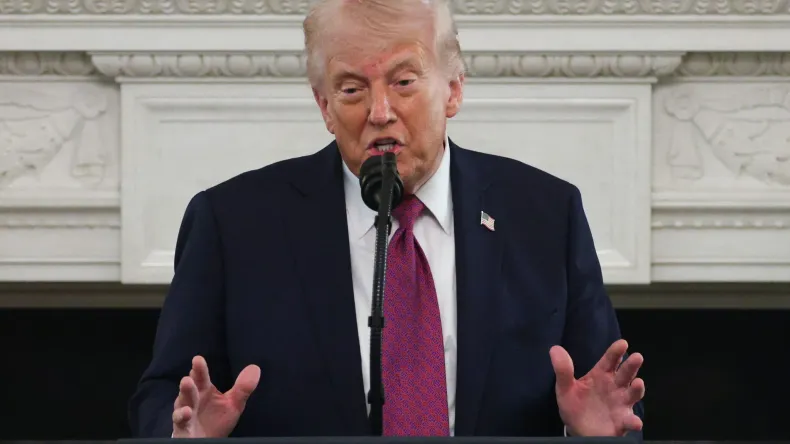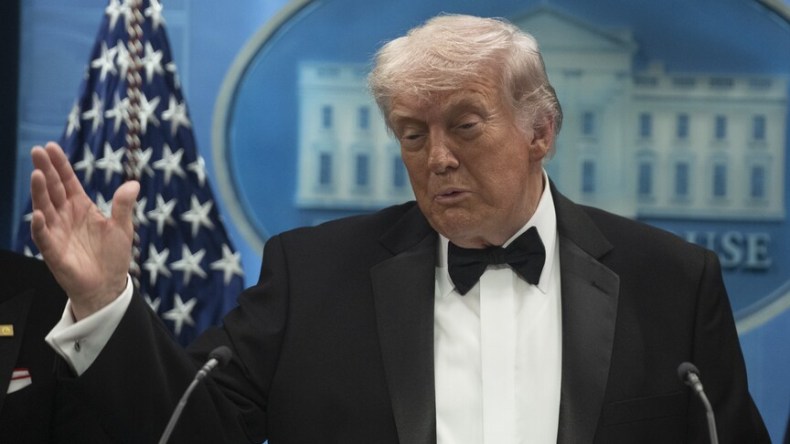
CENTCOM Commander Adm. Brad Cooper presented President Trump with potential strike options against Iran during a briefing in the Situation Room on Thursday, according to sources. These options included a full plan for a "short and powerful" wave of strikes targeting Iranian military assets, leaders, and infrastructure. Joint Chiefs Chairman Gen. Dan Caine was also expected to attend Thursday's briefing, the sources said, showing the high-level nature of the discussions. This follows a similar briefing given to Trump by Adm. Cooper on February 26, after which the United States and Israel launched strikes against Iran on February 28. One source close to President Trump indicated that this initial February 26 briefing from Adm. Cooper contributed significantly to Trump's decision to go to war.
Another plan anticipated for discussion involved taking over part of the Strait of Hormuz to facilitate the reopening of commercial shipping, a critical waterway for global trade. Additionally, a special forces operation to secure Iran's stockpile of highly enriched uranium, previously discussed as a potential option, might also be presented during the briefing. These discussions highlight the range of military and strategic options being considered by the U.S. Administration.
Proposed Military Actions
The envisaged targets for potential military action against Iran include the nation's "remaining military assets, leaders, and infrastructure," according to sources familiar with the discussions. This broad targeting strategy aims to significantly degrade Iran's military capabilities and leadership infrastructure. The Pentagon is also studying the deployment of advanced weapon systems, including a new hypersonic missile named "Dark Eagle." This missile would be capable of striking targets up to 2,000 miles (3,218 kilometers) away, offering a formidable long-range strike capability.
Regional military presence has seen an increase in B-1B Lancer bombers, which are capable of carrying hypersonic payloads up to 5,000 pounds. These bombers enhance the potential for rapid, long-range strikes. One source indicated that such an operation, particularly one involving the Strait of Hormuz or securing uranium stockpiles, could include ground forces. U.S. Military planners are also considering the possibility that Iran will take military action against U.S. Forces in the region in retaliation for a proposed blockade, preparing for potential counter-escalation.
Past Escalation and Diplomacy
The February 28 strikes against Iran prompted a strong response from Tehran, which retaliated against U.S. Allies in the Gulf and initiated the closure of the Strait of Hormuz. This conflict brought traffic through the Strait of Hormuz, a critical chokepoint for approximately 20% of global oil and liquefied natural gas shipments, close to a standstill, severely impacting international energy markets. Following Pakistani mediation, a ceasefire was announced on April 8, offering a temporary de-escalation. Subsequent discussions were held in Islamabad on April 11 and 12, though these negotiations failed to yield an agreement, indicating the persistent diplomatic challenges. At Pakistan's request, Donald Trump unilaterally extended the ceasefire period, referred to as the "dream," without establishing a new timeline for its duration, reflecting a cautious approach to maintaining peace while seeking a resolution.
Trump's Leverage and Concerns
President Trump views a naval blockade on Iran as "somewhat more effective than the bombing," he told Axios on Wednesday, suggesting a preference for economic pressure over direct military engagement. Two sources informed Axios that Mr. Trump presently considers the blockade his main source of leverage, though he would contemplate military action if Iran remains unyielding to diplomatic pressure. Washington's objective is to encourage greater flexibility from Iran at the negotiating table regarding nuclear issues, according to Axios, aiming to curb its nuclear ambitions through sustained pressure. Mr. Trump has repeatedly cited Iran's nuclear program as an imminent threat, emphasizing the urgency of addressing the issue.
Tehran, however, denies pursuing nuclear weapons, asserting its right to develop nuclear technology for peaceful applications, including enrichment, as a signatory to the Nuclear Non-Proliferation Treaty. This stance creates a fundamental disagreement with Washington. A senior Islamic Revolutionary Guards Corps official was quoted by state media on Thursday, stating that any U.S. Attack on Iran, even a limited one, would lead to "long and painful strikes" on U.S. Regional positions, signaling a strong deterrent message and the potential for a wider conflict.