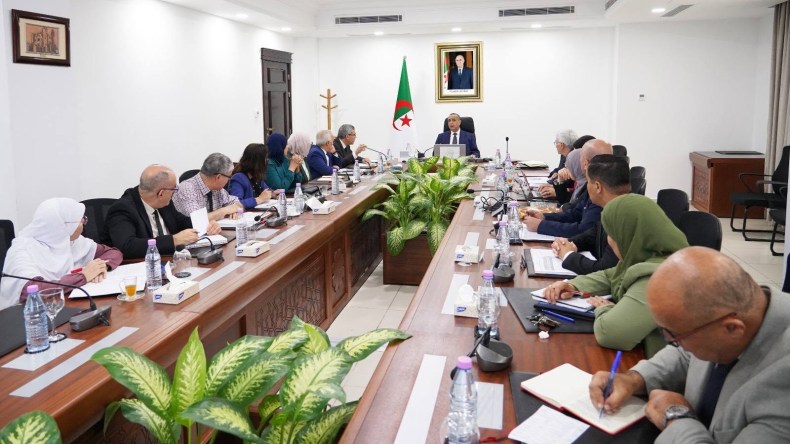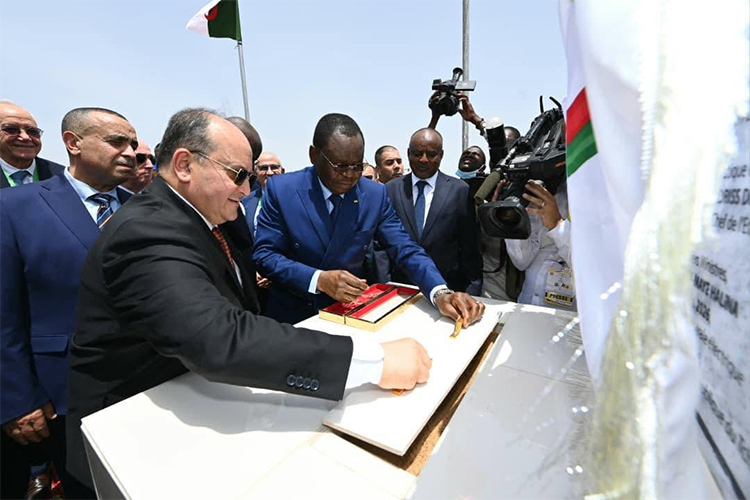
Algeria continues to fund developmental and social projects across the Sahel region, including recent efforts in Chad and Niger. This ongoing commitment shows Algeria's proactive engagement in the stability and progress of its southern neighbors. Prime Minister Sifi Ghreib recently visited Chad, emphasizing Algeria's commitment to regional development. This initiative aligns with the directives of President Abdelmadjid Tebboune, according to official statements, reflecting a high-level strategic focus on the Sahel. The full nature of these developmental and social projects funded by Algeria spans various sectors, aiming for sustainable growth and improved living conditions for the populations in the Sahel region.
During his visit, Prime Minister Sifi Ghreib stated that Algeria possesses a "firm political will" to support these endeavors. He further described the relationship between Algeria and its Sahelian neighbors as a "strong strategic partnership, based on effective solidarity, joint development, and mutual interests." This articulation of policy notes Algeria's long-term vision for collaborative growth in the region. In Niger, Algeria completed the development of the “Kafra” oil field in the northern part of the country, marking another significant step in its regional engagement and contributing to energy sector development in the Sahel. The continuous flow of developmental and social projects funded by Algeria across the Sahel region demonstrates a sustained effort to foster stability and prosperity through tangible contributions.
Energy Infrastructure Development
A cornerstone of Algeria's regional strategy is the development of critical energy infrastructure. Prime Minister Sifi Ghreib and his Chadian counterpart, Lamai Halina, recently oversaw the laying of the cornerstone for a new power plant project in Chad. This event signifies a major milestone in bilateral cooperation and regional energy security. The power plant in Chad will have a 40-megawatt capacity, a substantial addition to the country's energy grid. This facility is the second power plant constructed by Algeria in the Sahel region, illustrating a consistent pattern of investment in power generation. The first such plant was inaugurated in Niger less than a week prior to the Chad event, showing the rapid pace of Algeria's infrastructure development initiatives in the area. Mourad Adjal, Minister of Energy and Renewable Energies, announced this development during the inauguration of a separate station in Niamey, Niger, noting the coordinated efforts across multiple projects.
Sonelgaz International, Algeria's national electricity and gas company's international arm, will be responsible for building the power plant in Chad. This project is not merely a commercial venture but is presented as a gift from the Algerian state to the Chadian people, emphasizing the humanitarian and solidarity aspects of Algeria's foreign policy. Sonelgaz International's operations are also projected to expand further across Africa, with additional power plants planned for Côte d’Ivoire and Mozambique, signaling a broader continental ambition for Algerian energy expertise. The company's growing footprint reflects Algeria's commitment to sharing its energy infrastructure development capabilities with other African nations.
Beyond power generation, Algeria is also advancing significant energy transport infrastructure. The Algerian-Nigerian gas pipeline project officially commenced work on the fourth of this month, marking a key step towards its realization. This ambitious gas pipeline is designed to connect Algeria to Nigeria via Niger, with the ultimate goal of reaching the European continent, positioning Algeria as a key energy transit hub. Other major infrastructure initiatives, vital for regional connectivity and economic integration, include a fiber optic project aimed at enhancing digital communication across the Sahel. The Trans-Saharan Gas Pipeline Nigeria – Niger – Algeria, distinct from the Algerian-Nigerian gas pipeline project, represents another monumental effort to facilitate energy flow and regional cooperation. These projects collectively demonstrate Algeria's commitment to fostering a strong and interconnected infrastructure network throughout the Sahel and beyond.
Geopolitical and Historical Drivers
Algeria advocates for a development approach in the Sahel, presenting it as an alternative to military intervention in the region. This strategy is rooted in the belief that sustainable development and economic stability are more effective long-term solutions to regional challenges than purely security-focused measures. Through its humanitarian and developmental aid initiatives, Algeria seeks to maintain its position as a leading and neutral regional actor, a role it has carefully cultivated over decades. Mohamed Khoja, former director of the Institute of Political Science and International Relations at Algiers 3 University, stated that Algeria's actions align with current geopolitical requirements, indicating a strategic foresight in its foreign policy.
The nation adopted the concept of South-South cooperation starting in the mid-1950s and 1960s, a principle that continues to guide its foreign policy and underpins its engagement with fellow developing nations. Algerian officials believe that supporting economic and social stability is key for effectively eliminating terrorism and organized crime across the Sahel. This perspective emphasizes the interconnectedness of security and development, viewing poverty and lack of opportunity as root causes of instability. To bolster its engagement and streamline its efforts, President Abdelmadjid Tebboune activated the Algerian Agency for International Cooperation, designating it as the executive arm for cooperation with African countries. This institutional framework ensures a structured and efficient delivery of Algerian aid and expertise, further cementing its role as a key partner in African development.
Algerian aid is directed towards joint infrastructure projects, including the African Unity Road, which connects Algeria with Niger, Chad, and Mali, fostering greater regional integration and trade. Beyond infrastructure, Algeria dispatches air and land convoys carrying essential food and medical supplies, along with tents, providing critical humanitarian assistance to vulnerable populations. Additionally, the country provides training and scholarships as part of its broader regional support efforts, investing in human capital and capacity building in the Sahel. These multifaceted aid initiatives show Algeria's full approach to supporting its neighbors. Algerian aid to the African Sahel is viewed as a strategic tool, effectively combining historical heritage with existing political necessities, thereby solidifying its influence and fostering goodwill in the region.
Expert and Official Perspectives
Chadian President Mahamat Idriss Déby Itno visited Algeria on April 21st, a visit that coincided with recent Algerian aid initiatives in the region, noting the high-level diplomatic engagement between the two nations. The power plant project developed by Algeria in Chad is presented as a gift from the Algerian state to the Chadian people, emphasizing the spirit of solidarity and non-conditional support. Officials emphasize that Algeria's aid to the African Sahel serves as a strategic tool, integrating historical heritage with existing political necessities, reflecting a deeply ingrained approach to regional relations. This blend of historical ties and contemporary strategic imperatives forms the bedrock of Algeria's foreign policy in the Sahel.
Mohamed Khoja, former director of the Institute of Political Science and International Relations at Algiers 3 University, stated that Algeria "views the Sahel countries and its regional neighborhood as a strategic depth affecting its national security in all its dimensions." This perspective underlines Algeria's approach to regional engagement, where the stability and prosperity of its neighbors are directly linked to its own national interests. A key objective of Algeria's strategy is to secure its borders with Mali and Chad, primarily by preventing massive flows of displaced persons and illegal immigrants into its territory. This security dimension is intricately linked to its developmental aid, as fostering stability and economic opportunity in the Sahel is seen as the most effective way to address the root causes of migration and cross-border challenges. The full nature of Algeria's engagement, from infrastructure to humanitarian aid and security concerns, reflects a coherent and long-term vision for its role in the Sahel.