The goalkeeping position for the Algerian national team has become a crisis, potentially threatening the country's World Cup participation. This critical situation demands immediate attention, as the stability of the squad hinges on a reliable presence between the posts. Coach Bietkovic has introduced improvements to the team since taking charge after the Africa Cup of Nations in Ivory Coast, demonstrating his capacity to evolve the squad's dynamics. However, despite these positive changes in other areas of play, the issue of goalkeeping remains a significant concern for the squad, casting a shadow over their aspirations for global competition. The ongoing uncertainty surrounding this key role has prompted discussions among fans and pundits alike, raising questions about potential solutions and overlooked talents.
The Troubled Goalkeeping Ranks
Algeria's goalkeeping situation faces multiple challenges, with several players either injured or raising performance concerns, creating a precarious environment for national team selection. Goalkeeper Luca Zidane, for instance, is currently recovering from a head and jaw injury, which he sustained in Granada, Spain. This unfortunate injury sideline has significantly impacted his availability for national duty, removing a potential option from the pool. The current roster of available goalkeepers further complicates matters. It includes Blabout, who unexpectedly withdrew from contention, leaving a gap. Qandouz, another option, has seen his performances reportedly cause apprehension among observers, raising doubts about his readiness for high-stakes international matches. Additionally, Mandrea is dealing with an injury, further complicating the selection process and reducing the number of fit, in-form goalkeepers. These recurring issues collectively contribute to the instability within the national team's goalkeeping ranks, prompting a deeper look into potential alternatives.
A Legend's Unseen Presence
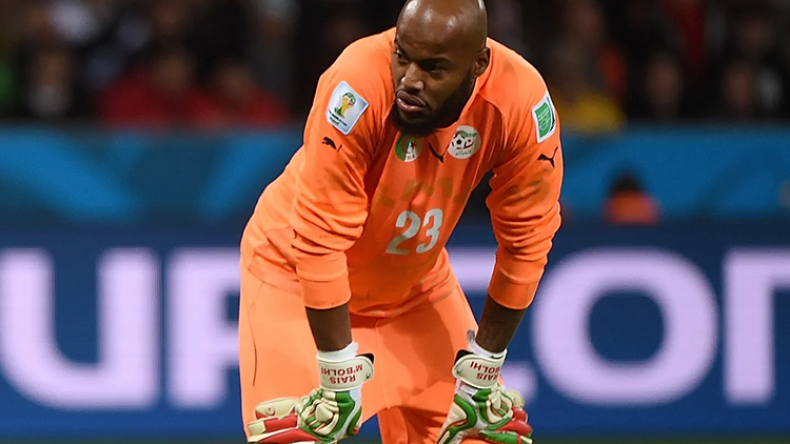
Into this void steps the contemplation of Raïs M'Bolhi, a figure described as a legend in Algerian football, whose retirement from international duty created a significant void in the national team's goalkeeping position. His absence has been acutely felt, especially given the current struggles. At the start of the current football season, Raïs M'Bolhi signed with TRG Mostaganem, marking a return to active club football, and began his league performances strongly, demonstrating that his abilities remain intact. M'Bolhi, who turned 40 on April 25th, brings extensive experience to any squad, a quality that is often invaluable in high-pressure tournaments. His illustrious career has seen him play on four continents, demonstrating a broad range of exposure to different footballing environments and styles of play, an asset few other Algerian goalkeepers can claim.
M'Bolhi's long tenure with the national team has resulted in a deep-seated familiarity with many current players, fostering a strong sense of camaraderie and understanding. He knows key defensive figures like Issa Mandi and Ramy Bensebaini, as well as midfield linchpin Ismaël Bennacer. He shares a particularly close relationship with captain Riyad Mahrez, a bond that could offer an intangible benefit in team cohesion and leadership on the field. This history with key team members could offer an intangible benefit, providing a calming and experienced presence in the dressing room and on the pitch. M'Bolhi's past performances are also a testament to his quality, including his exceptional displays in the 2014 World Cup, where he was recognized alongside world-class goalkeepers like Thibaut Courtois and Manuel Neuer for his outstanding saves and commanding presence. His ability to perform on the biggest stage is undeniable, making his current exclusion a point of contention for many.
Age as an Asset, Not a Barrier
The idea that age could be a barrier for M'Bolhi, despite his vast experience, is strongly challenged by numerous examples from top-tier football around the globe. Manuel Neuer, a paragon of modern goalkeeping, who served as Bayern Munich's starting goalkeeper in a recent Champions League match in Paris, is notably one month older than M'Bolhi. This demonstrates that age is not necessarily a detriment to performance at the highest levels of the sport. The article notes that at least five goalkeepers in the World Cup are expected to be over 40, with others close to that age, indicating a growing trend of longevity in the position. Mohamed El Shenawy of Egypt, a prominent figure in African football, is 38 years old and continues to perform at an elite level. Similarly, Thibaut Courtois of Belgium, another highly-rated international goalkeeper, is nearing 37 years old and remains a key player for his club and country. Domestically, Fawzi Chaouchi, who is two years older than M'Bolhi, continues to play with notable performance for his club, USM El Harrach, showcasing moments of brilliance that defy his age. These examples collectively argue that M'Bolhi's age should be viewed as an asset, providing invaluable experience and leadership, rather than a disqualifying factor.
The Coach's Unanswered Question
Raïs M'Bolhi's departure from the Algerian league, prior to his recent move to TRG Mostaganem, led to a period where his news coverage diminished, and consequently, his visibility for national team selection decreased significantly. There has been no reported contact between him and Coach Bietkovic, suggesting a lack of consideration despite the evident goalkeeping crisis. M'Bolhi's continued presence in the Algerian league, especially given his strong performances with TRG Mostaganem, would have maintained his visibility for national team selection, keeping him firmly in the spotlight. His current situation, playing actively and performing well in the Algerian league, is considered no worse than that of Mandrea, who plays in the French third division and is currently injured. This comparison shows the argument that M'Bolhi, with his legendary status, experience, and current form, warrants at least a conversation with the national team coach, especially given the critical juncture for Algeria's World Cup ambitions.