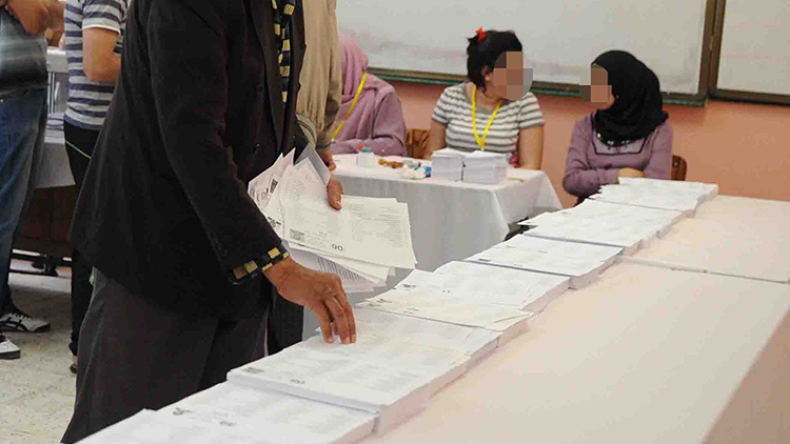
Algeria's National Independent Authority for Elections (ANIE) has begun receiving vote counting minutes from polling stations across the provinces, a critical initial step in the electoral process. These minutes, which document the vote counts from various polling stations throughout Algeria's provinces, are essential for ensuring the integrity and transparency of the election. While the ANIE processes these key documents, political parties and free lists are actively circulating preliminary results and extending congratulations to their candidates, creating a dynamic atmosphere following the vote. However, it is important to note that the Organic Law on the Electoral System specifies that only the ANIE and the Constitutional Court have the exclusive authority to announce official election results, thereby centralizing the validation process.
The ANIE is mandated to receive all minutes from provincial electoral committees and the committee for expatriates within a maximum of seventy-two (72) hours from the close of polling. This strict timeframe shows the urgency and precision required in the initial stages of vote tabulation. Following the reception of these documents, the head of the ANIE must announce the provisional results within a maximum of forty-eight (48) hours. This provisional announcement marks a significant milestone, providing the first full overview of the election's outcome.
Official Announcement Timelines and Challenges
The head of the National Independent Authority for Elections (ANIE) holds the power to extend the deadline for announcing provisional results by twenty-four (24) hours, a provision designed to accommodate any unforeseen logistical challenges in the vote tabulation process. Following this provisional announcement, a critical phase for electoral oversight begins. Candidate lists, individual candidates, or political parties have a forty-eight (48) hour window to challenge these results before the Constitutional Court. This period allows for the formal submission of any grievances or irregularities observed during the election or the initial counting process.
Upon receiving these appeals, the Constitutional Court is then mandated to issue rulings on any challenges it receives within three days of their submission. This swift judicial review is key for resolving disputes and upholding the fairness of the electoral process. The Constitutional Court is ultimately responsible for finalizing and announcing the definitive results of legislative elections. This full process must be completed within a maximum of ten (10) days from the date it receives the provisional results from the ANIE. To ensure thoroughness, the President of the Constitutional Court possesses the authority to extend this deadline for announcing the final results by an additional forty-eight (48) hours if deemed necessary, providing a safeguard against premature declarations and allowing for careful verification.
Seat Allocation Mechanics
Algeria's parliamentary seats are allocated using a proportional representation system, which incorporates the highest remainder rule. This method aims to distribute seats in a manner that accurately reflects the proportion of votes received by various political entities, striving for a representative legislative body. A key element of this system dictates that lists failing to secure at least five percent (5%) of the total expressed votes are excluded from the seat distribution process. This threshold is designed to prevent excessive fragmentation of the parliament and encourage broader political consensus. This exclusion applies unless a scenario arises where no list manages to reach this minimum threshold, in which case all lists remain eligible for consideration to ensure all votes contribute to representation.
The allocation process further involves calculating an electoral coefficient. This coefficient is determined by dividing the total number of expressed votes by the number of seats assigned to a specific electoral district. Importantly, the expressed votes used in this calculation are those remaining after any lists that did not meet the five percent (5%) threshold have been excluded. This formula helps to ensure a structured and transparent method for converting votes into parliamentary representation within Algeria's electoral framework, providing a clear mathematical basis for seat distribution.
Candidate-Level Distribution and Tie-Breaking Rules
Once seats are allocated to each list, they are then distributed among candidates within that list based on the number of votes each candidate received. This method ensures that the candidates who resonated most strongly with voters within their respective lists secure the parliamentary positions, reflecting individual popularity and voter preference. In the event of a tie in votes for a specific seat, the criterion of age is applied to determine the successful candidate, with the older candidate typically taking precedence. If the tie occurs for the final available seat, preference is given to a female candidate. This provision aims to promote gender representation in the legislative body, particularly in close electoral contests, and shows Algeria's commitment to encouraging the participation of women in political leadership.