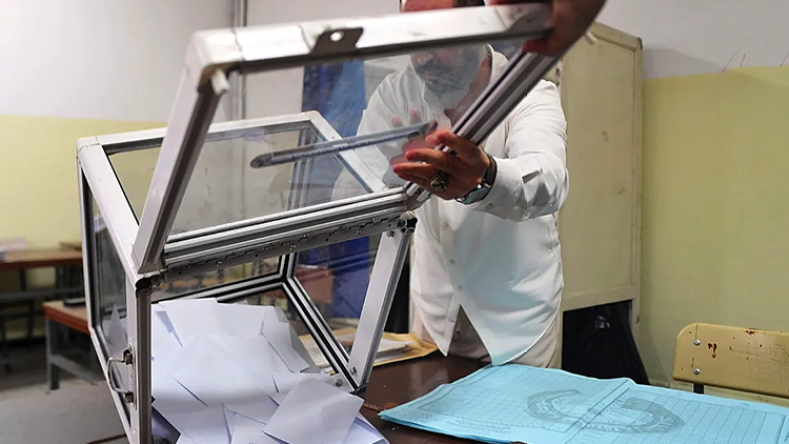
Algerian political parties are struggling to attract voters despite a perceived shift to cleaner elections since 2019, according to an article published on July 3, 2026. The report suggests that the disappearance of social media videos depicting ballot box seizures, falsified counts, dead people voting, and administration-controlled lists has altered the electoral landscape. Since the 2019 elections, Algerians have grown accustomed to polls free from such irregularities. Indeed, since the 2019 elections, Algerians have become accustomed to non-rigged elections, and scandalous videos of ballot box seizures, falsified counts, dead people voting, and administration-controlled lists have disappeared from social media. However, with the ballot box now considered clean, political parties are directly facing citizens and are reportedly failing to persuade them to vote for their programs. This is attributed to a lack of charismatic leaders and strong platforms among the parties, as the article claims that now that the ballot box is clean, political parties are facing Algerians directly and failing to convince citizens to vote for their programs due to a lack of charismatic leaders and strong platforms.
The Shift to Clean Elections
President Abdelmadjid Tebboune committed to ending the rigged elections and ensuring the ballot box's integrity. Previously, a quota system pre-arranged seats and distributed them in advance, which made elections a mere administrative protocol and contributed significantly to Algerian boycotts, according to an article published on July 3, 2026. The article states that this quota system was a primary reason for Algerian boycotts. President Tebboune paved the way for a new generation through full reforms. These reforms included ethicalizing political life, separating finance from politics, and reforming oversight and accompaniment bodies for the electoral process. Additionally, the Hirak protest movement has been constitutionally recognized for its historical stance. President Tebboune's initiatives were instrumental in ushering in a new political era, fundamentally altering the mechanisms that historically governed Algerian elections.
Parties' Struggle to Connect
The era of electoral quotas has concluded, with the political weight of each candidate now serving as the sole determinant for victory, thereby initiating a sound period for Algeria's political landscape, according to an article published on July 3, 2026. The article emphasizes that the era of electoral quotas has ended, and the political weight of each candidate is now the sole measure for victory, ushering in a sound era for the political scene in Algeria. However, political parties reportedly failed to adapt to the "electoral revolution" introduced by the new election law. The article suggests parties appeared hesitant and skeptical regarding the literal implementation of these changes. The article claims that political parties did not keep pace with the 'electoral revolution' introduced by the election law, appearing hesitant and skeptical about its literal implementation. This reluctance to embrace the new electoral framework has potentially hindered their ability to connect with a newly empowered electorate.
The current authority in Algeria operates independently of political parties and is not obligated to appease any specific party or support any official, the article states. This shift in the political environment has also impacted candidate selection. The article notes that the current authority in Algeria is independent of political parties and is not obligated to appease any party or support any official. The National Independent Elections Authority's vetting process has pushed parties to nominate competent and clean candidates, which has led to the emergence of a new generation of youth within the political sphere. The article suggests that the National Independent Elections Authority's vetting process has pushed parties to nominate competent and clean candidates, leading to the emergence of a new generation of youth. This rigorous vetting ensures that candidates meet higher standards of integrity and capability, reflecting the broader commitment to transparent governance.
Historical Context and Low Turnout
Securing the electoral process and protecting the Algerian vote has not yet led to a full improvement in the electoral path, with the participation rate remaining a controversial issue. The article notes that securing the electoral process and protecting the Algerian vote has not yet led to a full improvement in the electoral path, as the participation rate remains a controversial black spot. Political parties previously accepted offers of seats in national and local councils, in exchange for becoming supporting associations or a facade opposition. The article further clarifies that political parties accepted the offer of seats in national and local councils in exchange for becoming supporting associations or facade opposition. This historical practice contributed to a political landscape where genuine competition and voter engagement were often sidelined.
The current political era in Algeria is seen as a return to a desired state, stemming from the electoral crisis of February 22, 2019, when Algerians protested against the "fifth term" of the former president. The article posits that the current political era in Algeria is a return to the desired nature, stemming from the electoral crisis of February 22, 2019, when Algerians protested against the 'fifth term'. Before 2019, authorities offered various explanations for low Algerian voter turnout. Former Interior Minister Yazid Zerhouni, for instance, once stated that Algerians preferred to go to the sea for recreation due to hot weather, according to an article published on July 3, 2026. The article recounts that before 2019, authorities explained low Algerian voter turnout with various excuses, including former Interior Minister Yazid Zerhouni's statement that Algerians preferred to go to the sea for recreation due to hot weather. This historical context notes the long-standing challenge of voter engagement in the country despite recent reforms, showing that while electoral integrity has improved, the task of mobilizing the electorate and fostering strong political participation continues to be a significant hurdle for Algerian parties.