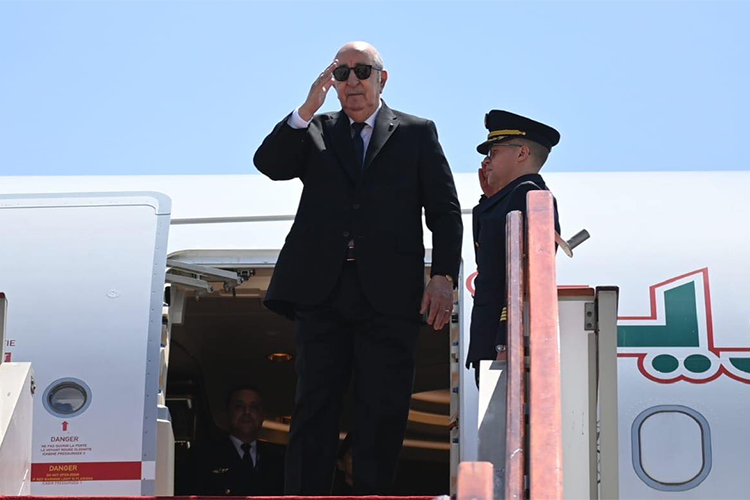
Algerian President Abdelmadjid Tebboune arrived in Turkey on Wednesday for an official visit aimed at strengthening bilateral ties. During his visit, President Tebboune will co-chair the inaugural session of the Algerian-Turkish High-Level Strategic Cooperation Council with his Turkish counterpart, Mr. Recep Tayyip Erdoğan. The council's first meeting shows a joint effort to deepen cooperation between the two nations, addressing various areas of mutual interest. This high-level council is designed to provide a structured platform for ongoing dialogue and decision-making, signifying a new phase in their strategic partnership. Its establishment reflects a mutual commitment to elevating the scope and depth of their collaborative endeavors across multiple sectors.
Strengthening Strategic Cooperation
The historical relations between Algeria and Turkey are deeply rooted, experiencing strong momentum and remarkable development in recent years. This evolving partnership forms a key basis for current bilateral discussions. The two countries formalized their relationship with a Treaty of Friendship and Cooperation, initially signed in 2006. This treaty has since served as a foundational document guiding their collaborative efforts across various sectors, including economic, political, and cultural exchanges. The framework provided by this treaty has been instrumental in fostering a stable and progressive relationship. The ongoing high-level engagements aim to further build upon this established framework, fostering enhanced strategic cooperation and economic ties between Algiers and Ankara. Both nations continue to emphasize the importance of their shared history in shaping future diplomatic and commercial endeavors, leveraging their historical bonds to forge a strong contemporary alliance.
History of High-Level Engagement
Algerian President Abdelmadjid Tebboune conducted a state visit to Turkey in May 2022. During this visit, President Tebboune received an honorary doctorate in international relations from Istanbul University, a recognition of his contributions to international diplomacy and the strengthening of Algeria-Turkey relations. This visit also saw the signing of numerous agreements and memoranda of understanding, signifying a concrete expansion of their partnership. He later paid a working visit to Turkey in July 2023, continuing the pattern of high-level exchanges between the two nations. The President of the Republic of Turkey, Mr. Recep Tayyip Erdoğan, also made a friendship and working visit to Algeria in January 2020. Mr. Erdoğan undertook an official visit to Algeria in November 2023, showing the frequent diplomatic interactions between the two countries' leaderships. These reciprocal visits highlight the ongoing commitment to strengthening bilateral relations and strategic cooperation across various sectors, ensuring continuous dialogue and progress.
Broader Regional Alignment
The visit aims to affirm political alignment between Algeria and Turkey on prominent regional and international issues of common interest. Discussions during the visit are expected to focus on areas where the two countries share perspectives and priorities, reinforcing their coordinated diplomatic efforts. A key aspect of this alignment involves their positions on the Palestinian cause, which both nations have consistently noted as a central concern in their foreign policy agendas. This diplomatic engagement seeks to reinforce their coordinated stances on global affairs, particularly concerning justice and self-determination. The focus on shared regional and international concerns shows a broader effort to strengthen their diplomatic collaboration beyond bilateral economic ties, positioning them as influential voices on critical global matters.
Economic and Political Outlook
The visit aims to strengthen the bonds of brotherhood and cooperation between Algeria and Turkey. During President Abdelmadjid Tebboune's state visit in May 2022, several agreements and memoranda of understanding were signed. These covered key sectors such as energy, mining, finance, and industry, indicating a full approach to economic partnership. Additionally, agreements were reached concerning science, technology, and innovation, showing a broad scope for bilateral collaboration that extends into future-oriented sectors. These agreements reflect a concerted effort to foster economic and technological partnerships between the two nations, aiming to boost trade, investment, and joint ventures. The ongoing engagements are expected to build upon these foundations, exploring new avenues for mutual growth and prosperity.